
Sugar is a term used to describe sweet-tasting, soluble carbohydrates in food products. It encompasses various types, including simple sugars known as monosaccharides, such as glucose, fructose, and galactose. The most common form of sugar, sucrose, is composed of glucose and fructose and is extracted from sugar cane or sugar beet.
Another sugar substitute called acesulfame potassium, also known as acesulfame K or Ace K, is a synthetic, calorie-free option. It is often marketed under the trade names Sunett and Sweet One and is identified as E950 in the European Union. This particular sugar substitute was accidentally discovered by a chemist!
So, is there one that reigns supreme in the baking world? Let’s take a look.
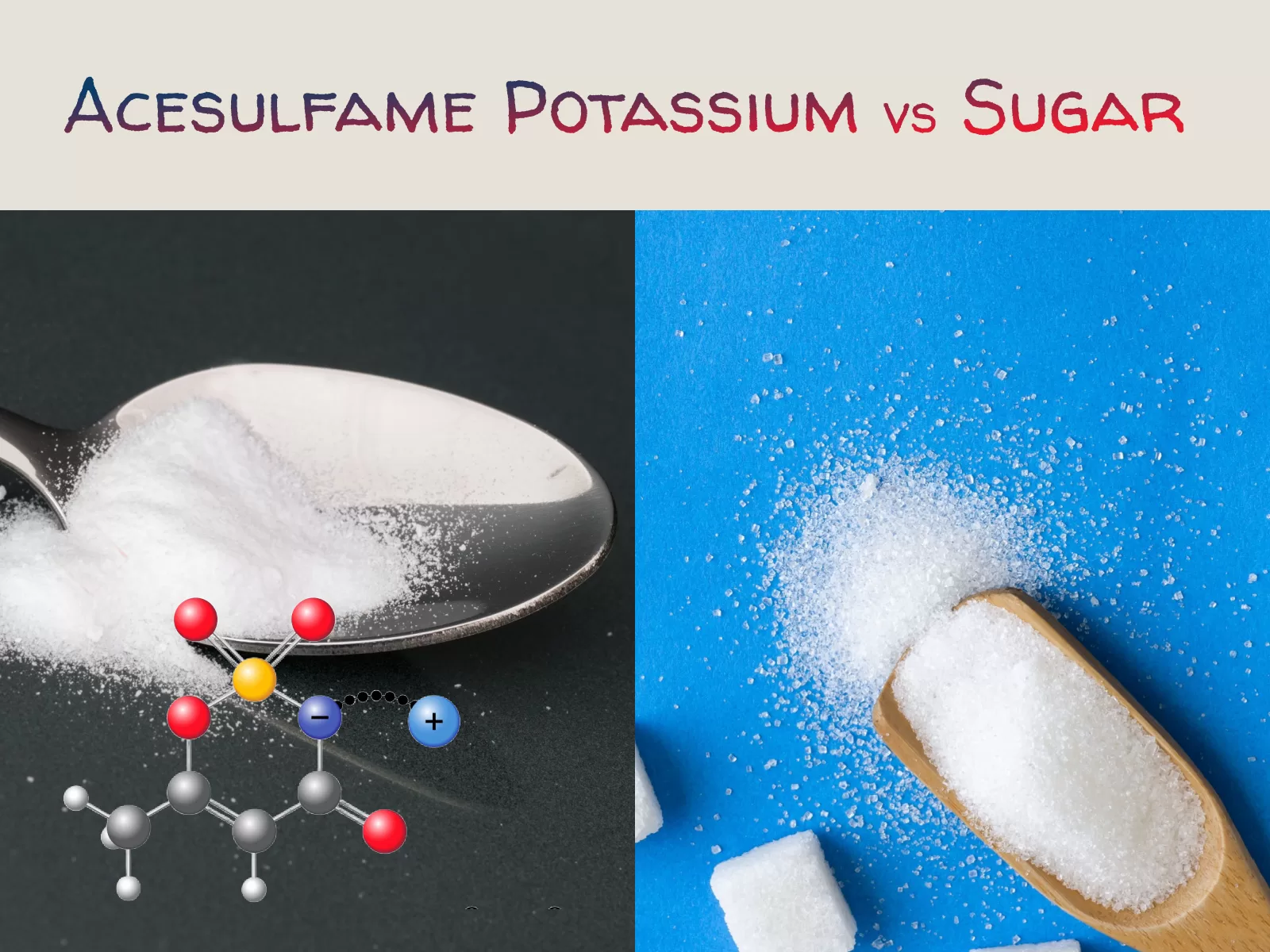
Comparing Acesulfame Potassium vs Sugar
| Acesulfame Potassium | Sugar | |
| Substitution ratio | n/a | n/a |
| Gluten-free? | Yes | Yes |
| Keto-friendly? | Yes | No |
| Paleo-friendly? | No | No |
| Common Allergens | Sulfite and sulfonamide | Sugarcane or sugarbeet |
| Pantry shelf life (unopened/sealed) | 10 plus years | 2 years to indefinite |
| Best for baking | Best as an added sweetener to beverages. | Best for cakes and pastries. |
Differences Between Acesulfame Potassium And Sugar
The most significant difference between these sweeteners is that one is natural, and one is not. Sugar occurs naturally in food such as fruit, dairy, or carbohydrates. Despite being from a natural source, refined sugar undergoes processing to isolate only the sugar, as seen in granulated sugar from sugar cane or corn syrup from corn. Table sugar is composed of 50 percent glucose and 50 percent fructose. It remains solid in its form.
Ace K is an artificial/synthetic sweetener produced through chemical synthesis in a laboratory. It is a no-calorie sweetener used in various food and beverage products as a means to provide sweetness without the additional calories found in sugars.
Taste and Culinary Uses
Besides its sweet taste, sugar serves multiple functions in food technology, including preservation and texture modification. It is widely regarded as the benchmark for sweetness, offering a pure and pleasant taste that hits quickly and doesn’t linger. It imparts no secondary flavors or aftertaste, allowing the other flavors in sweet dishes to really shine.
Acesulfame-K is an intense sweetener that provides sweetness but with a bitter taste or aftertaste, more so than aspartame and other such sweeteners. However, it maintains its sweetness across various temperatures and food-processing conditions. This versatility allows acesulfame-K to be utilized in various packaged food products, including baked goods, beverages, candies, chocolates, dairy products, desserts, and more.
Are Acesulfame Potassium and Sugar Substitutes for Each Other?
Ace-K is 200 times stronger than sugar, making it a highly potent alternative to traditional sweeteners. While it may satisfy the cravings of those with a sweet tooth, it may not be suitable for baking purposes. Its unique properties and concentrated sweetness make it ideal for adding a tiny amount to beverages, desserts, and other recipes that require a small amount of sweetening. So, unless you are using it for those things, you cannot swap it one to one with sugar.
Nutritional Profile And Health Benefits
- Table sugar (also known as granulated sugar or sucrose), when consumed in a quantity of 2 teaspoons, contains:
- 30 calories
- 8 grams of total carbs
- 8 grams of sugars
- It has a glycemic index (GI) of 65
- Acesulfame potassium (no matter the serving size) contains:
- 0 calories
- 0 grams of total carbs
- 0 grams of sugars
- It has a glycemic index (GI) of 0
Health wise, sugar serves as a rapid source of energy (in the form of glucose) that fuels the functioning of cells, tissues, and organs within the body. Ace-K, on the other hand, is better for weight management and low to no-sugar diets.
Diet Suitability
White sugar might seem like it is vegan, but it obtains its white color through a refining process that often involves the utilization of bone char. Due to this aspect, even though it is not directly derived from animal products, white sugar from sugarcane cannot be considered vegan. It is also unsuitable for those following a keto diet, as it is too high in net carbs. Similarly, white sugar also does not meet the criteria for individuals adhering to a paleo or whole30 diet. It is gluten-free, though, so there’s that!
Ace-K, on the other hand, is vegan. This mineral salt does not contain any animal ingredients whatsoever. In addition, it is a keto-friendly sugar alternative due to its low carbohydrate content. However, artificial sweeteners like aspartame, sucralose, saccharin, acesulfame-k, and sugar alcohols like xylitol are in the no-no camp while following a paleo or Whole30 diet.
How to Store Acesulfame Potassium and Sugar
Both sugar and ace-k are ideally stored in an airtight container at room temperature, ensuring their freshness and quality. With proper storage, acesulfame potassium can remain stable for up to 10 years without decomposition!
Price and Availability
Sugar is as low as 25 cents per pound, and acesulfame potassium is around $1.83 per ounce. It is also more difficult to find than sugar, particularly in bulk quantities.
Environmental Impact
The burning of sugarcane harms the environment, primarily by releasing air pollutants. When the leafy parts of sugarcane are burned, they emit various toxic and hazardous substances that can significantly affect air quality. Examples of these substances include nitrates, carbon compounds, and sulfates.
These emitted compounds are directly linked to the issue of climate change. The combination of different compounds resulting from the burning of sugarcane leads to a reduction in oxidization efficiency and an increase in ozone concentrations. These two factors further contribute to the ongoing challenges posed by climate change.
There is not much information on any environmental concerns that come with consuming ace-k, but that isn’t to say there are none. However, it seems unlikely that it is as bad for the environment as sugarcane.
Acesulfame Potassium vs. Sugar: The Ultimate Verdict
I am always going to choose an (almost) whole food sugar over a processed or artificial sugar or sweetener, but I have the privilege of doing so because I do not have any conditions that require me to lower my sugar intake. But, even if you are on the low or no-sugar team, there are better alternatives than acesulfame potassium. You can look to natural sweeteners such as stevia or monk fruit. These are minimally processed and do not come with the health risks that artificial ones like Ace-K pose.
FAQs
Opting for foods and drinks that are sweetened with low- and no-calorie sweeteners like acesulfame potassium can help reduce the intake of added sugars and manage calorie consumption if you are on specific diets. However, aside from this, there are no other health benefits, and overall, sugar has more health properties.
Yes, it is a man-made sugar substitute. Acesulfame potassium, also recognized as acesulfame K or ace K, is an artificial sweetener. In certain regions of Europe, it is occasionally referred to as E950. Sweet One and Sunett are among the brand names under which manufacturers market acesulfame potassium.
Acesulfame K is approximately 200 times sweeter than table sugar.




Leave a Comment