
Sugar alcohols are a common ingredient in sugar-free and reduced-sugar foods (and non-food items like sugarless gum). If you’ve ever wondered if sugar alcohols are natural or artificial, you’re not alone.
Sugar alcohols are isolated and manmade when used as a sugar alternative, so they are generally considered artificial in these cases. However, they occur naturally in some foods, so they aren’t as artificial as TRUE artificial sweeteners like sucralose and aspartame.
We’ll explain more about sugar alcohols, what they’re used for, and more next!
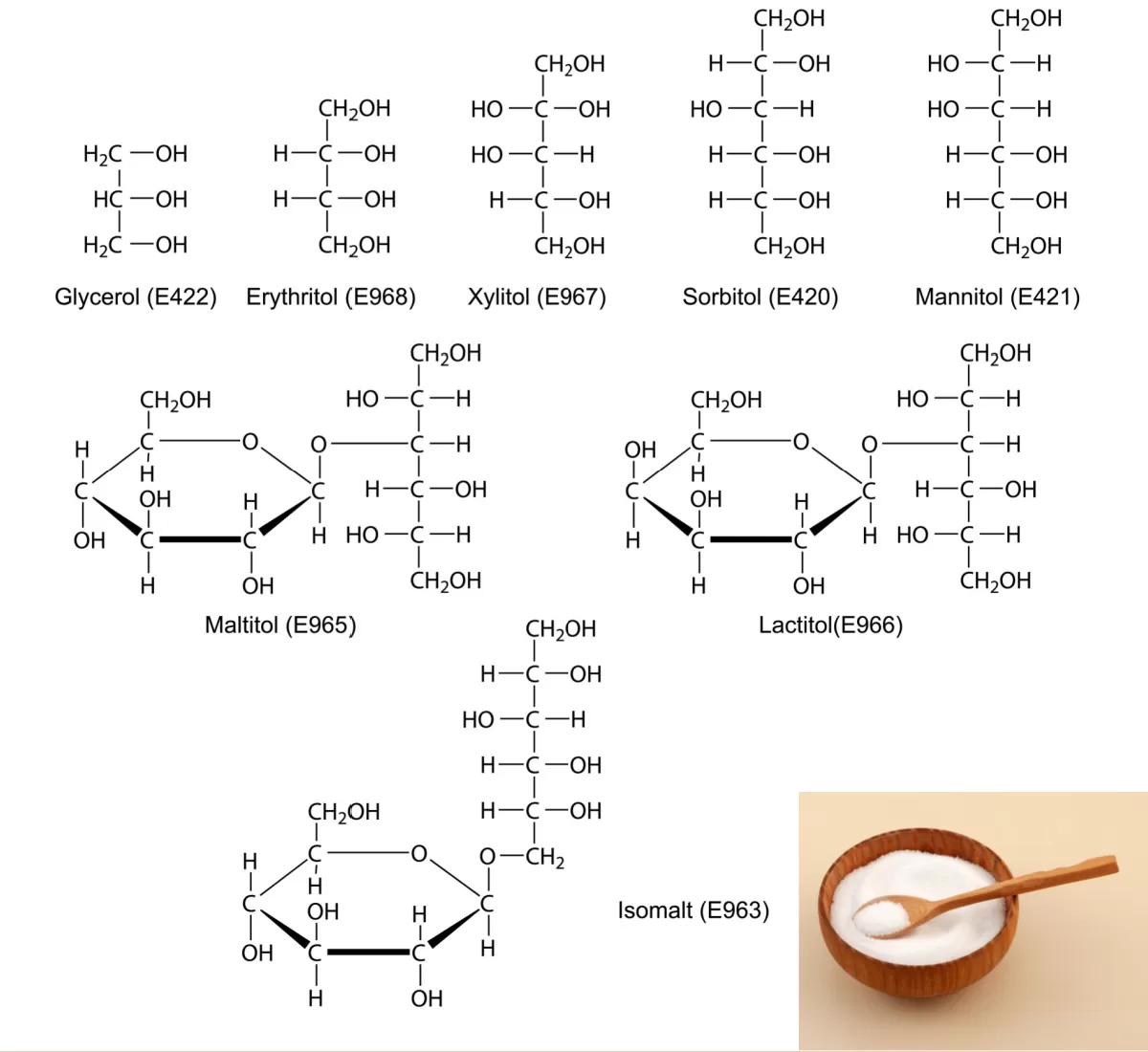
What are sugar alcohols?
Sugar alcohols are chemical compounds that taste sweet, but aren’t sugar. Sugar alcohols are lower in calories and aren’t a source of sugar compared to sweeteners like white sugar and honey. Sugar alcohol molecules resemble alcohol, but there is no alcohol in them!
Sugar alcohols occur naturally in certain foods such as:
- Fruits
- Vegetables
- Certain cereals
- Olives
Some examples of sugar alcohols include:
- Mannitol
- Sorbitol
- Xylitol
- Lactitol
- Isomalt
- Maltitol
What are sugar alcohols used for?
Sugar alcohols are popular for creating sugar-free and reduced-sugar products. Sugar alcohols taste sweet, but don’t contain actual sugar, so they provide a negligible amount of calories.
For instance, sugar alcohols contain 1.5-3 calories per gram compared to 4 calories per gram for regular sugar.
Sugar alcohols are poorly digested, which is why they usually provide negligible calories when consumed as a sugar substitute. That’s also the reason they can cause stomach upset if you eat too many (bacteria ferment the undigested sugar alcohols in your colon, which can cause gas, bloating, and other unpleasant side effects!)
Are sugar alcohols natural or artificial?
It gets a little tricky when classifying sugar alcohols as natural or artificial.
Sugar alcohols CAN occur naturally, but when they’re used to sweeten foods and drinks they are isolated and manmade to produce pure sugar alcohols (like a bag of xylitol powder).
Sugar alcohols are considered artificial sweeteners by many, yet they aren’t as artificial as purely manmade sweeteners like sucralose and aspartame, which NEVER occur naturally in any food.
Bottom line: sugar alcohols are usually considered artificial sweeteners.
Pros and cons of sugar alcohols
Pros
- Lower in calories compared to regular sugar.
- Doesn’t contain sugar, so it can be beneficial for low-carb diets like keto.
Cons
- Not as natural as unrefined sweeteners like honey, maple syrup, etc.
- Can cause digestive upset if consumed in large amounts.
- Not suitable for people with certain digestive issues following a low FODMAP diet (P stands for polyols, which includes sugar alcohols).
FAQs:
Stevia is a natural sugar substitute that might be better tolerated than sugar alcohol. Stevia has a distinct flavor/aftertaste, which is why sugar alcohols are more commonly used as sugar alternatives in processed foods.
Despite the name, sugar alcohols aren’t sugar! They are sugar substitutes because they taste sweet without providing dietary sugar. So no, sugar alcohols aren’t natural sugars.
Isolated and manmade sugar alcohols are usually considered artificial, though they can occur naturally (in smaller amounts) in many foods like fruits and vegetables.


Leave a Comment