

If you’ve ever eaten Cheetos, you’ve experienced “Cheeto fingers”, the coating of orange cheese dust left on your fingers.
Cheetos even has a trademarked term for the cheese dust fingers and calls it “Cheetle”, defining it as “The delicious dust that covers your fingers while eating Cheetos®. Lick it off or wear your Cheetle® fingers like a badge of honor…”
With the proposed ban on food dyes, however, it might be the end of “Cheetle”…
Follow The Coconut Mama
• For fun lists, healthy living tips, and bar conversation topics, make sure to follow The Coconut Mama. Click here to access The Coconut Mama’s profile page and be sure to hit the Follow button here or at the top of this article!
• Have feedback? Add a comment below!
Shutterstock

Under the guidance of Robert F. Kennedy, Jr., the Food and Drug Administration is moving towards banning artificial food dyes by the end of 2026, including Red 40, Yellow 5, Yellow 6, Blue 1, and Blue 2 (among a few others).
In case you hadn’t already guessed, Cheetos’ orange hue comes from artificial food dyes.
Many major food manufacturers have announced their pledges to remove food dyes from products per the FDA’s goal, and the manufacturer of Cheetos is one of them.
Shutterstock

Cheetos are made by Frito-Lay, a subsidiary of PepsiCo. PepsiCo announced it will begin phasing out the use of artificial dyes.
PepsiCo’s ‘Prepared Management Remarks’ from its second quarter earnings report was just released on July 17th, and reads, “We plan to introduce extensions of Cheetos and Doritos that will contain no artificial colors or flavors…”
Let’s look at all of the dyes in the different Cheetos products (there’s more than just one!)…
Shutterstock

The classic flavor of Cheetos (both the puffs and crunchy versions) uses Yellow 6 for the famous orange color.
If you like your Cheetos spicy, buckle up, because there are four different dyes in the Flamin’ Hot flavor of Cheetos:
- Red 40 Lake (lake dyes are slightly modified versions of the regular FD&C dyes)
- Yellow 6 Lake
- Yellow 6
- Yellow 5
Shutterstock

The Cheddar and Jalapeno Cheetos have:
- Yellow 6
- Yellow 5
- Blue 1
- Red 40
Mexican Street Corn Cheetos are a bit lighter in color, but still contain Yellow 5 Lake. However, this flavor also contains turmeric extracts, a natural dye alternative for orange-hued products. Maybe we’ll see more turmeric extract in Cheetos’ future?
Shutterstock
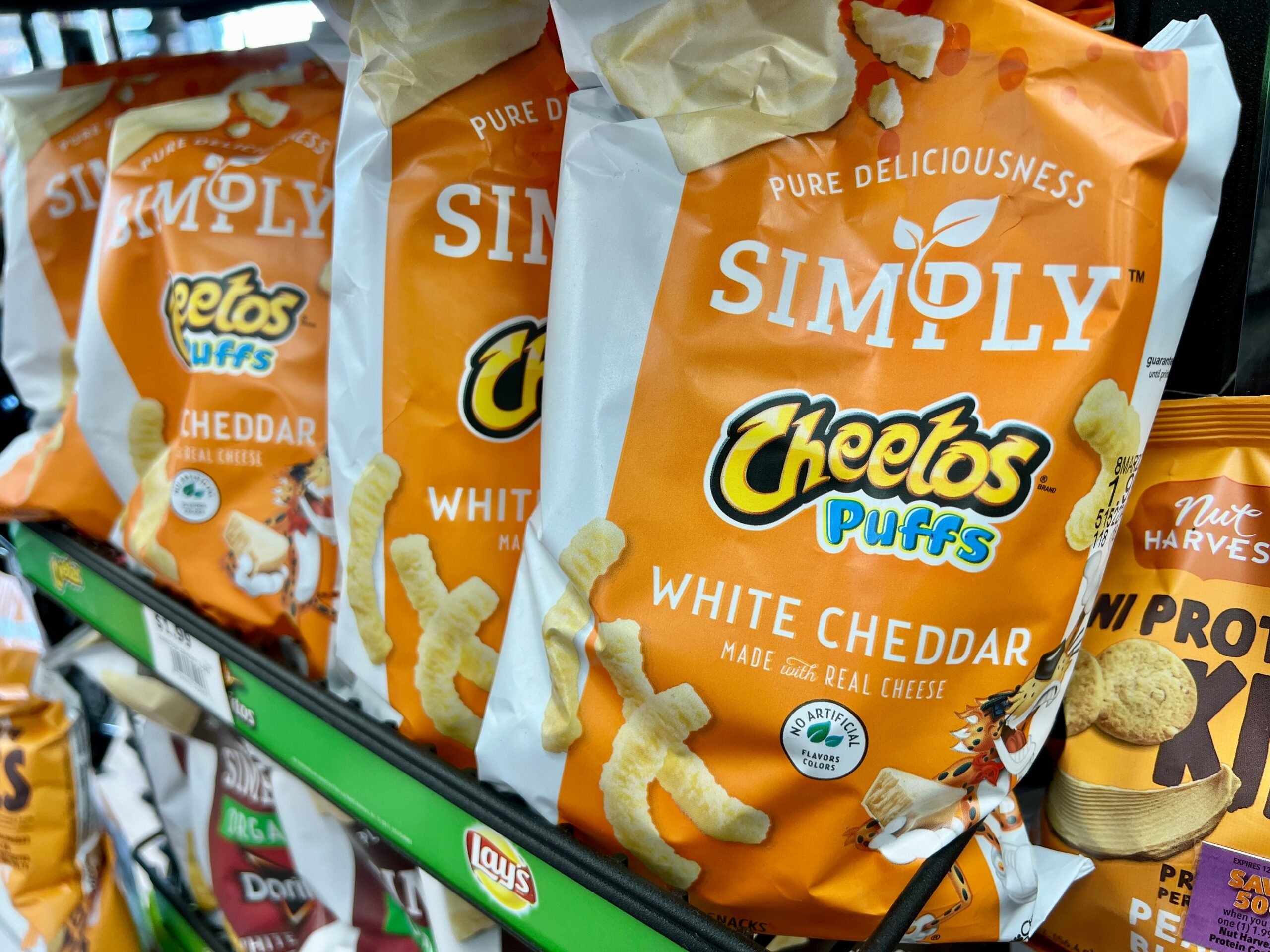
Cheetos already has a line called “Simply Cheetos”, which is free of artificial dyes. The flavor for Simply Cheetos is White Cheddar, and the color is a much more natural-looking, muted color (more like real cheese).
There aren’t any natural dyes added to the Simply Cheetos – the color comes from cheddar cheese.
Shutterstock

One of the disadvantages of natural dyes from a food manufacturing perspective is the cost. Natural dyes are more expensive to use, so we might see a price increase for dye-free products compared to the artificial dye versions.
According to Darin Detwiler, author of the book Food Safety: Past, Present, and Predictions, says that natural dyes are “significantly” more expensive than artificial dyes.
Shutterstock
Detwiler goes on to say, “Natural food dyes tend to be less stable than artificial dyes, meaning their color can degrade under certain conditions — heat, light, and oxidation.”
This means that natural dyes might not be as shelf-stable, and they don’t always look as vibrant as artificial dyes, impacting the cosmetic appeal.
While many consumers wouldn’t mind the lack of vivid artificial color, others may find the natural look off-putting. The good news is that the flavor of foods isn’t impacted by the dyes, so it’s something that would take getting used to.
Follow The Coconut Mama
• For fun lists, healthy living tips, and bar conversation topics, make sure to follow The Coconut Mama. Click here to access The Coconut Mama’s profile page and be sure to hit the Follow button here or at the top of this article!
• Have feedback? Add a comment below!
Shutterstock

It’ll be interesting to see how Cheetos will be reformulated without artificial food dyes. Will they not contain any source of natural coloring (like the Simply Cheetos line), or will they include a natural dye alternative?
Let’s look at a few of those potential dye alternatives.
Shutterstock

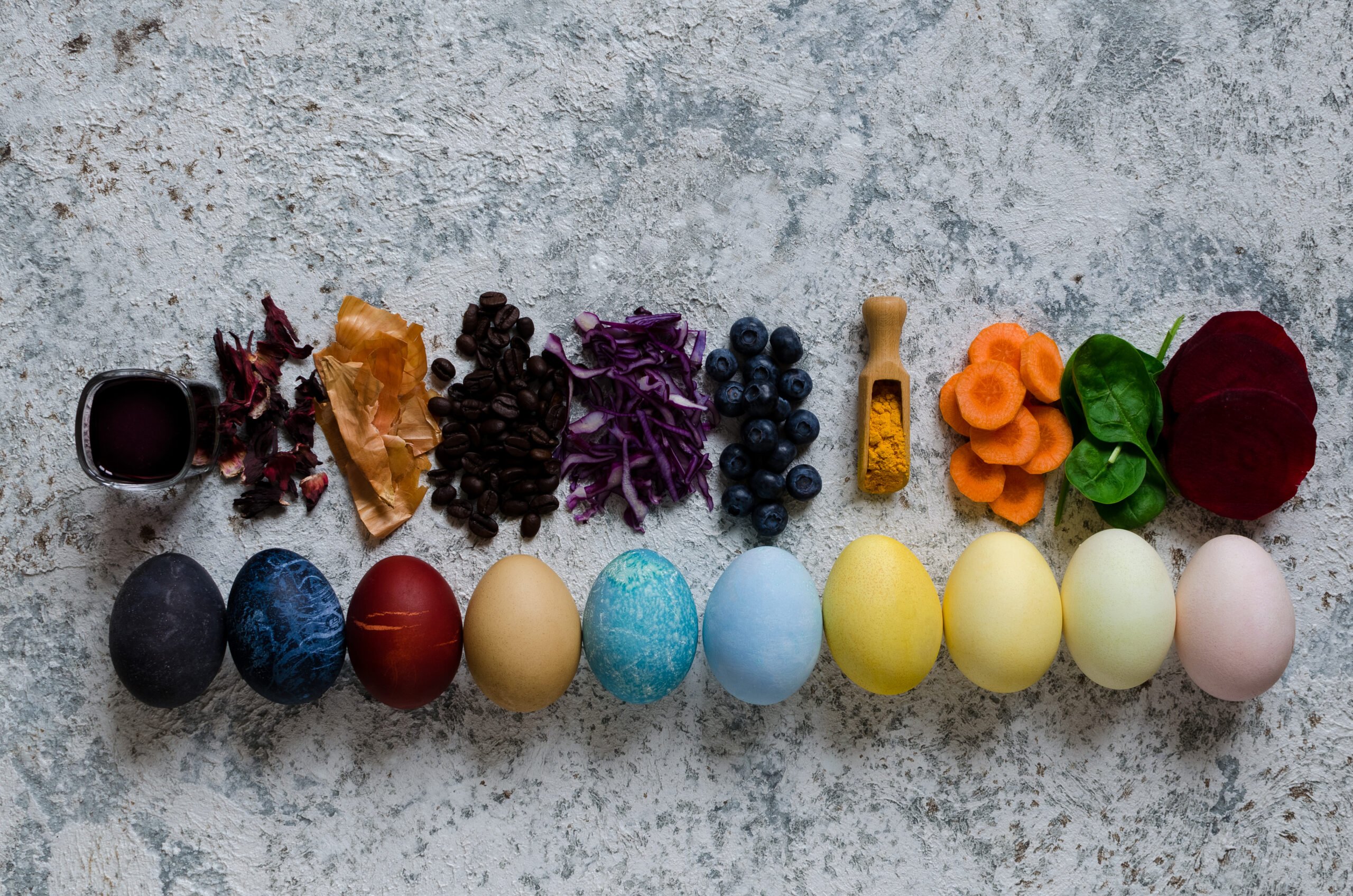
Here are some alternatives to the banned artificial dyes.
- Annatto extract (yellow)
- Beta-carotene (orange/yellow)
- Carrot juice concentrate (orange/yellow)
- Paprika extract (red/orange)
- Beet juice concentrate (red)
- Turmeric extract (orange/yellow)
Shutterstock
PepsiCo announced that artificial dyes will be removed from products like Lay’s and Tositos by the end of the year.
PepsiCo CEO Ramon Laguarta emphasizes that “Sixty percent-plus of our (portfolio) today doesn’t have any artificial colors,” and that the transition to phase out food dyes from the remaining products is “well underway.”
We might see dyes removed from Cheetos this year, but it might take longer and stretch into 2026 as well.
Shutterstock

Which would you rather see – Cheetos without any sort of color added (like Simply Cheetos), or a natural dye like paprika to replace the Red 40 in Flamin’ Hot Cheetos?
Share your preferences in the comments!
Shutterstock




Leave a Comment