
We got ourselves two seed butters, both of which are great nut butter alternatives, trying to be the ones you pick up at the store!
Flaxseed butter bets its high fiber content against sunbutter’s smooth and creamy texture in a match-up that’ll decide which one of these is the best – a thrilling fight!
We’ll look at all their individual characteristics, because after all, only one can be the best…
Let’s jump in for a closer look!
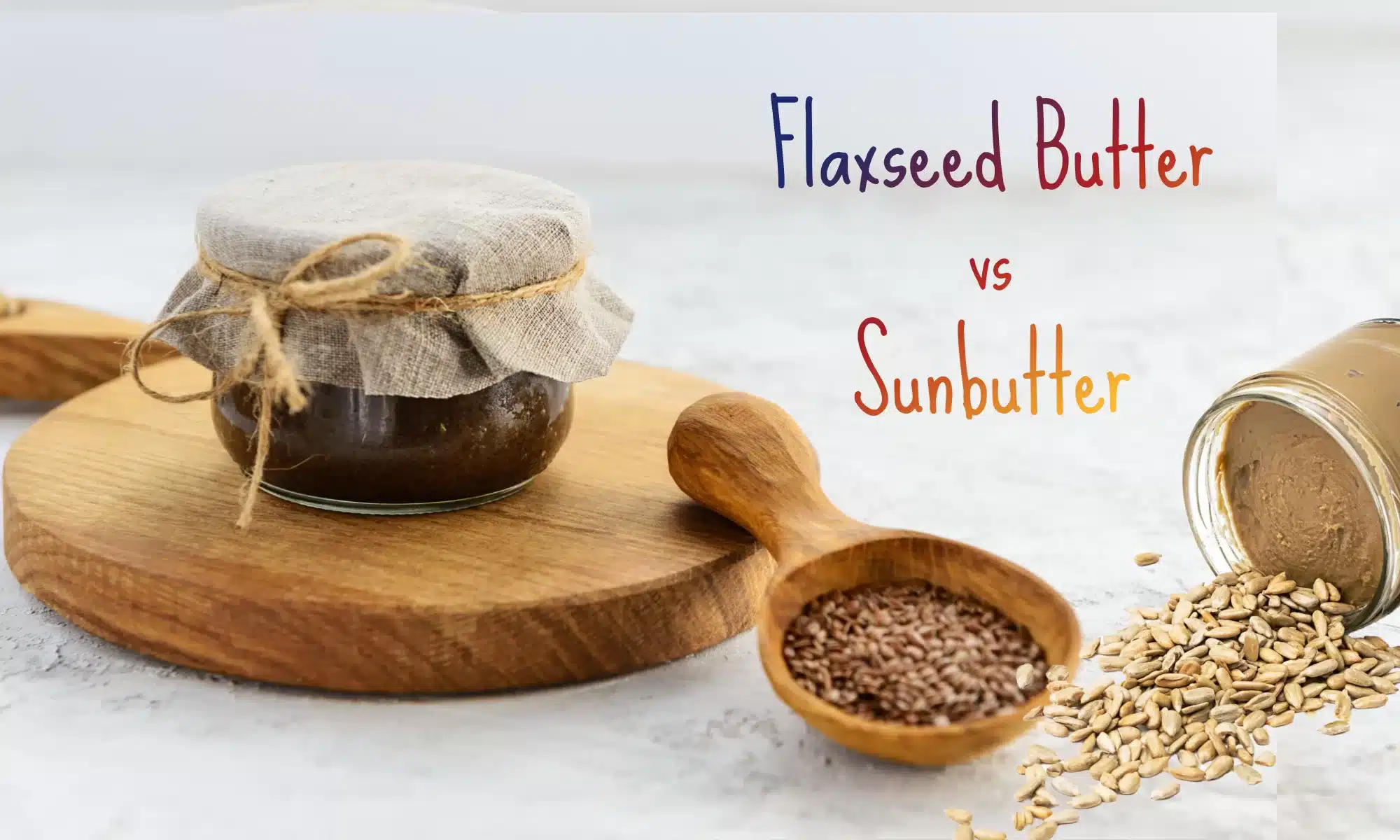
Comparing flaxseed butter vs sunbutter
Flaxseed butter and sunbutter are both made from seeds, and give you an allergy-free spread! They share earthy tones to their flavor, and are great for vegan and paleo diets (if the sunbutter is unsweetened). Flaxseed butter, unlike sunbutter, is also ideal for keto diets!
They both have a low glycemic index score of 35, which makes them good for avoiding any big spikes in blood sugar from eating them – always check with your physician if you’re unsure!
| Flaxseed butter | Sunbutter | |
| Taste | Mild, nutty, earthy | Intense, earthy, roasted |
| Texture | Thin, grainy | Smooth, creamy |
| Allergens | None | None |
| Vegan? | Yes | Yes |
| Paleo? | Yes | Yes (if unsweetened) |
| Keto? | Yes | No |
| Glycemic index (GI) | Flaxseed=35 | Sunflower seed=35 |
What is flaxseed butter?
Flaxseed butter is made from flax seeds that are ground into a grainy and thin paste. It’s completely nut-free, and has one of the highest fiber contents of any nut or seed butter!
It makes for a great alternative to nut butters like peanut butter, for example, since it has a spreadable texture and a nutty taste as well!
What is sunbutter?
Sunbutter, or sunflower butter, is one of the most popular substitutes to many nut butters – like peanut butter!
It has a creamy consistency, and is made by grinding roasted sunflower seeds down into a paste, adding a pinch of salt to create an earthy spread that has no common food allergens like nuts, sesames, and more!
On top of that, it’s really easy to make sunbutter at home!
Differences between flaxseed butter and sunbutter
The biggest difference between flaxseed butter and sunbutter is their texture, with differences in their flavor as well.
Flaxseed butter has a thin and grainy texture that’s similar to almond butter, while sunbutter has a smooth and creamy texture more similar to traditional peanut butter.
Looking at their flavors, flaxseed butter has a mildly nutty and earthy taste, whereas sunbutter has a more intense earthy taste than flaxseed butter with a roasted tone to it.
And, as I mentioned, flaxseed butter works for keto diets, whereas sunbutter does not due to its carb content (more on nutrition in just a bit).
How to use flaxseed butter vs sunbutter
Flaxseed butter and sunbutter can be used in fairly similar ways – the different textures and tastes will change the dish, so feel free to experiment!
You can use both simply as a spread on your toast, added into your oatmeal, mixed into your smoothies, or as an ingredient for your cookies!
A delicious and easy way to use them is to just dip sliced apples or other fruits/vegetables into them!
Both these spreads encourage you to get creative – flaxseed butter’s mildly nutty taste adds a subtle twist to your dishes, while sunbutter’s earthy flavor adds a more distinct twist to your creations!
Nutrition: Flaxseed butter vs sunbutter
Flaxseed butter is packed with omega-3 fatty acids, which are important for reducing overall inflammation in your body and improving heart/brain health. It also has a ton of fiber with zero grams of carbs and a high protein content, making it a great choice for keto recipes.
Sunbutter is filled with vitamin E and magnesium, and also has a high protein content! However, it often has sugar added in it to enhance the flavor, so make sure to check the label before buying – go for the natural ones if you want minimal sugar!
| Serving size: 2 tbsp | Flaxseed butter | Sunbutter |
| Calories | 190 | 200 |
| Total fat (saturated) | 13 g (1.5 g) | 17 g (2 g) |
| Total carbs | 9 g | 6 g |
| Net carbs (fiber) | 0 g (9 g) | 4 g (2 g) |
| Total sugars (incl. added) | 0 g | 3 g (3 g) |
| Protein | 8 g | 7 g |
How to store flaxseed butter and sunbutter
Flaxseed butter is quite prone to oxidation, meaning you should keep it in the fridge to avoid having it go rancid too quickly. It’ll also thicken up in there a little, making it easier to handle!
Sunbutter does fine at room temperature and in a dark place (like the pantry), but you can also store it in the fridge – it could increase its shelf-life a bit!
Storage instructions and best-before dates can vary from brand-to-brand, so make sure to always read the label!
Flaxseed butter vs sunbutter: Which is better
If you’re looking for a nut-free spread, both of these are great options and it comes down to a lot of personal preference.
However, flaxseed butter has a great fiber content, no sugar, a lot of protein, 0 net carbs, and healthy omega-3 fatty acids that make it a strong choice.
Sunbutter, on the other hand, also has some nutritional qualities that make it worth looking at – like a high protein content, vitamin E, and magnesium. Plus, it has a deliciously creamy and smooth texture.
All that said, flaxseed butter is the overall better option for its nutritional profile, great taste, and versatility in vegan, keto, and paleo diets!
FAQs
Both flaxseed butter and sunbutter have healthy qualities, although flaxseed butter has better fiber and protein contents with less net carbs and sugar than sunbutter.
Bodybuilders may eat flaxseed because of its awesome protein content and omega-3 fatty acids, which help lower overall body inflammation – perfect for muscle recovery!
Flaxseeds aren’t nuts, but seeds, and there are no other allergens in flaxseed butter making it a wonderful choice if you have a nut allergy!
Sunbutter sure is! It is made from sunflower seeds, not nuts – perfect for anyone with a nut allergy!


Leave a Comment