
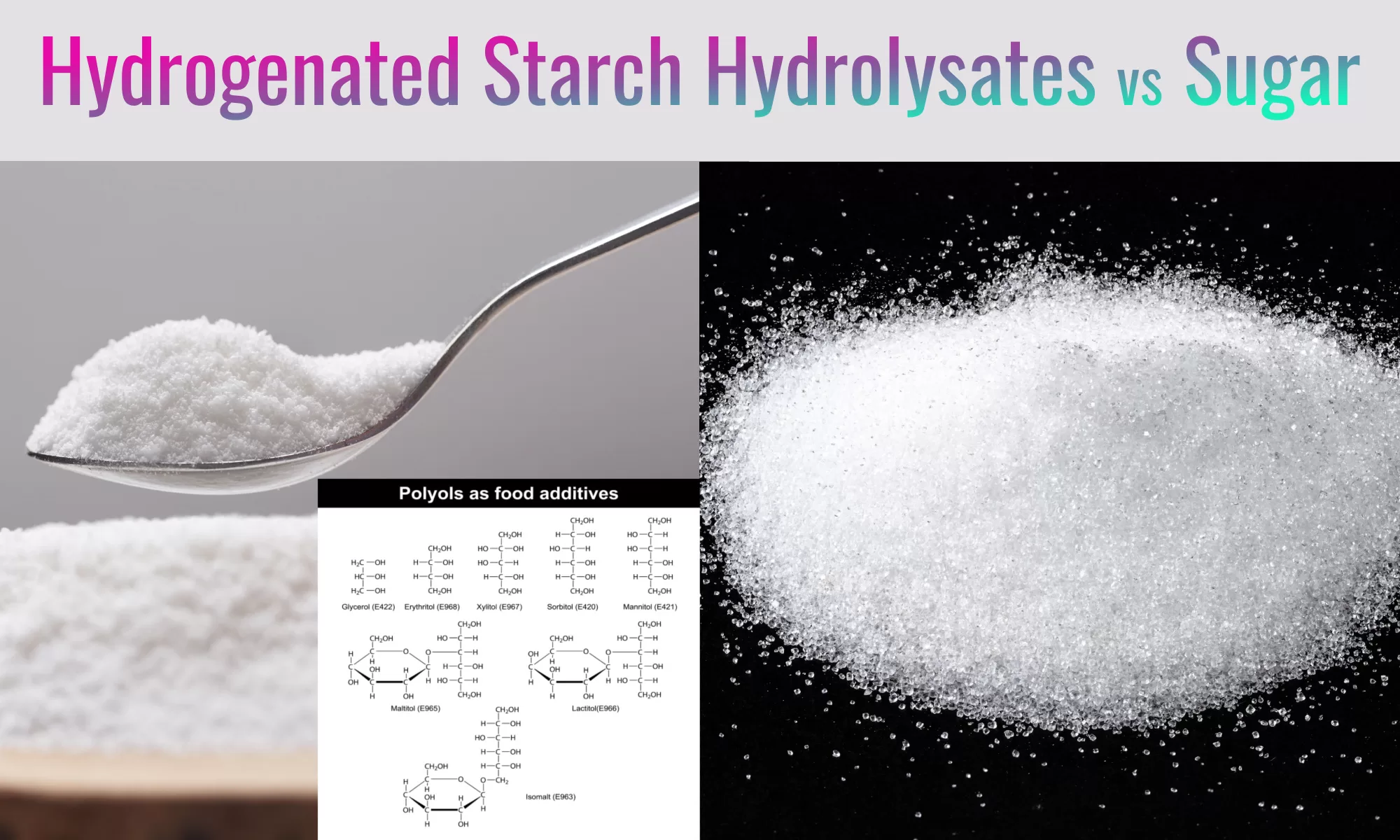
Hydrogenated starch hydrolysates (HSH), also referred to as polyglycitol syrup, and ordinary sugar (sucrose) are two distinct sweeteners widely used in the food industry. While HSH is a mixture of sugar alcohols developed by Lyckeby Starch in the 1960s, common sugar is derived from glucose and fructose extracted from sugar cane or sugar beet. As both sweeteners have unique properties and applications, the question arises: which one is ultimately better? Let’s delve into their characteristics to help determine the answer.
Comparing Hydrogenated Starch Hydrolysates vs. Sugar
| Hydrogenated Starch Hydrolysates | Sugar | |
| Substitution ratio | n/a | n/a |
| Gluten-free? | Yes | Yes |
| Keto-friendly? | No | No |
| Paleo-friendly? | No | No |
| Common Allergens | Sugar alcohols | Sugarcane |
| Pantry shelf life (unopened/sealed) | 2 years | 2 plus years |
| Best for baking | Moist baked goods | Most desserts and sweet baked goods |
Differences Between Hydrogenated Starch Hydrolysates And Sugar
The sweeteners hydrogenated starch hydrolysate and table sugar have distinct characteristics and applications. HSH is produced through the partial hydrolysis of starch, usually derived from sources like corn, potato, or wheat. This process generates dextrins, which are short chains of glucose molecules. These dextrins are then converted into sugar alcohols through hydrogenation, creating a sugar-free sweetener.
HSH serves multiple purposes in the food industry. It is commonly used as a dietary supplement to provide energy and as a sweetener in various food and beverage products. HSH also functions as a thickener, humectant, and stabilizer in processed foods, enhancing their texture and consistency.
On the other hand, table sugar, which is derived from sugar cane or beets, consists of equal parts glucose and fructose. It is widely known for its sweet taste and is commonly used as a sweetener in many food products. Sucrose, the scientific name for table sugar, also serves other functions in food technology. It acts as a preservative, texture modifier, and coloring agent.
Taste and Culinary Uses
Hydrogenated starch hydrolysates are widely used in the food industry. They serve as an excellent sweetener in various food products, offering sweetness comparable to sugar. This makes HSH an ideal substitute for those seeking to lower their sugar intake. You can find HSH in candies, chocolates, baked goods, and beverages.
Besides their role as sweeteners, hydrogenated starch hydrolysates also function as bulking agents, enhancing the volume and texture of certain food items. This makes them valuable in the production of low-calorie or reduced-fat products because they help maintain the desired consistency while reducing the amount of sugar and fat.
HSH demonstrates versatility as a humectant, helping retain moisture in food products. This property extends their shelf life in baked goods and prevents them from becoming dry or stale.
Sugar itself also possesses unique qualities in the culinary realm. It acts as a preservative, flavor enhancer, bulking agent, and colorant in baked goods. It also finds its way into numerous sauces, syrups, and beverages, increasing viscosity and providing a thicker consistency and richer mouthfeel.
Are Hydrogenated Starch Hydrolysates and Sugar Substitutes for Each Other?
While the sweetness level is comparable, they do not make suitable substitutes for each other as far as texture and other physical properties are concerned. HSH provides an increased moisture content but does not offer the same bulking or color that sugar does.
Nutritional Profile And Health Benefits
- Name: Hydrogenated starch hydrolysates
- Calories: 3 calories per gram
- Total carbs: N/A
- Sugars: N/A
- GI: N/A
- Name: Table sugar (granulated sugar, sucrose)
- Serving size: 2 tsp.
- Calories: 30
- Total carbs: 8 g
- Sugars: 8 g
- GI: 65
Sugar provides a quick source of energy in the form of glucose, which is essential for the proper functioning of our body’s cells, tissues, and organs. Hydrogenated starch hydrolysate, on the other hand, is a low-calorie sweetener that can aid in reducing the risk of obesity and diabetes.
Diet Suitability
Hydrogenated starch hydrolysates are generally vegan-friendly due to their plant-based sourcing and production methods. However, despite being a sugar alcohol with a low glycemic index, HSH is not keto-friendly. It does not align with the principles of consuming whole, unprocessed foods in the Paleo or Whole30 dies, a topic of debate among proponents of this lifestyle. Supporters argue that HSH is a product of modern food processing techniques and would not have been available to our ancestors. Conversely, some advocate for including small amounts of HSH in the Paleo diet as an occasional treat, asserting that the diet allows for individual preferences and choices within the framework of consuming whole, nutrient-dense foods.
White sugar is not vegan, as it often undergoes a refining process involving the use of bone char. It is also not considered keto-friendly, paleo-friendly, or whole30-friendly. These diets prioritize consuming whole, unrefined foods and exclude or limit the consumption of processed sugars.
How to Store Hydrogenated Starch Hydrolysates and Sugar
Both sweeteners are best stored at room temperature in an airtight container.
Price and Availability
Hydrogenated starch hydrolysate is priced at 45 cents per pound in the US, while regular sugar can be found for as low as 25 cents per pound. Regular white table sugar is much easier to find, as HSH is often only available online.
Environmental Impact
The production and processing of certain sweeteners can negatively affect the environment. For example, burning sugarcane affects air quality and contributes to air pollution. When the leafy parts of sugarcane are burnt, it releases toxic and hazardous substances. These substances can have detrimental impacts on air quality and are also associated with climate change.
The environmental impact of HSH depends on where it has been sourced from, but it is likely high due to the multiple processing steps it undergoes.
Hydrogenated Starch Hydrolysates vs. Sugar: The Ultimate Verdict
There is no question I’ll take real sugar over HSH any day. If I do need to bake a low-sugar dessert, I think xylitol or another granulated sugar alcohol is a much more convenient choice. Ultimately, the choice of whether to use HSH or not should be based on individual preferences, but it isn’t even on my radar as a sweetening alternative, to be honest!
FAQs
Hydrogenated starch hydrolysates (HSH) are combinations of sorbitol, maltitol, and other sugar alcohols.
HSH offers mild sweetness and is poorly absorbed by the body. However, consuming large quantities of HSH, similar to other sugar alcohols, may lead to excessive gas and diarrhea.
Hydrogenated starch hydrolysates (HSHs) may also be called polyglycitol syrup (INS 964).


Leave a Comment