
Sunflowers aren’t just a feast for our eyes—their seed flour counterparts can actually create a feast of baked goods for our stomachs. Made by grinding roasted sunflower seeds, this subtly nutty flour boasts similarities to almond flour. We’re going to compare the unique and underrated sunflower seed flour to the ever-popular oat flour made from ground rolled oats. Let’s find out which is better for whipping up your favorite recipe!
Comparing oat flour vs sunflower seed flour
| Oat flour | Sunflower seed flour | |
| Substitution ratio vs all-purpose flour | 100% swap with all-purpose if done by weight. If done by cup, you need 1 ⅓ cup of oat flour for every 1 cup of all-purpose | You can swap 100% of your all-purpose flour for sunflower seed flour and adjust your liquids and binders. |
| Gluten-free? | Yes* | Yes |
| Keto-friendly? | No | Yes |
| Paleo-friendly? | No | Yes |
| Common allergens | None | None |
| Liquid absorbency | High | Medium |
| Pantry shelf life (unopened/sealed) | 2 months | 6 months if refrigerated |
| Best for baking… | Dense baked goods like pancakes, bread, and muffins | Delicate cakes, cupcakes, pastries |
*Check the label/ingredients to determine gluten-free status
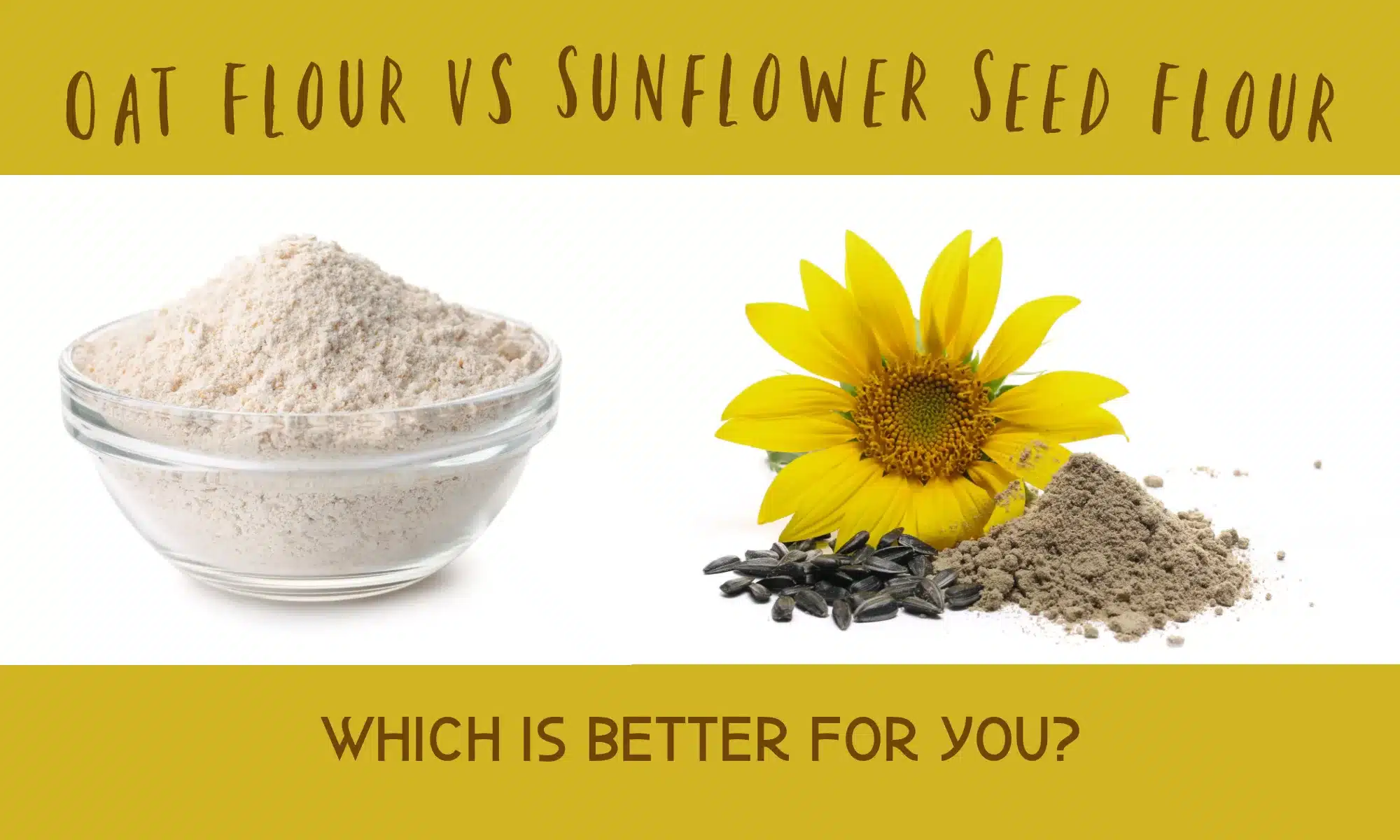
Differences between oat flour and sunflower seed flour
While oat flour is a popular gluten-free flour, sunflower seed flour steals the show for being gluten-free, keto-friendly, and paleo-friendly—accommodating a bunch of different diets. Both are common-allergen-free.
If you’re subbing all-purpose flour for either of these flours, you can use a 1:1 substitute, but there are some things to keep in mind. If you’re substituting oat flour by cup instead of weight, you’ll need to use 1 ⅓ cup for every cup of all-purpose flour. And for sunflower seed flour, you’ll likely need to adjust your liquids and binders.
Note: Always choose certified gluten-free oat flour if you are gluten intolerant since some oats are processed on machinery that also handles gluten.
Baking with oat flour vs baking with sunflower seed flour
As mentioned, sunflower seed flour has similarities with almond flour. One of these is its overall delicate qualities. Because of this, it works perfectly in recipes that need a tender and light consistency, like cakes, cupcakes, and pastries. Its mild and nutty flavor adds a tad of richness to baked goods, and it pairs beautifully with ingredients like honey, cinnamon, pumpkin, and citrus flavors.
Oat flour is also generally quite subtle, letting other flavors shine through. It pairs best with ingredients like vanilla, chocolate, cinnamon, and fruits like apples and berries. Rather than add a lighter consistency. However, it’ll lend a slightly denser and chewier texture. Traditional cookie, muffin, pancake, and bread recipes love oat flour.
In terms of absorbency, oat flour has a high absorbency level, which is why batters and doughs can get dense and dry if you’re not careful. Sunflower seed flour has a moderate absorbency, making it relatively easy to work with.
Ingredients in oat flour vs sunflower seed flour
These two flours are as straightforward as it gets: oat flour is made from ground-up oats, and sunflower seed flour is made from ground-up roasted sunflower seeds!
Oat flour + sunflower seed flour nutritional facts
| Per ¼ cup serving | Oat flour | Sunflower seed flour |
| Calories | 120 | 180 |
| Carbs | 22 g | 6 g |
| Fiber | 3 g | 3 g |
| Sugar | 0 g | <1 g |
| Fat | 2 g | 16 g |
| Protein | 4 g | 6 g |
| Glycemic index score | 44 | Sunflower seeds = 35 |
Sunflower seed flour is a very low-carb (6g per ¼ cup) flour that is high in healthy unsaturated fats (16g). It’s also relatively high in protein (6g) and calories (180). Oat flour also offers a good dose of protein at 4g and just as much fiber as sunflower seed flour (3g each). Both flours are low on the glycemic index, making them suitable for those watching their blood sugar levels.
Oat flour vs sunflower seed flour storage
In the pantry, oat flour can maintain its quality for up to two months, while sunflower seed flour, it can typically maintain its quality for about six months in the fridge. Unfortunately, I don’t have any specific information on pantry storage for sunflower seed flour storage, but in almost all cases, refrigerating flour will help extend its shelf life.
Oat flour + sunflower seed flour alternatives
For a sunflower seed flour alternative, almond flour is the best all-around option for its texture, flavor, and dietary-friendly qualities. If you’re looking for lower calories and higher fiber, hemp flour is an excellent alternative. For oat flour, a blend of buckwheat flour and white rice flour is a wonderful choice to mimic the texture and flavor profile. But for keto or paleo diet options, coconut flour is your best bet.
Oat flour vs sunflower seed flour: Which is better?
So, which is better? Oat flour, to me, is synonymous with rustic, wholesome goods. I love using it in traditional recipes and pairing it with nuts and dried fruit. For sunflower seed flour, I pair its delicate nature with sweet ingredients like honey, maple syrup, and warm spices. Both flours add a little something extra to a plain recipe that you’ll want to try out!
Looking to get creative and experiment with more flours? Here’s our breakdown of 61 different flours.
FAQ
While sunflower seed flour has its own incredible properties, it doesn’t have the same binding properties as all-purpose flour. Sunflower seed flour can be used in combination with other flours, or you can adjust the binders and liquid ingredients for best results.
Both sunflower seed flour and almond flour are nut-based flours that are commonly used as substitutes for one another. This is because they both are gluten-free, paleo-friendly, and keto-friendly, and boast similar flavor and texture profiles.


Leave a Comment