
Salt is one of the five main flavors we can detect, and it tends to be one of the more preferred flavors along with sweet. Salt is commonly used in cooking, but with so many types of salt, is there one that is the “saltiest” for cooking?
Table salt tends to be the saltiest salt for cooking because it contains the most sodium compared to other types of salt.
We’ll compare the sodium content of several popular types of salt and explain more about how salt can taste more or less salty in this article!
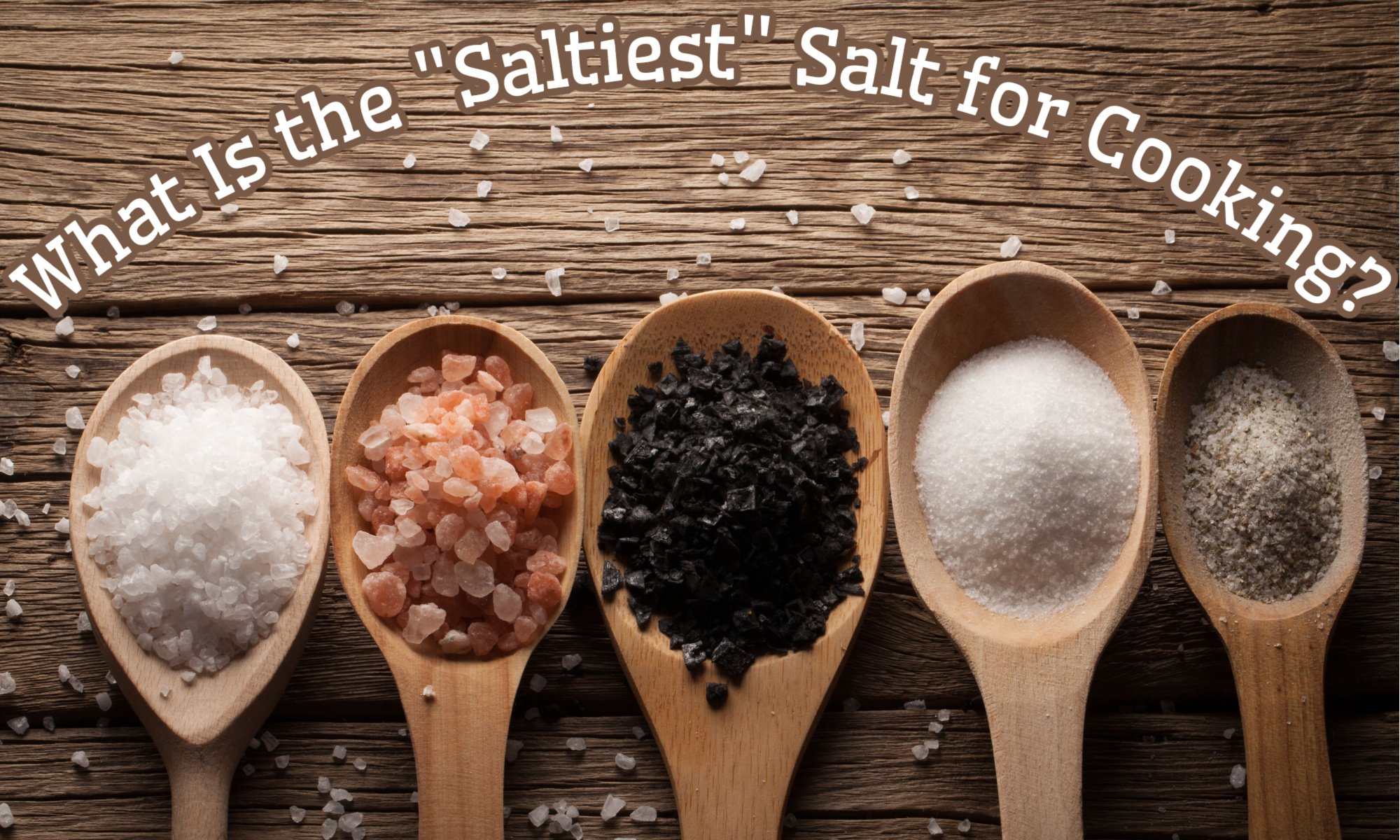
What is salt?
Salt is the most common flavor enhancer in cooking and gives the “salty” flavor we can detect (along with four other types of taste). Salt consists of sodium chloride, so “sodium” is a nutrient listed on nutrition facts labels.
There are many types of salt, with one of the most common types being “regular” table salt. Table salt is usually fortified with iodine, a nutrient that people can become deficient in if it’s not included in their diet. (Fun fact – salt was first fortified with iodine in 1924!)
Table salt is more refined than other types of salt, which means it contains fewer nutrients and minerals like calcium, magnesium, and others.
Other popular types of salt include Kosher salt, Himalayan (pink) salt, sea salt, and Celtic salt. These types of salt are less refined than table salt, so can be richer in trace minerals.
Sodium in different types of salt
One teaspoon of table salt (the most common type of salt) generally contains around 2,300 milligrams of sodium, which is 100% of the daily recommended amount of sodium.
We rounded up the sodium in different types of salt to compare, though – and as you’ll see, the amount of sodium varies depending on the type!
Why does the sodium content vary depending on the type of salt? The main factor is the size of the salt granules impacting how much sodium is in a teaspoon. For example, table salt is finely ground, whereas sea salt is coarser, so you can fit more of the finer ground salt granules (and more sodium) of table salt in a teaspoon compared to coarse sea salt.
| Brand | Amount of sodium per teaspoon | |
| Table salt | Morton | 2,360 milligrams |
| Sea salt (coarser grind) | Morton | 2,120 milligrams |
| Sea salt (fine grind) | Morton | 2,240 milligrams |
| Celtic salt | Selina Naturally | 1,920 milligrams |
| Himalayan (pink) salt (fine grind) | Morton | 2,120 milligrams |
| Kosher salt (coarse) | Morton | 1,920 milligrams |
What is the saltiest salt?
As you can see, table salt has the most sodium per serving, so it’s generally considered the saltiest salt for cooking. Kosher salt and other types of less-refined salt (Himalayan, sea salt, Celtic salt) have larger granules and are less dense than table salt, so they contain less sodium for the same serving size.
Is MSG saltier than salt?
Monosodium glutamate (MSG) is a flavor enhancer used in savory snacks like fast food, salty snacks like chips, instant soup flavoring packets, and more. It brings both salty and an umami flavor, and it’s often compared to salt.
Monosodium glutamate contains sodium (hence the ‘sodium’ in the name) but it actually is lower in sodium than regular salt. MSG contains around ⅓ the amount of sodium as regular salt. That means that MSG isn’t as salty as salt, but it has a more savory flavor because of its glutamate content.
Why is too much salt not good for your health?
Healthcare providers often recommend low-sodium diets for some of their patients. What’s the deal with salt and your health?
Eating salt causes your body to hold on to (retain) more fluid to balance out the sodium in your body. Fluid retention can worsen certain health conditions, most notably high blood pressure (hypertension), kidney problems, and heart failure.
It’s recommended to limit your sodium intake to less than 2,300 milligrams per day (yet the average American consumes 3,400 milligrams per day. If you’re told to follow a low-sodium diet, that usually means 2,000 milligrams or less per day.
What can I use instead of salt in cooking?
If you’ve been told to limit your salt (sodium) intake, what else can you use instead of salt? There are a few options, including:
- Salt substitutes (consist of potassium chloride, which tastes salty but doesn’t contain sodium)
- Herbs and spices
- No-salt seasoning blends (usually consist of a blend of herbs and spices and sometimes potassium chloride)
FAQs:
Iodized (table) salt usually contains more sodium in a serving compared to sea salt. One of the reasons is because of the size of the granules – sea salt has larger granules, so you can fit fewer granules in a teaspoon than you can table salt (there is lost space from the air surrounding the granules since they can’t fit as tightly together).
Kosher salt is considered less salty than sea salt because it contains less sodium than both coarse and finely ground sea salt. One teaspoon of fine sea salt contains 2,240 milligrams of sodium (the part of salt that makes it salty) while one teaspoon of kosher salt contains 1,920 milligrams of sodium.
Also called “French sea salt”, Celtic salt is harvested in the ocean near the coasts of France and Spain. It has a light gray color because of the clay lining the salt beds from where they are harvested.


Leave a Comment