
We have all been there. Making dough for something, and it isn’t coming together, so you throw in a bit more water, only to have it turn into a sticky mess. Such a delicate balance, and that’s just with standard all-purpose flour! When you start baking with alternative or gluten-free flour, it can be even more of a mystery, and you might find that your liquid-to-dry product ratios are all off again.
So why do different flours have different rates of absorption?
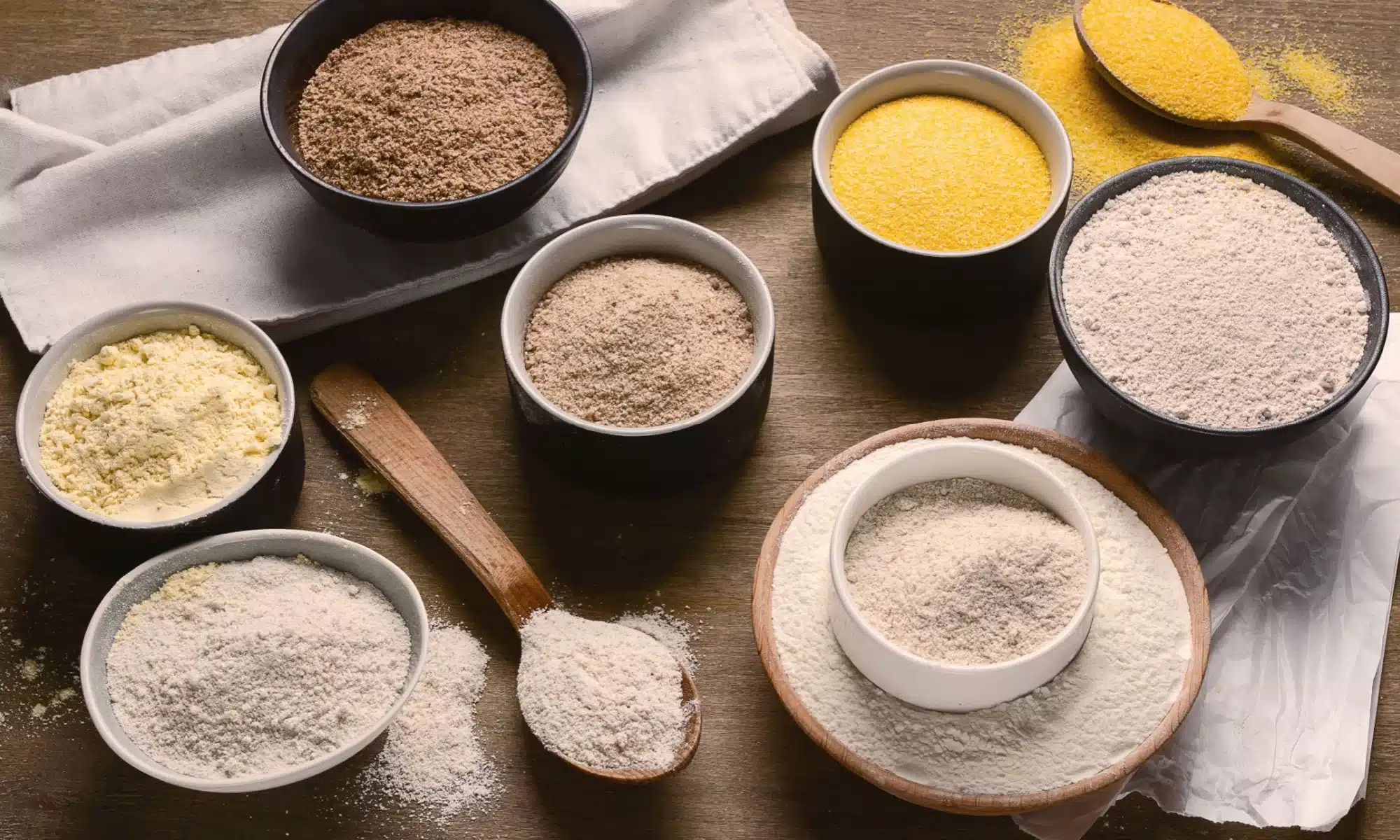
Why Do Flours Differ In Absorption Value?
Let’s look at all-purpose flour as an example. It contains starch, protein, fat, and minerals (known as ash) that have a lot of something called pentosans.
When looking at how much liquid an all-purpose flour will absorb:
- The higher the water content the flour granules already have, the less water they will be able to absorb.
- The higher the mineral ash and pentosans, the more it will absorb (pentosans can absorb up to 15x their weight in water, and as they are found in the bran, they are higher in whole wheat flour, which makes it more absorbent than all-purpose)
- The higher the protein/gluten content, the more water it will absorb.
- The higher the presence of damaged starch, the more liquid it will absorb. Undamaged starch can absorb 0.3x its weight in water, and damaged starch can absorb 3x its weight in water. Damaged starch also grabs hold of water first, causing it to be absorbed quickly, whereas protein grabs onto water a bit slower.
So, if we take this as a base for our understanding of absorption, flours across the board will differ in absorption because they are all made up of different things that react with liquids in different ways.
Some gluten-free flours might be super low in protein but high in damaged starch, absorbing more liquid than a flour containing gluten but not much damaged starch. Some flours will be super duper dry, retaining almost no moisture, and soak up lots more liquid than all-purpose flour. Some flours won’t have pentosans, but they will have other minerals or compounds that could absorb a lot of water.
The most frustrating thing? There is not much information available online about the liquid absorption ratios of alternative flours, so it’s usually a bunch of trial and error in the kitchen to get it right. Did I mention liquid absorption also can vary by brand too? Such a mystery, so we have made life easier for you with our comprehensive flour guide!
But Wait! It’s Not Just The Flour Absorbtion Capacity That Matters.
So now we have a better idea of why different flours can absorb different amounts of liquid, but we also need to factor in other things that affect flour absorption. They include:
- What the liquid is. Water might absorb more easily than buttermilk, for example.
- The temperature of the liquid – warmer things absorb faster than colder things.
- The mineral content of the water – Water with a higher mineral content takes longer to absorb.
- Agitation – the level of mixing increases absorption.
- Time – Some components in flour take longer to absorb liquids than others, and you may need to let it rest for 30 minutes for the liquid to absorb properly.
- Hydrophobic ingredients, like waxes and oils, will repel water and reduce absorption.
Different Types of Flours and Their Liquid Absorption Ranges
Because of all the factors discussed that affect a flour’s ability to absorb liquid, we cannot give super precise values for this question.
Using all-purpose flour as a pretty stable base example flour, we rate its ability to absorb liquid as ‘medium.’ Anything in the low column means it absorbs less liquid than all-purpose flour, so less liquid will need to be used when baking with it, and the ‘high’ column means it absorbs more liquid, and you’ll need either less of the flour in the recipe or more liquid to accommodate.
| Low | Low Medium | Medium | Medium High | High |
| -Brown rice flour -Spelt flour -Sprouted flour -Tigernut flour | -Cashew flour -Einkorn flour -Sorghum flour | -All Purpose flour -Almond flour -Amaranth flour -Bulgur flour -Corn flour -Cricket flour -Durum flour -Millet flour -Mung bean flour -Pasta flour -Pastry flour -Pecan flour -Self-rising flour -Semolina flour -Sunflower seed flour -Tipo 00 flour -Whole wheat pastry flour | -Barley flour -Bread flour -Buckwheat flour -Cake flour -Chapati flour -Chickpea flour -Dal flour -Gluten-free flour -Graham flour -Wondra flour -Kamut flour -Red whole wheat flour -White rice flour -Rye flour -White whole wheat flour -Whole wheat flour | -Apple flour -Arrowroot flour -Banana flour -Cassava flour –Coconut flour -Fava bean flour -Flaxseed meal -Hemp flour -Lupin flour -Oat flour -Okara flour -Peanut flour -Potato flour -Quinoa flour -Sesame flour -Soy flour -Tapioca flour -Teff flour -Vital wheat gluten |
FAQs
Vital wheat gluten is the most absorbent flour that I know of, as it is pretty much pure gluten. It isn’t used as a stand-alone flour but mixed with other flour to increase the gluten content and change its baking properties.
It seems like it, but I actually think it absorbs the same amount; it just does so much faster than a more coarse grind of the same variety, as the finer grind will have a larger surface area.
Probably temperature. My secret trick when making a chocolate cake is adding a cup of boiling hot water to the batter. It absorbs instantly because of the high temperature, making the batter smooth and silky without overmixing, creating a fluffier, airier cake. I don’t know if it will work for every kind of recipe, though, so let me know in the comments if you do this with any of yours!


Leave a Comment