
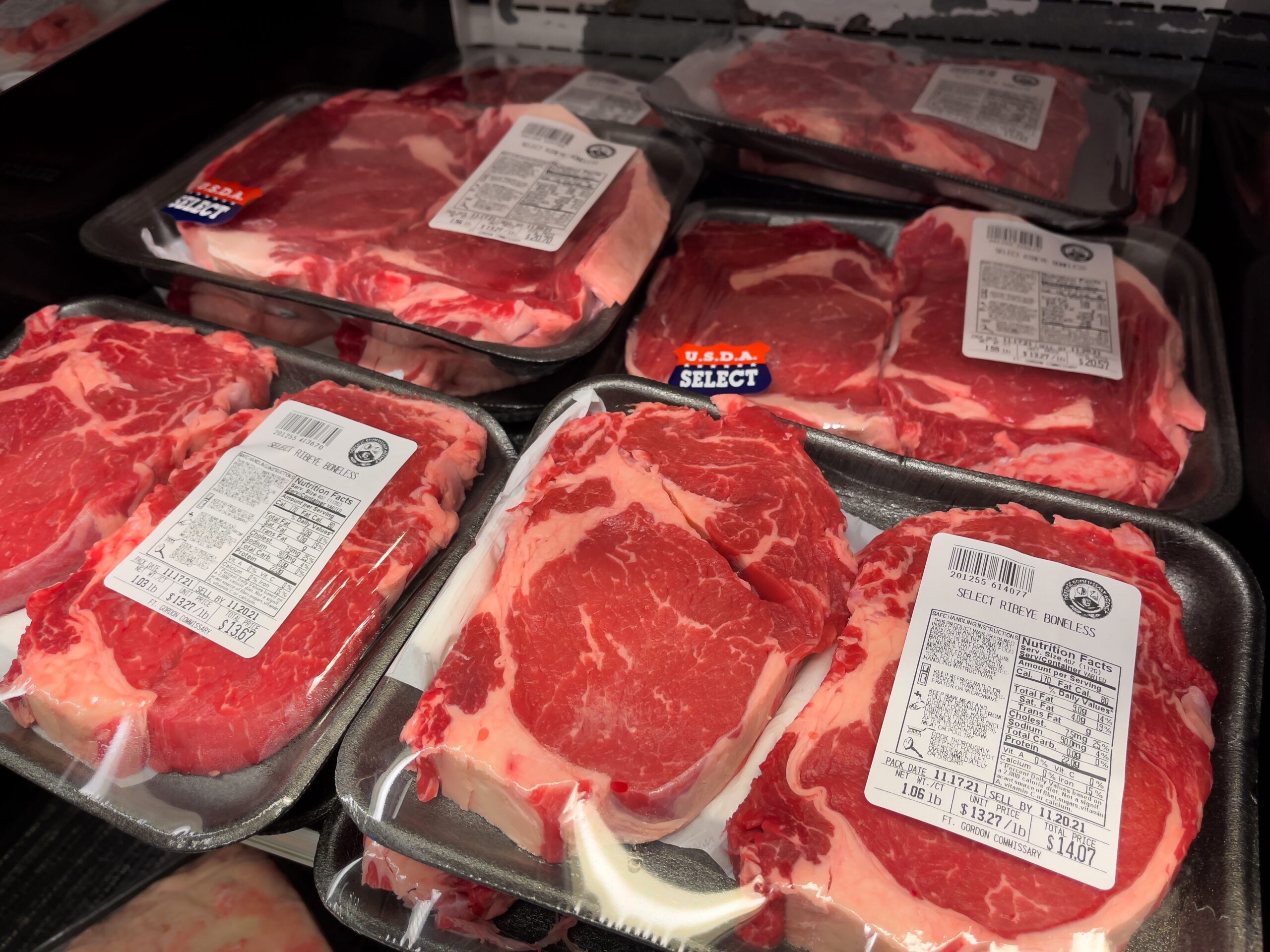
Beef prices in the United States remain near record levels heading into 2026, following several years of steady increases at grocery stores and restaurants. According to federal price data, average retail beef prices rose again in 2025, leaving consumers paying significantly more than just a few years ago.
Common cuts such as ground beef, chuck, and steak continue to reflect the strain of limited supply and higher production costs across the industry.
Year-over-year price increases show persistent inflation
Ground beef prices offer a clear example of the trend. In 2024, average retail prices hovered around $5.30 per pound. By late 2025, that figure had climbed to roughly $6.00 per pound, representing a year-over-year increase of about 12-15%.
Steak and other premium cuts saw similar movement. Sirloin and ribeye prices rose by roughly 8-12% compared with the previous year, with many grocery stores listing prices above $11 per pound.
Supply constraints continue to drive prices
The primary driver behind rising beef prices is a historically small U.S. cattle herd. Years of drought forced ranchers to reduce herd sizes, pushing cattle inventories to their lowest levels in decades. Rebuilding herds takes time, limiting how quickly supply can recover.
Higher feed, labor, transportation, and processing costs have also added pressure, pushing prices higher throughout the supply chain. (We’ve seen major meatpackers closing down plants across the country as a result.)
What the outlook looks like for consumers
Economists expect beef prices to remain elevated through 2026. While modest herd rebuilding may begin, supply growth is unlikely to be strong enough to meaningfully lower prices in the near term, especially as demand for beef is high.
As a result, beef is expected to remain one of the most expensive protein options for both households and restaurants.
Links on this page may be affiliate links, for which the site earns a small commission, but the price for you is the same


Leave a Comment