
Beef tallow is a robust and beefy solid, oozing with flavor and ideal for comfort food, while grapeseed oil is a silky liquid with a neutral flavor profile. With such varied personalities in the kitchen, what are these two oils and fats best for? Ready to find out? Read on!
Comparing beef tallow vs grapeseed oil
| Beef tallow | Grapeseed oil | |
| Solid or liquid? | Solid | Liquid |
| Smoke point (Fahrenheit) | 400 degrees | 420 degrees |
| Primary fat | Saturated | Polyunsaturated |
| Taste | Beefy | Neutral |
| Good for cooking… | Raw, low heat, medium heat | Raw, low heat, medium heat, high heat |
| Common allergens | Mammalian meat allergy (MMA) | Grapes, grape seeds |
| Gluten-free? | Yes | Yes |
| Keto? | Yes | Yes |
| Paleo? | Yes | No |
| Vegan? | No | Yes |
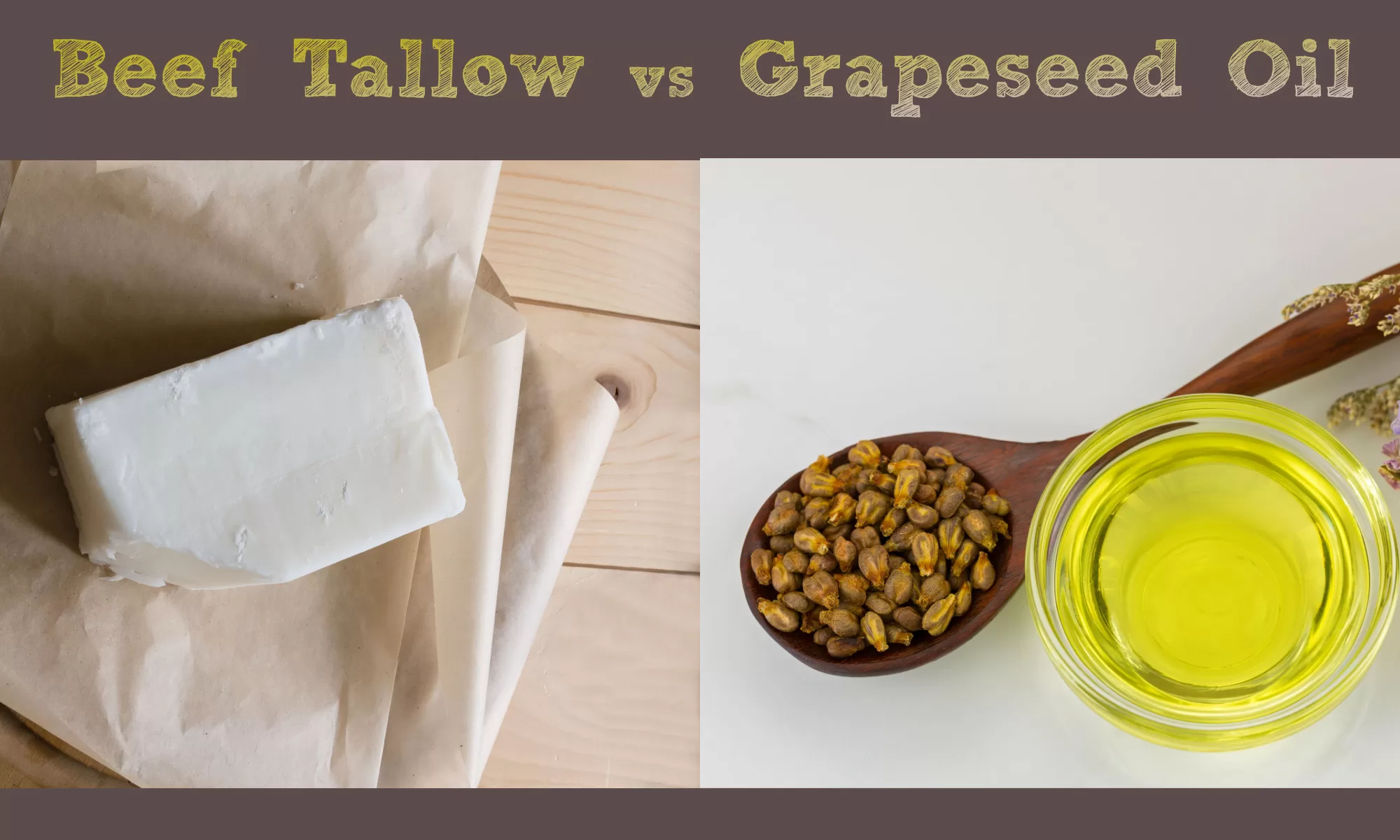
Differences between beef tallow and grapeseed oil
Beef tallow and grapeseed oil couldn’t be more different when it comes to their consistency and flavor. Beef tallow is rendered animal fat that has a rich, meaty flavor, making it ideal for adding a savory layer to dishes. Meanwhile, grapeseed oil is a silky, neutral-flavored oil that comes from grape seeds and brings out the natural flavor of a dish’s ingredients. Essentially, one is a flavor enhancer, while the other is a blank canvas.
Grapeseed oil and beef tallow are gluten-free and keto-friendly, but only grapeseed oil is vegan, and only beef tallow is paleo.
Baking and cooking with beef tallow vs grapeseed oil
Whether you choose to bake or cook with beef tallow and grapeseed oil, you can look forward to a unique experience. Beef tallow can transform ordinary dishes with its delicious umami flavor – it could be roasted vegetables, seared steaks, enhancing aromatics, or baking savory pies – but don’t think about using it in anything sweet! Its rich and meaty quality is incredible when it comes to making savory, flaky pastries. Just be careful when it comes to high-heat applications, as beef tallow has a medium smoke point.
Rather than add flavor and texture, grapeseed oil serves a different purpose. It acts as a more versatile option for all sorts of cooking, whether it’s stir-frying, sautéing, or using it raw in dressings. As its neutral flavor profile doesn’t overpower other ingredients, it’s an excellent choice for delicate dishes like seafood or fresh stir-fries with many ingredients. It also has incredible emulsifying properties, which means you can bake moist and tender cakes and cookies.
Can beef tallow and grapeseed oil be substituted for each other?
As we’ve established, beef tallow and grapeseed oil are like yin and yang. They aren’t the best substitutes for each other, given beef tallow’s solid texture and strong, distinctive flavor and grapeseed oil’s mild taste and liquid form.
If you’re looking for a better substitute for grapeseed oil, cottonseed oil will provide that neutral flavor and similar smoke point, while solid lard will be the best sub for beef tallow. If you’re looking for a substitute for beef tallow in raw cooking, macadamia oil has a buttery quality which makes it a great pick.
Nutrition: Beef tallow vs grapeseed oil
Continuing on with the differences, beef tallow and grapeseed oil have completely different fats as their primary fat. Grapeseed oil is very high in polyunsaturated fats, and beef tallow is highest in saturated fat. While polyunsaturated fats have been linked to positive health outcomes, such as lower bad cholesterol and better heart health, saturated fats have been linked to poor health outcomes if consumed in excess.
However, the good news is that beef tallow is high in fat-soluble vitamins A, D, E, K2, and more, which are all important for the body! On the other hand, grapeseed oil isn’t particularly high in any vitamins apart from vitamin E and omega-6 fatty acids.
As a rule of thumb, use all cooking oils and fats in moderation.
| Per tablespoon (15mL) | Beef tallow | Grapeseed oil |
| Calories | 115 | 120 |
| Polyunsaturated | 0.5 g | 9.5 g |
| Monounsaturated | 5.4 g | 2.2 g |
| Saturated | 6.4 g | 1.3 g |
| Trans | 0 g | 0 g |
| Total fat | 12.8 g | 13.6 g |
| Cholesterol | 14 mg | 0 mg |
The primary fat source is bolded.
How to store beef tallow and grapeseed oil
With beef tallow of varying qualities, better quality ones will last longer overall. Regardless, you’ll want to make sure you store it in a glass or stainless steel airtight container in the fridge for best results. It’s possible to leave the container out on the counter if you live in a colder climate or even freeze it if you aren’t going to use it very often. Sealed and opened beef tallow can last a year in the pantry in the right conditions and 2+ years in the freezer.
Grapeseed oil should be stored in a cool, dark place away from light and heat sources – ideally in the fridge if you live in a hot or humid climate. Unopened grapeseed oil can last for up to 1 – 2 years from its production date, and opened bottles can last 3 – 6 months or 12 months in the fridge.
Beef tallow vs grapeseed oil: What’s the verdict?
The verdict is more of a matter of when and where to use each one. I’ve found that beef tallow is more of a specialty fat when you’re looking to enhance hearty dishes like beefy stew, roasted potatoes, crispy fried chicken, and steaks, for example, while grapeseed oil is a go-to for lighter, more delicate recipes. Their distinct profiles make them so different that it’ll be easy to know when to use each one in the kitchen!
FAQ
Beef tallow can be better in situations where you want to add a very rich, savory, beefy flavor profile that no seed oil can provide. Seed oils are typically enjoyed for their versatility, but they won’t be able to replicate that hearty essence that beef tallow has to create golden crusts and infuse a fatty quality.
While grapeseed oil has much to offer, such as its high smoke point and neutral flavor, some oils offer advantages that might make them better choices for what you’re making. For example, avocado oil has an even higher smoke point (100 degrees higher!), which makes it more stable at extremely high temperatures, while sesame oil has a very rich, nutty flavor that is exceptional in Asian cuisine.




Leave a Comment