
Have you ever wondered what’s inside vegan chicken or meat (also known as seitan)? Well, it’s made of vital wheat gluten flour. Although not strictly a flour, vital wheat gluten is made up of nearly all gluten, giving it a stringy, elastic texture that resembles meat. This impressive flour is very high in protein and can be added to dough to give it more volume.
Coconut flour, on the other hand, is completely gluten-free! It’s made from dried, ground coconut meat, adding a subtle sweetness to baked goods.
So which one is better for baking? Let’s dig into the details and find out which one will be your new go-to baking ingredient!
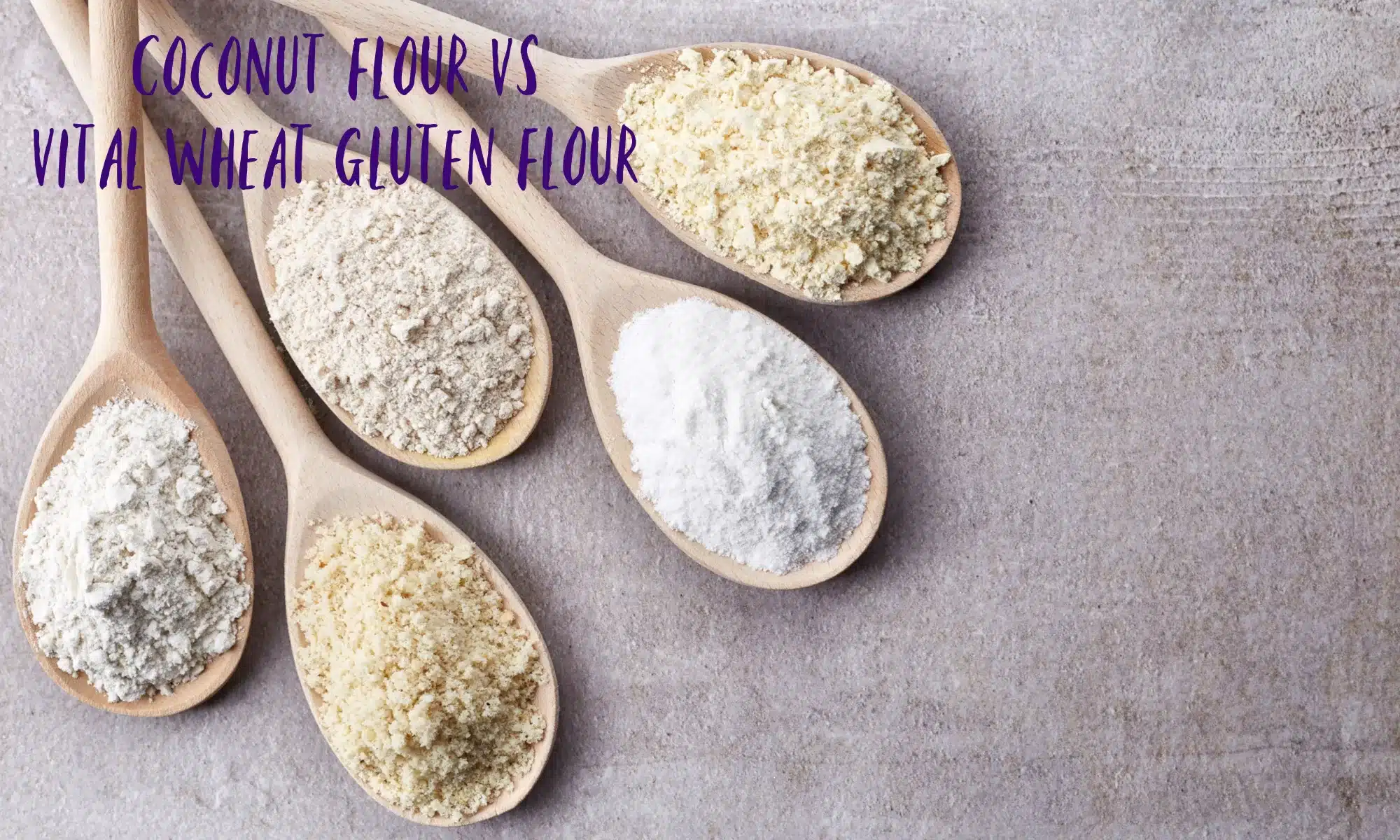
Comparing coconut flour vs vital wheat gluten flour
| Coconut flour | Vital wheat gluten flour | All-purpose flour | |
| Substitution ratio | 1:4 | 1 tablespoon* | N/A |
| Gluten-free? | Yes | No | No |
| Keto-friendly? | Somewhat | Yes | No |
| Paleo-friendly? | Yes | No | No |
| Common Allergens | Coconut (tree nuts) | Wheat, gluten | Wheat, gluten |
| Liquid absorbency | High | High | Medium |
| Pantry shelf life (unopened/sealed) | Up to 2 years | 6-12 months (7-10 years if unopened) | 6-8 months |
| Best for baking | Most desserts – especially cakes, cookies, and pie crusts, muffins, and dense breads. | Light breads, pasta, pizza dough, and vegan and vegetarian dishes with a meat-like texture such as seitan | Non-yeast recipes (think cookies, biscuits, and some breads) |
*Since vital wheat gluten flour isn’t really flour, you cannot use vital wheat flour in place of regular flour for baking. Instead, use about 1 tablespoon for every 2-3 cups of flour to improve the texture of dough.
As you can see, both vital wheat gluten flour and coconut flour are considered Keto-friendly. (Coconut flour has a lot more carbs than vital wheat gluten flour, but many of those carbs come from flour, so the net carb count is actually quite low – although vital wheat gluten flour’s is even lower. But more on that later.)
In terms of other diets, that’s where the similarities mostly end – coconut flour is a great paleo flour, while vital wheat gluten flour is not. Coconut flour is gluten-free, while vital wheat gluten flour is (obviously) not – it’s in the name!
And of course, when it comes to allergens – coconut flour has coconuts (which are a type of tree nut for allergen purposes – but even if you’re allergic to other tree nuts, unless you know that you’re specifically allergic to coconut, it’s worth talking to your allergist about whether you could incorporate coconut flour), while vital wheat gluten flour has wheat (and, of course, gluten).
Differences between coconut flour and vital wheat gluten flour
The biggest difference between coconut flour and vital wheat gluten flour is that coconut flour is gluten-free, whereas vital wheat gluten flour is pretty much all gluten. Vital wheat gluten flour is made from the highest-protein part of regular wheat, which helps add structure and an elastic texture to dough. (Because of this, it won’t surprise you that it’s one of the highest-gluten flours out there.)
Vital wheat gluten is usually combined with other types of flour in recipes, but you can also use it alone to make a vegetarian meat substitute known as seitan. It can also act as a binder when making meatloaf, meatballs, or veggie burgers.
You don’t need to combine coconut flour with any other flours in recipes, but you may need to add an extra egg or xanthan gum to make up for the lack of gluten.
Baking with coconut flour vs vital wheat gluten flour
In terms of baking performance, both are pretty very absorbent ingredients, so a little goes a long way! Coconut flour adds a subtle sweetness to baked goods and its soft texture is ideal for making cakes, muffins, and other sweet treats. There’s a few tips and tricks you should know when baking with coconut flour!
Vital wheat gluten flour gives baked goods a soft yet chewy texture with improved elasticity, making it easier to shape and roll out, so it’s best reserved for breads, pizza doughs, and pasta dishes.
Adding a small amount of vital wheat gluten flour to yeast bread recipes can drastically improve the texture and elasticity of the dough. Its high protein content helps the dough retain gas and steam from baking, allowing the dough to rise and giving more volume to the baked bread.
Ingredients in coconut flour vs vital wheat gluten flour
High-quality coconut flour will be made of 100% organic coconut and it contains tree nuts. Always check labels to ensure the product is produced in a facility that does not handle gluten products to guarantee it is gluten-free. I can save you some time; we’ve already found the best coconut flour brands you can buy.
The only ingredient in vital wheat gluten flour should be ‘vital wheat gluten’, and it contains wheat.
Coconut flour + vital wheat gluten flour nutritional facts
| Per 1/4 cup serving | Coconut flour | Vital wheat gluten flour | All-purpose flour |
| Calories | 120 | 120 | 110 |
| Carbs | 18 g | 4 g | 23 g |
| Fiber | 10 g | 0 g | 1 g |
| Fat | 3 g | 1 g | 0 g |
| Protein | 6 g | 23 g | 4 g |
| Glycemic index score | 45 | 64 | 85 |
Coconut flour is an excellent source of dietary fiber, which helps promote digestion and gut health. In addition, it contains healthy fats and proteins, but it’s no match for vital wheat gluten flour, which has a higher protein content than any other type of flour at 23 g per 1/4 cup!
Because of their relative nutrient density (coconut flour with the healthy fats and lots of fiber, vital wheat gluten flour with tons of protein), but are considered great flours for vegan baking – because they contain many of the nutrients many vegans in particular will need since they’re cutting all animal products out of their diets.
Because of its high levels of protein and very little starch, vital wheat gluten flour ranks #1 on flours with the lowest carbs.
Coconut flour vs vital wheat gluten flour storage
If stored properly, coconut flour will stay fresh for up to 2 years under ideal conditions (in a cool, dry place) and vital wheat gluten flour will last up to 1 year. But unopened, vital wheat gluten flour can last anywhere from 7-10 years! However, for the best performance, I’m guessing you probably shouldn’t wait that long to use it.
Coconut flour vs vital wheat gluten flour: The best bake
Both vital wheat gluten and coconut flour have their own unique strengths and weaknesses, so the better flour depends on what you’re baking.
Vital wheat gluten flour is an excellent addition to sweet or savory baking due to its high-protein that’s perfect for making breads and other doughs like pizza, pretzels, and bagels. But for a stand-alone gluten-free flour, I’m leaning towards coconut flour for its subtle sweetness that’s ideal for baking sweet treats such as cakes, muffins, and cookies!
FAQ
Coconut flour cannot be used as a direct replacement for vital wheat gluten since it lacks binding or leavening properties that give structure to baked goods. When baking with coconut flour you will need to add additional ingredients like eggs, psyllium husk powder or xanthan gum in order to successfully replace the structural ability of vital wheat gluten.
Yes, but you will need more eggs or other binders to achieve the same result. Additionally, a larger amount of baking powder may be needed to achieve the desired texture and rise. For best results, use recipes specifically crafted for coconut flour, as these will take into account all of its unique characteristics.
Vital wheat gluten can be replaced with xanthan gum, protein powder, whey powder, or guar gum.





Leave a Comment