
You’ve probably seen both corn syrup and high-fructose corn syrup in the ingredient list of a food or drink before. What are the differences between these two ingredients, and are there any benefits of using one vs. the other?
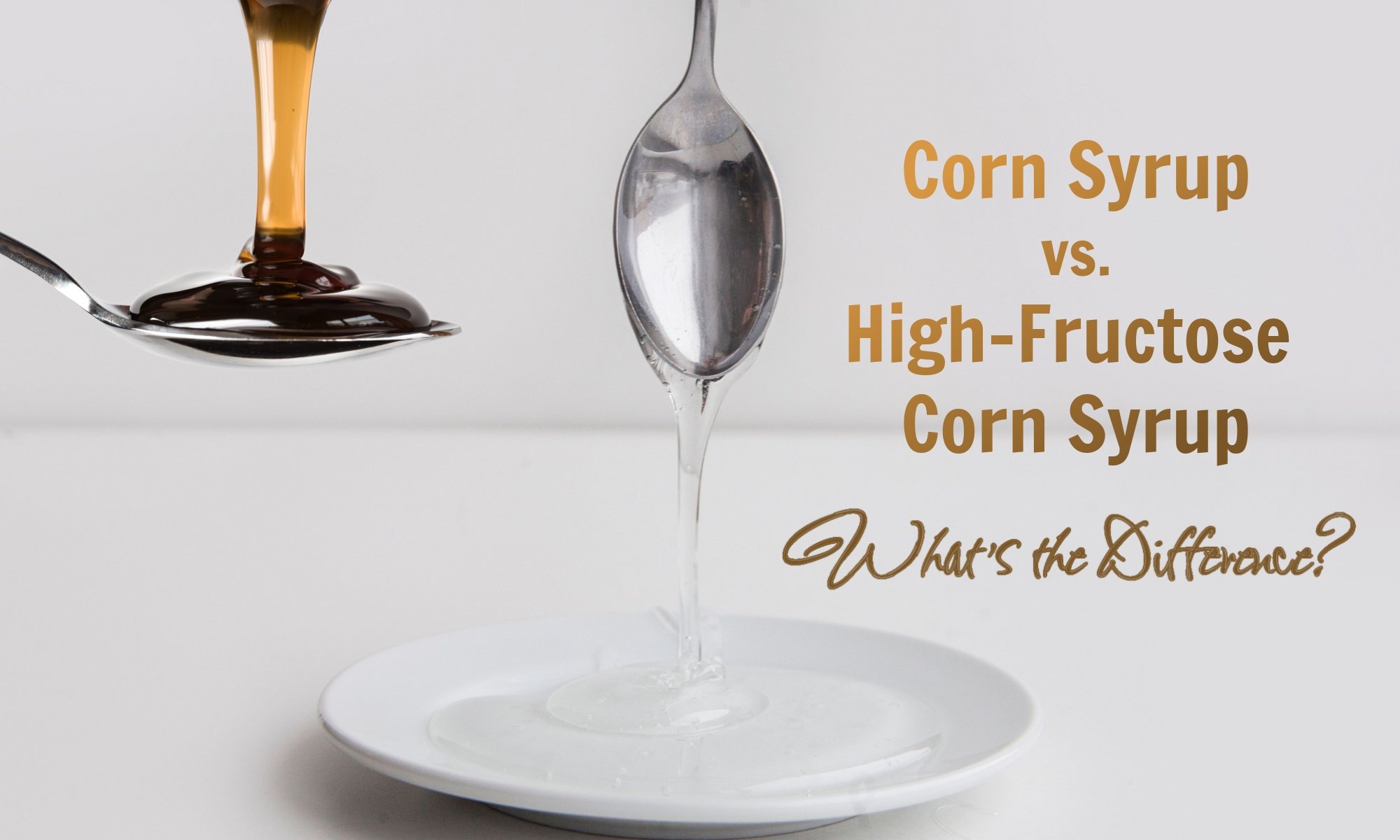
Both corn syrup and high-fructose corn syrup are refined sweeteners made from corn, but the main difference is that high-fructose corn syrup undergoes an enzymatic process that converts a significant portion of the glucose molecules into fructose, while corn syrup is mainly glucose.
If this sounds Greek to you (what the heck is glucose, anyway?), then never fear – we’ll explain more about these sugars, what they taste like in comparison to “regular” sugar (aka table sugar), and how they impact your health!
What is corn syrup?
Corn syrup is a processed sweetener made from cornstarch. To make corn syrup, cornstarch undergoes enzymatic processes which convert the starch to sugars, mainly glucose molecules. Glucose is a monosaccharide, a simple sugar – the same type of sugar that is in your bloodstream (called blood sugar or blood glucose).
You can buy corn syrup at the grocery store in light or dark varieties for home baking. Light corn syrup has a lighter, more vanilla-like flavor while dark corn syrup has a more robust flavor because it has molasses.
Outside of home baking, corn syrup is widely used in processed foods instead of regular sugar. Some of the reasons corn syrup is used instead of regular table sugar are:
- Cost: corn is a subsidized crop in the United States, so it’s cheaper to use corn syrup as a food manufacturer.
- Ease of use: corn syrup’s syrupy texture means that it easily mixes into liquid and solid foods, while table sugar needs to be dissolved to prevent a gritty texture.
- Stability: corn syrup has more liquid than table sugar, so it can prolong the shelf life of processed foods and help retain moisture.
What is high-fructose corn syrup?
High-fructose corn syrup starts as regular corn syrup as we just described. The difference between corn syrup and high-fructose corn syrup (HFCS) is that a large amount of the glucose molecules in corn syrup are converted to fructose.
Why mess with glucose and turn it into fructose? Good question! To make high-fructose corn syrup taste a bit more like table sugar (the most common type of sweetener in most people’s pantries), some of the glucose molecules are converted to fructose to make the structure more similar to the type of sugar molecules in table sugar – sucrose! (Sucrose is a disaccharide, which means it’s a sugar consisting of two different molecules – in this case, glucose + fructose.)
Just how much fructose does high-fructose corn syrup have? According to the United States Food and Drug Administration, HFCS contains either 42% or 55% fructose, whereas regular corn syrup is essentially 100% glucose
First off, as a home baker, you won’t have the option to use HFCS as it’s only available for commercial food and beverage manufacturers. So why do food manufacturers opt to use high-fructose corn syrup over regular corn syrup? Some of the potential reasons are:
- Taste: the higher fructose content makes high-fructose corn syrup more similar to the sweetness of sucrose, while corn syrup isn’t as sweet as table sugar in equal amounts.
- Cost: like corn syrup, HFCS is cheaper than other types of sugar, which is a major benefit for some food and beverage manufacturers.
- Texture/ease of use: like corn syrup, high-fructose corn syrup helps promote shelf stability and retain moisture – plus it’s easy to use in its viscous form!
Which one is better for you – corn syrup vs. high-fructose corn syrup?
First off, we need to stress that neither corn syrup nor high-fructose corn syrup is considered “good” for you. Why? Both types of corn syrups are refined sweeteners that are added to foods and drinks, and consistently getting too much of these added sugars can be detrimental to your health.
However, if you HAD to classify one as “better” than the other in terms of your health, it can be argued that corn syrup would be a better option over high-fructose corn syrup. The reason is that corn syrup is easily absorbed and digested because it’s essentially pure glucose, the same type of sugar in your bloodstream.
Fructose, on the other hand, has to be metabolized by your liver. That means that if you have liver problems, it can be taxing to your liver to consume high-fructose corn syrup compared to corn syrup.
Also, when large amounts of fructose hit your liver, some of the extra sugar can be stored as fat, which leads to an increasingly common condition called non-alcoholic fatty liver disease. Harvard University estimates that around 40% of American adults have some form of fatty liver disease, which can lead to more serious issues like liver scarring, liver disease, and even liver cancer.
Corn syrup vs. high-fructose corn syrup: summary of differences
| Corn syrup | High-fructose corn syrup | |
| Consistency | Viscous liquid | Viscous liquid |
| Common uses | Home baking and food/beverage manufacturing | Food/beverage manufacturing |
| Cost | Cheaper than table sugar | Cheaper than table sugar |
| Taste | Slightly less sweet than regular sugar (fructose is sweeter than glucose, and corn syrup is only made of glucose) | Similar sweetness to regular sugar; some say it tastes slightly sweeter than table sugar |
| Health concerns | Large amounts can lead to health concerns | Large amounts can lead to health concerns; excess amounts can contribute to liver problems because of fructose metabolism in the liver |
FAQs:
Corn syrup and other refined sugars contribute to added sugar intake, which should be limited to 24-32 grams per day (according to the American Heart Association). For perspective, one 12-ounce can of cola contains 33 grams of added sugars, which exceeds the daily recommended amount.
Most sodas contain high-fructose corn syrup, a refined sweetener that is as sweet as regular table sugar but less expensive and more convenient to use in food and beverage manufacturing.




Leave a Comment