
Extracted from tiny, nutritious flaxseeds, flaxseed oil is often associated with gourmet, raw uses. Meanwhile, beef tallow is bold and savory, bringing the robust flavors of rendered beef fat to your dishes. Whether you’re curious about how different they are or want to incorporate one or both into your kitchen, read on!
Comparing flaxseed oil vs beef tallow
| Flaxseed oil | Beef tallow | |
| Solid or liquid? | Liquid | Solid |
| Smoke point (Fahrenheit) | 225 degrees | 400 degrees |
| Primary fat | Polyunsaturated | Saturated |
| Taste | Crisp, nutty | Beefy |
| Good for cooking… | Raw | Raw, low heat, medium heat |
| Common allergens | Flaxseed/Linseed | Mammalian meat allergy (MMA) |
| Gluten-free? | Yes | Yes |
| Keto? | Yes | Yes |
| Paleo? | Yes | Yes |
| Vegan? | Yes | No |
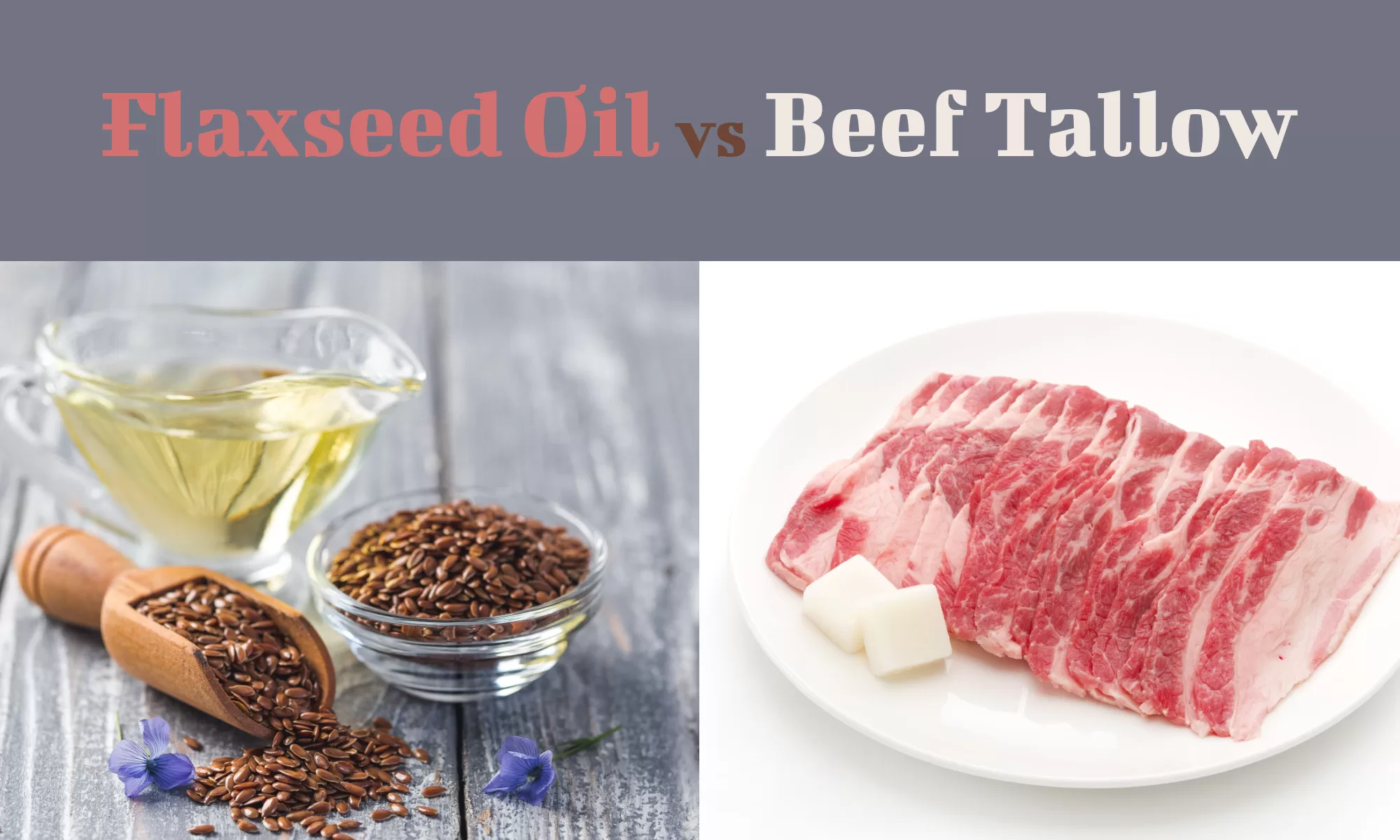
Differences between flaxseed oil and beef tallow
One look at flaxseed oil and beef tallow, and you’ll spot one of their biggest differences – their textures. Give them both a little taste, and you’re bound to experience their second big difference – their flavors. Flaxseed oil is a liquid oil pressed from dried flaxseeds, while beef tallow is a solid fat made from rendered beef. Beef tallow will have a robust, meaty taste, while flaxseed oil has a crisp and nutty flavor profile. And while they aren’t on opposite ends of the spectrum with their smoke points, flaxseed oil has a very low smoke point that makes it only suitable for raw cooking and beef tallow for anything up to medium-heat cooking.
When it comes to diet accommodation, both flaxseed oil and beef tallow are keto-friendly, paleo-friendly, and gluten-free. Meanwhile, only flaxseed oil is vegan-friendly.
Baking and cooking with flaxseed oil vs beef tallow
Flaxseed oil is delicate and has a low smoke point, which makes it only suitable for raw uses like drizzling over roasted veggies or banana bread or even adding it to smoothies for a boost in nutrition. It has a mild, clean, nutty flavor that can be a great addition to salad dressings or cooked grains but should be used in moderation, as some people report a fishy taste if too much is used.
With beef tallow, it’s all about the sizzle of the skillet and adding extra heartiness to things like succulent pork chops and crispy roast potatoes. It can also create a delicious crispy sear on chicken or a golden crust on french fries thanks to its solid nature at room temperature. Its intense savory flavor means it won’t be suitable for sweet dishes, but it can be used to make flaky pie crusts and pastries. It has the ability to create those all-important flavor pockets that are key in pastries.
Can flaxseed oil and beef tallow be substituted for each other?
It’s essentially impossible to substitute flaxseed oil and beef tallow. One is a liquid and the other is a solid. One can’t be used to cook with, while the other can’t be used raw. One has a nutty flavor, while the other has a strong meaty flavor.
If you’re looking for a substitute for flaxseed oil, chia seed oil has a similar high omega-3 fatty acid content and a crisp, nutty flavor. For something with a higher smoke point for heat cooking, choose regular olive oil for your cooking adventures. For beef tallow, lard will mimic its texture and properties best, although it won’t be as robust in terms of flavor.
Nutrition: Flaxseed oil vs beef tallow
Just like with their other qualities, comparing the nutritional profile of flaxseed oil and beef tallow is like comparing apples to oranges.
Flaxseed oil has a reputation for being healthy, being jam-packed with polyunsaturated fats such as anti-inflammatory omega-6 and omega-3 fatty acids. The oil is a plant-based powerhouse that is said to be able to reduce inflammation, improve skin health, and protect the body’s cells.
Beef tallow, on the other hand, is highest in saturated fats but has a significant amount of monounsaturated fats as well. It also contains fat-soluble vitamins such as A, D, and K, which are all important for the functioning of the body.
As a rule of thumb, use all cooking oils and fats in moderation.
| Per tablespoon (15mL) | Flaxseed oil | Beef tallow |
| Calories | 120 | 115 |
| Polyunsaturated | 9.2 g | 0.5 g |
| Monounsaturated | 2.5 g | 5.4 g |
| Saturated | 1.2 g | 6.4 g |
| Trans | trace | 0 g |
| Total fat | 13.6 g | 12.8 g |
| Cholesterol | 0 | 14 mg |
The primary fat source is bolded.
How to store flaxseed oil and beef tallow
Flaxseed oil oxidizes quickly, which is why it comes in a dark bottle, and it’s recommended to be stored in the fridge. Ultimately, it should be kept away from light and heat sources to make sure it stays fresh. Its shelf life is no surprise – very short – an unopened bottle can last for up to 6 months, while an opened bottle should be used up within 2 – 3 months.
The longest-lasting type of beef tallow is those with a lower water content. But regardless of what kind of beef tallow you have, it should be stored in an airtight glass or stainless steel container in the fridge. While you can store it in the pantry, the fridge will keep it fresh for as long as possible. In the fridge, both sealed and opened beef tallow can last 12 – 18 months, while it’ll last a year in the pantry and more than 2 years in the freezer.
Flaxseed oil vs beef tallow: What’s the verdict?
Choosing between flaxseed oil and beef tallow is a bit like choosing between two delicious cuisines – both are ultimately appealing, but the choice depends on the moment. Flaxseed oil is more appropriate for raw cooking, like salads, drizzles, and classic muffins, while beef tallow is more used for its textural qualities and to bring a burst of flavor to hearty dishes. As they can’t be comfortably substituted for one another, your personal verdict should be easy!
FAQ
If you’re considering using flaxseed oil, note that it might not be the best fit for you. Those with a history of digestive issues like irritable bowel syndrome might want to be careful with its high fiber content, as it could make certain symptoms worse. However, high-fiber foods are also said to be good for certain individuals with digestive issues, so it’s all about trial and error.
Beef tallow is full of saturated and monounsaturated fats, including oleic acid, which composes 47% of beef tallow itself. Along with oleic acid, there is also a blend of palmitic acid, stearic acid, and linoleic acid, which gives beef tallow its unique flavor profile.




Leave a Comment