
This kitchen battle is all about the modern vs the traditional and the earthy vs the hearty. Beef tallow is a timeless kitchen fat that promises a journey of robust, savory flavor, while hemp oil (not to be confused with CBD oil) is a green elixir that infuses dishes with an earthy, grassy flavor. With so much flavor and aroma between the two, one or both of them are sure to find a place in your kitchen. Ready to find out more? Let’s go!
Comparing hemp oil vs beef tallow
| Hemp oil | Beef tallow | |
| Solid or liquid? | Liquid | Solid |
| Smoke point (Fahrenheit) | 330 degrees | 400 degrees |
| Primary fat | Polyunsaturated | Saturated |
| Taste | Grassy | Beefy |
| Good for cooking… | Raw, low heat | Raw, low heat, medium heat |
| Common allergens | Hemp seed, cannabis | Mammalian meat allergy (MMA) |
| Gluten-free? | Yes | Yes |
| Keto? | Yes | Yes |
| Paleo? | Yes | Yes |
| Vegan? | Yes | No |
Differences between hemp oil and beef tallow
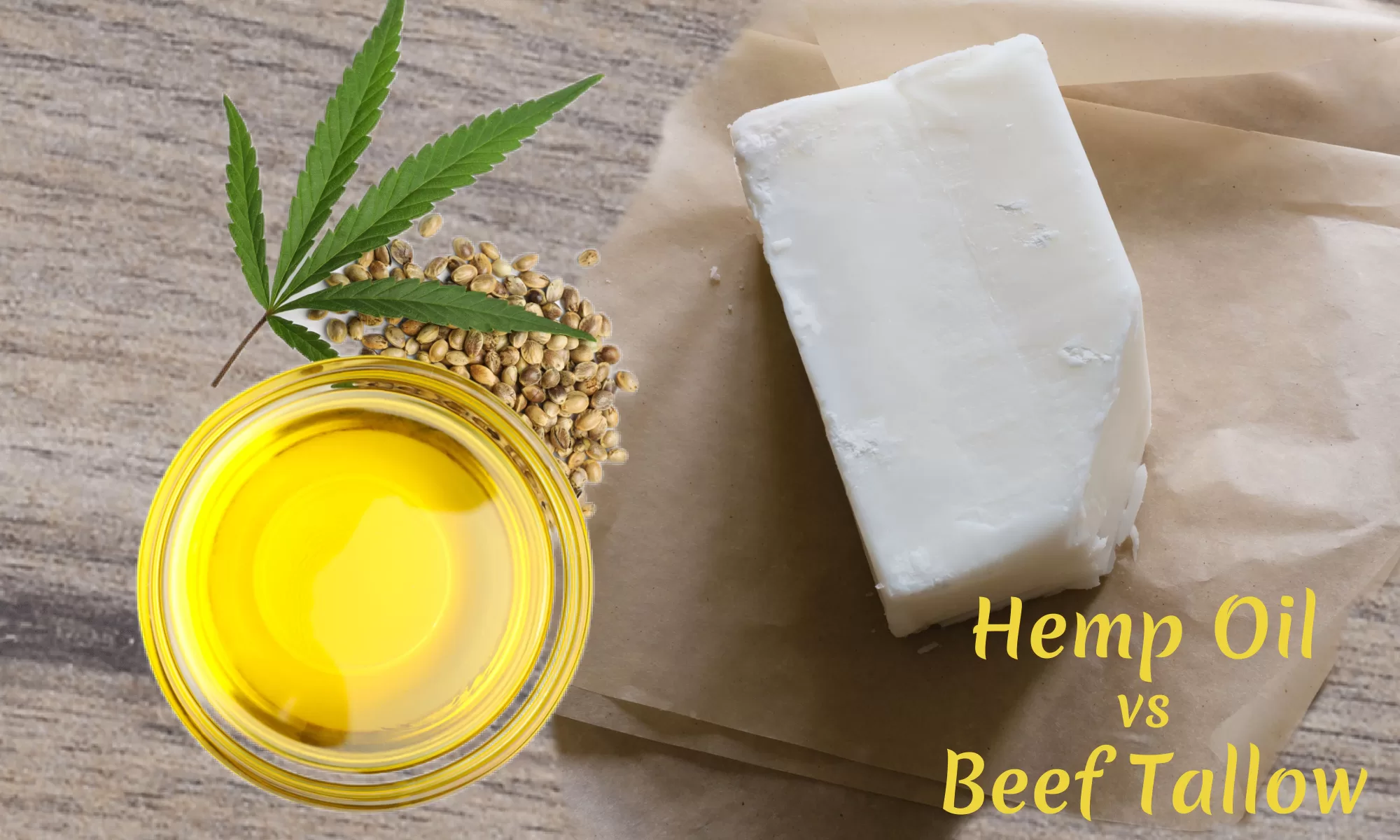
What isn’t different between hemp oil and beef tallow? From their textures and flavors to where they’re sourced from and their nutritional profile, they can’t be compared. Beef tallow is a solid fat rendered from beef and carries a powerful beefy and savory taste. Meanwhile, hemp oil is a green liquid oil that comes from the seeds of the hemp plant (the non-psychoactive part) and has an intense grassy, nutty flavor.
Both are gluten-free, keto-friendly, and paleo-friendly, but hemp oil is the only vegan option.
Baking and cooking with hemp oil vs beef tallow
Hemp oil has a low-moderate smoke point and a very intense flavor, which means it’s best used in raw or low-heat cooking in moderation. Especially if your recipe calls for a lot of oil, you’ll want to “water” the oil down with another neutral oil, as you won’t want the grassy and nutty flavor to overpower your dish. Much like flax oil, hemp oil is very sensitive and prone to oxidation. It lends itself particularly well as a finishing oil for soups and grains and can be added to salads, dips, and dressings. If you’re feeling adventurous, you can even use it as a substitute for olive oil in pesto!
On the other end of the spectrum, we have beef tallow – a solid fat with a meaty flavor that is so savory it can’t be used in sweet dishes. It’s an amazing choice for frying and making crispy delights like french fries and chicken, as well as rubbing over meats or roasting potatoes. The depth of flavor it provides is particularly ideal for hearty dishes and classic uses. While it might not be able to work if you’re baking chocolate chip cookies or a lemon loaf, it’s able to help bake a rich, savory, flaky pie or pastry.
Can hemp oil and beef tallow be substituted for each other?
You’ll likely struggle to find a situation where you can substitute hemp oil and beef tallow for each other. Hemp oil has a strong grassy flavor and a low-moderate smoke point, which is more suited for vegetable-centric dishes and no-heat cooking, while beef tallow’s rich, beefy flavor and higher smoke point make it a favorite for frying and hearty dishes.
If you’re looking for a substitute for hemp oil, wheat germ oil is another oil that is typically used for raw applications with a nutty undertone. For something with a higher smoke point, regular olive oil will do the trick. For beef tallow, lard has a similar texture and flavor profile, although it is less intense in flavor.
Nutrition: Hemp oil vs beef tallow
Hemp oil is extremely rich in polyunsaturated fats, abundant in omega-3s, omega-6s, and omega-9s. These essential fats contribute to heart health, skin quality, and general well-being. It’s even considered a complete protein as it contains all 20 amino acids and is a source of vitamin E and many dietary minerals like potassium, magnesium, and calcium.
Beef tallow, in contrast, is mainly composed of saturated fat, with some monounsaturated and polyunsaturated fats as well. Saturated fats have been linked to poorer health outcomes, but some studies show that those in beef tallow might be more neutral in nature. Beef tallow is also abundant in fat-soluble vitamins like vitamin D and vitamin K.
As a rule of thumb, always use cooking oils and fats in moderation.
| Per tablespoon (15mL) | Hemp oil | Beef tallow |
| Calories | 125 | 115 |
| Polyunsaturated | 11 g | 0.5 g |
| Monounsaturated | 2 g | 5.4 g |
| Saturated | 1 g | 6.4 g |
| Trans | 0 g | 0 g |
| Total fat | 14 g | 12.8 g |
| Cholesterol | 0 mg | 14 mg |
The primary fat source is bolded.
How to store hemp oil and beef tallow
Hemp oil is extremely sensitive to light and heat. You’ll typically find it in a dark bottle that needs to be stored ideally in the fridge, especially once opened. Unopened hemp seed oil can stay fresh for around 12 – 14 months regardless of where it’s stored, but after opening, it should be used up within 3 – 4 months.
Beef tallow should be ideally stored in an airtight container made of glass or stainless steel to protect it against oxidative damage. While it can be left in a cool, dry spot, it’s recommended to refrigerate it to keep it as fresh as possible. Whether sealed or opened, beef tallow can last a year in the pantry, more than 2 years in the freezer, and 12 – 18 months in the fridge. Note that beef tallow with a lower water content will naturally have a longer shelf life!
Hemp oil vs beef tallow: Which is better?
Hemp oil is the right choice when you want a healthy, plant-based liquid oil to add a grassy touch, while beef tallow is the better choice if you want to elevate your frying and roasting with a robust, savory fat. While neither is considered an all-purpose oil or fat, their unique qualities make them shine in specific applications in the kitchen!
FAQ
While beef tallow is a saturated fat, it has a mix of saturated and monounsaturated fats and is a good source of fat-soluble vitamins like A and D. Some other fats might offer other health benefits, like medium-chain triglycerides in coconut oil or plant-based compounds in margarine. Like with any fat or oil, moderation is key.
Hemp oil is a flavorful oil that has a lower smoke point, making it unsuitable for medium to high-heat cooking. To preserve its beneficial compounds and to prevent it from going bad, it’s best used as a drizzle or addition in raw mixtures like dressings and marinades. It can also be added at the end of the cooking process or in dishes that don’t require higher temperatures.
Beef tallow does contain a small amount of collagen as it is rendered from beef, which can come with bits of connective tissue or fatty portions. Collagen is a structural protein that can add thickness and richness to stocks and broths, and while tallow can contribute to this, it’s not a significant source of collagen compared to other substances.



Leave a Comment