
Cake flour is one of those ingredients that you don’t really consider useful in the kitchen until you start to get really serious about baking.
Typically bought as the flour for making cakes and other sweet baked goods, cake flour is preferred because of the lighter texture you get when you cook with it.
The reason cake flour is so useful is because of its lower protein content, resulting in a less chewy texture when you bake it into a cake.
But who says that you need to buy cake flour, when you just make it yourself?
How Can I Use My Homemade Cake Flour?
Cake flour is a lot more than just flour with slightly lower protein. It has a lighter, more delicate texture when you bake it into basically anything, allowing you to enjoy a lighter and less dense cake no matter what other ingredients you use.
While chewiness is a desirable quality in any good bread, sometimes you want to cook with flour without having to break your jaw chewing it, and that’s where cake flour comes in.
Use cake flour to make any kind of cake, muffin, or dessert that you don’t want to be excessively chewy, or just use it in any recipe where you want that little bit of airiness that you can’t get with regular flour.
What Kind Of Special Equipment Do I Need To Make Cake Flour?
Making homemade cake flour is quite literally as simple as substituting some of the flour for some cornstarch, so other than a whisk and a sieve to help incorporate everything together, you don’t need any kind of special equipment at all!
Ingredients
1 cup White All-PurposeFlour
2 tablespoons Cornstarch

How To Make Homemade Cake Flour
Step 1 – Measure out your flour into a bowl, being careful not to spill any.
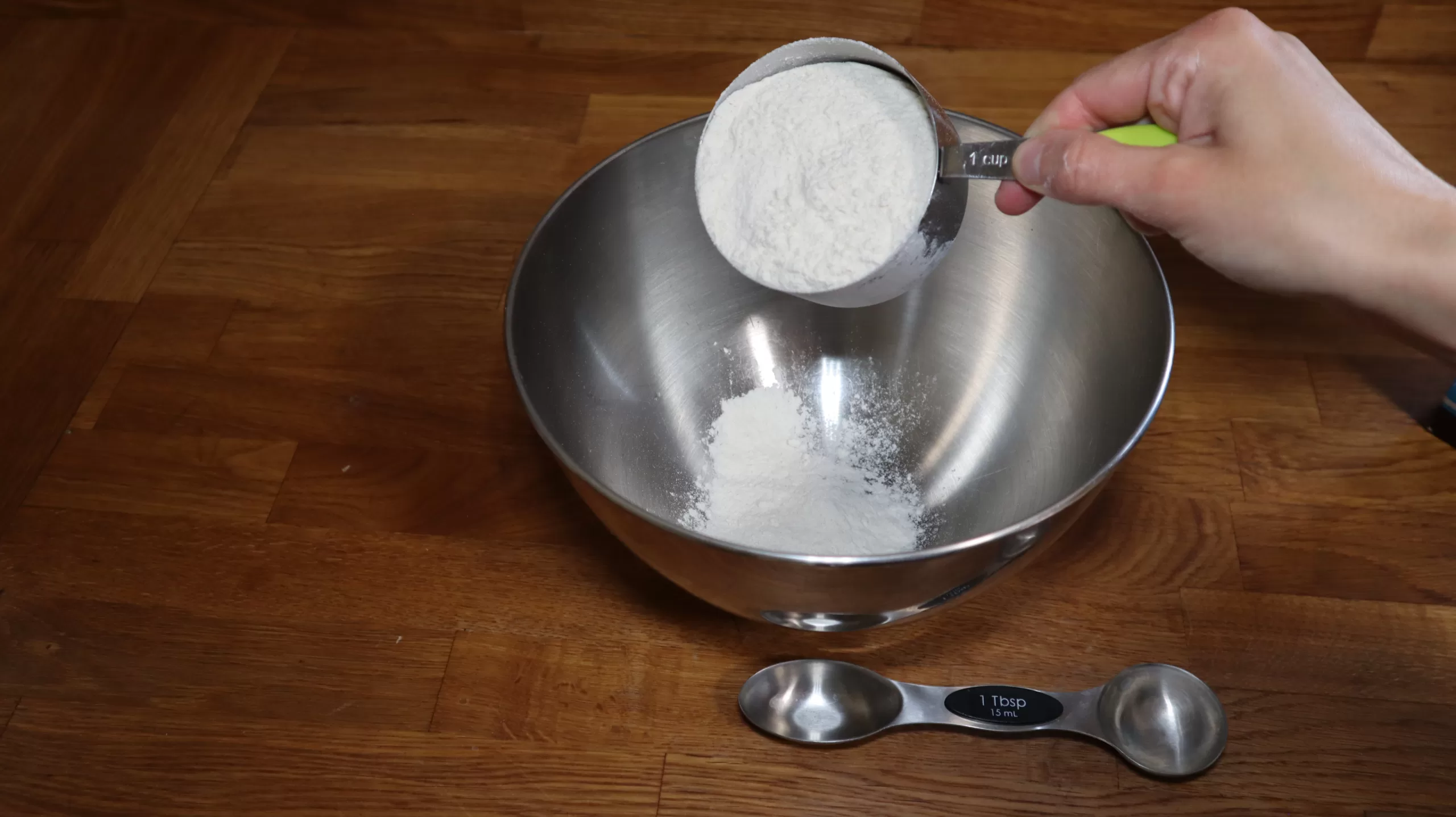
Step 2 – Remove 2 tablespoons of flour using a tablespoon, and add it back into the bag.
Step 3 – Add in 2 tablespoons of cornstarch, replacing exactly what you took out.
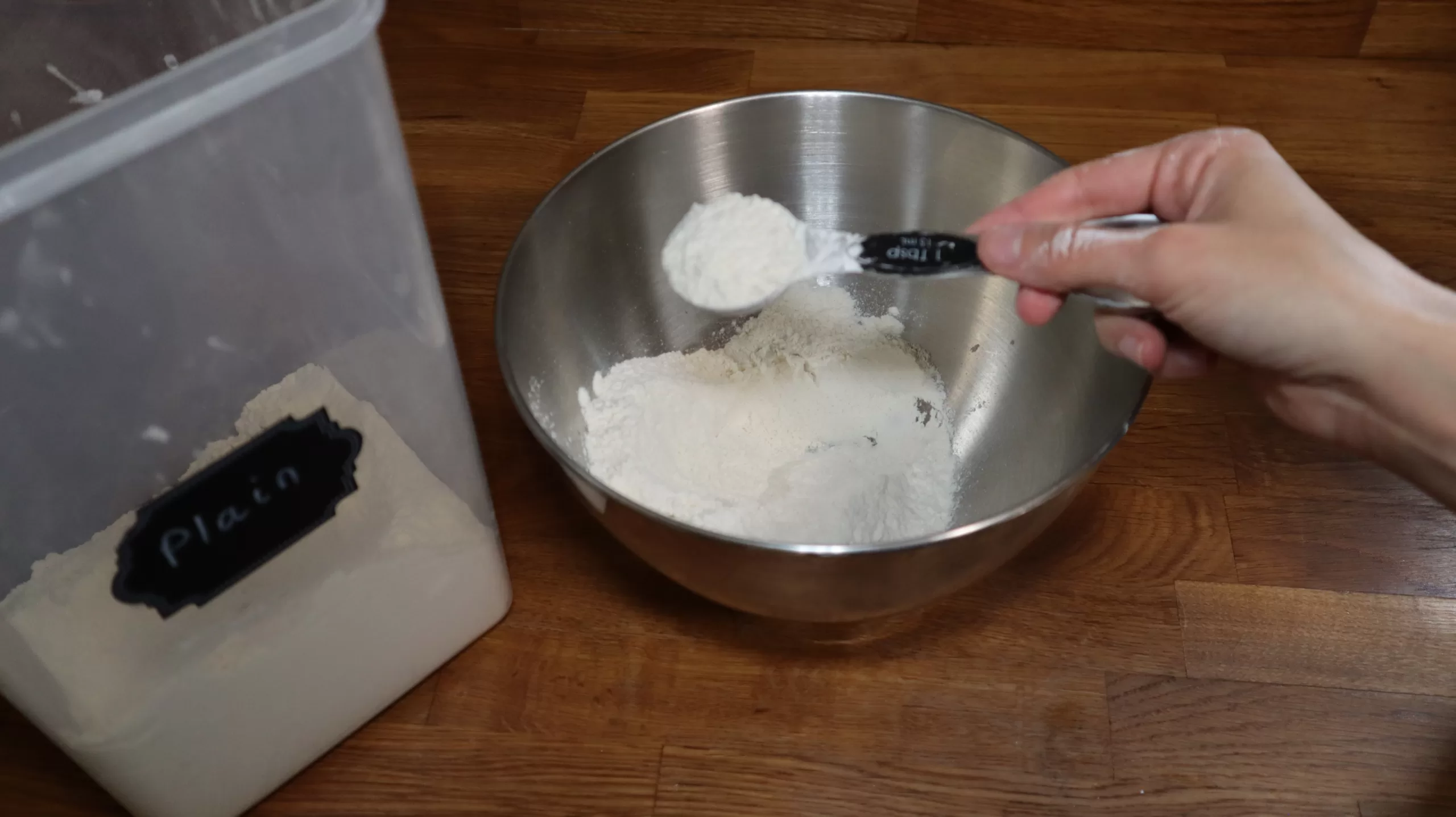
Step 4 – Pour all of this through a fine mesh strainer, and then whisk it to completely incorporate, and then store it in the cupboard in a sealed container.
Troubleshooting Tips
• One issue you might find when combining your flour and cornstarch together is that they just don’t seem to want to blend together properly. If this happens to you, it is only because of the different particle sizes of the flour and cornstarch. You can easily overcome this though, by making sure to whisk everything really vigorously. So just make sure that you are being really thorough when you whisk everything together.
• If you are in the habit of having a lot of different types of flour sitting around your pantry, you might run into the problem of not being able to tell different flour types apart from one another. This is especially a problem for this recipe because there is literally no way to discern the difference between regular all-purpose flour, and homemade cake flour. To get rid of this issue, make sure that you label your homemade cake flour before you store it in the pantry so that you don’t accidentally end up using it in the wrong recipe.
Nutritional Facts
For the health-conscious out there, here are the nutritional details for
Calories: 129
Total Fat: 0.3 grams
Saturated Fat: 0.1 grams
Cholesterol: 0 milligrams
Sodium: 1 milligrams
Total Carbohydrates: 27.5 grams
Dietary Fiber: 0.9 grams
Sugars: 0.1 grams
Protein: 3.2 gram
Potassium: 34 milligrams
FAQs
This recipe recommends that you use regular plain white flour as the flour portion of your homemade cake flour. However, some people might prefer to use something like wholemeal flour instead; wholemeal flour has a lot more fiber in it and is definitely the healthier option when it comes to your choice of flour.
However, one big problem with using wholemeal flour is that it tends to be a lot clumpier, and naturally has a higher amount of protein in it, as a result of the miller not removing the fat and protein-rich bran.
There are some brands of wholemeal flour out there that are ground to a smaller particle size and might be a good option, but generally speaking, you should probably stick to all-purpose flour.
This recipe recommends white, all-purpose plain flour because of its lower levels of protein when compared to bread flour. In fact, it is precisely the protein in the flour that we are trying to remove by substituting it with some cornstarch.
While you absolutely could use whatever type of flour you wanted, for the best, lightest cake flour, you need to make sure to use all-purpose flour, instead of bread flour.
Cornstarch is used to lighten the texture and density of whatever you bake within this cake flour recipe, but there is nothing stopping you from using some alternate flour types instead.
A little bit of specially finely ground rice flour would do a pretty similar job of cornstarch, as would something like arrowroot flour. You could also use tapioca flour, so long as it is the quick-cooking kind, to ensure that it doesn’t turn gummy.
How to Make Homemade Cake Flour
Ingredients
1 cup White All-PurposeFlour
2 tablespoons Cornstarch
Instructions
Step 1 – Measure out your flour into a bowl, being careful not to spill any.
Step 2 – Remove 2 tablespoons of flour using a tablespoon, and add it back into the bag.
Step 3 – Add in 2 tablespoons of cornstarch, replacing exactly what you took out.
Step 4 – Pour all of this through a fine mesh strainer, and then whisk it to completely incorporate, and then store it in the cupboard in a sealed container.
Nutrition Facts
- Serving Size: 1/4 cup


Leave a Comment