
Potatoes are one of the most versatile foods there is; not only are they one of the most calorically dense edible things in the world, but they can be used in basically any kind of recipe.
Alongside making anything from hash browns and French fries to vodka thanks to their sugar content, why not consider trying to make some homemade potato flour as well?
How Can I Use My Homemade Potato Flour?
Potato flour isn’t just about getting that rich potato flavor into all kinds of recipes – it is also a great way to make potato-rich breads with no gluten! Just by adding water, salt, and a bit of yeast, you can enjoy a potato-rich bread that is perfect for serving alongside soups or eaten on its own with butter!
What Kind Of Special Equipment Do I Need To Make Potato Flour?
Just like with making any other type of flour substitutes, the only thing you really need to make potato flour is a blender, and a warm oven. A dehydrator would definitely help speed the process up, but absolutely isn’t necessary so long as you don’t mind waiting a bit longer for your oven to dehydrate everything.
Ingredients
1 large potato, approximately 8 ounces

How To Make Homemade Potato Flour
Step 1 – Peel your potatoes, ensuring you remove every trace of peel and any spots.

Step 2 – Cut your potatoes into more manageable sized pieces, and place them gently in a pot of boiling water, and boil the potatoes at low heat until completely softened.
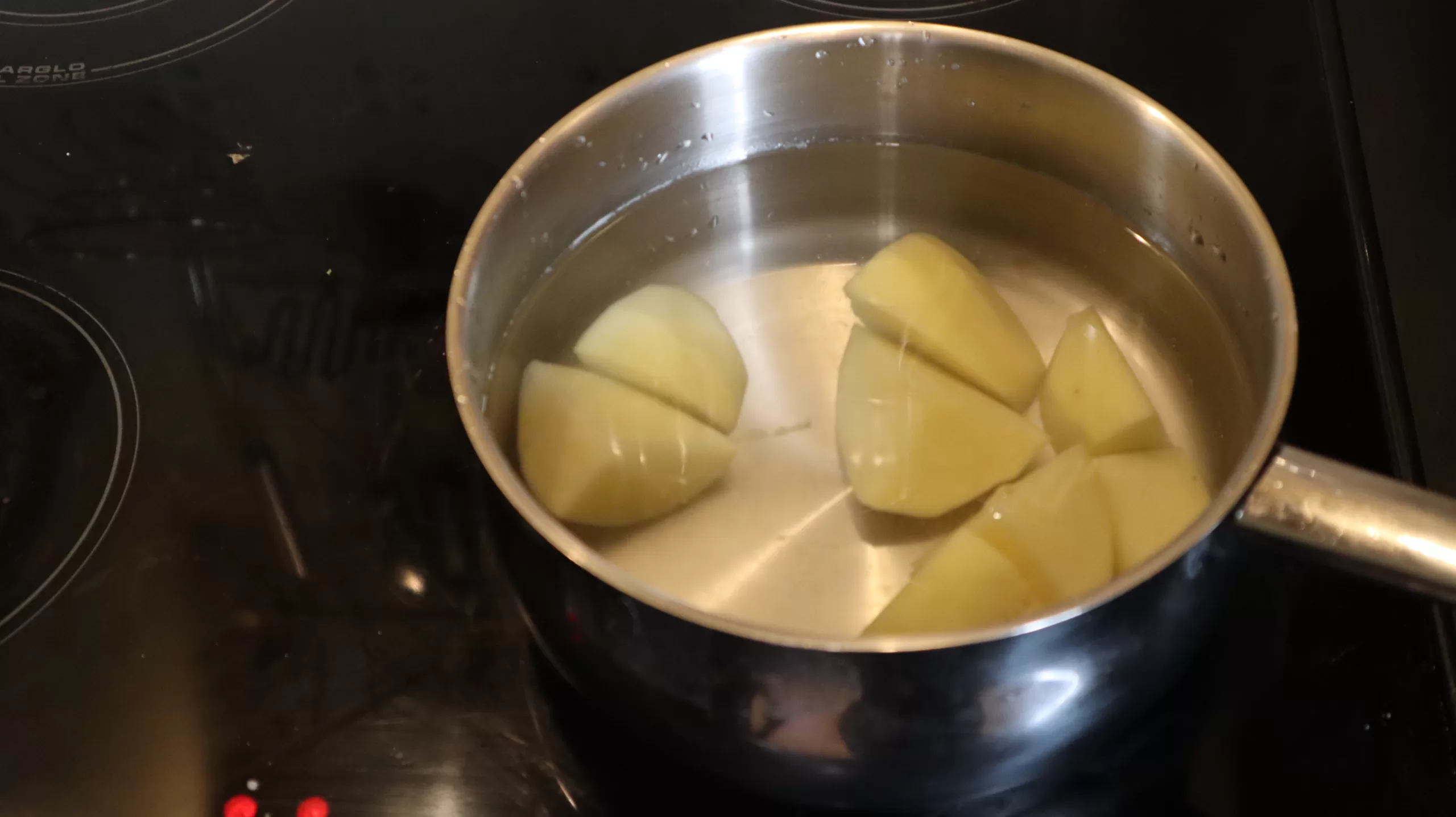
Step 3 – Remove your now-cooked potatoes from the boiling water and drain them thoroughly.

Step 4 – Once dry, mash your potatoes completely, ensuring no lumps remain whatsoever.
Step 5 – Spread your now-mashed potatoes in a thin layer on a baking sheet, and set it in the oven set to the lowest temperature that it can safely run.

Optionally, if you have a dehydrator:
Step 6 – Spread your now-mashed potatoes onto a dehydrator sheet and set your dehydrator to its “dried grains” setting.
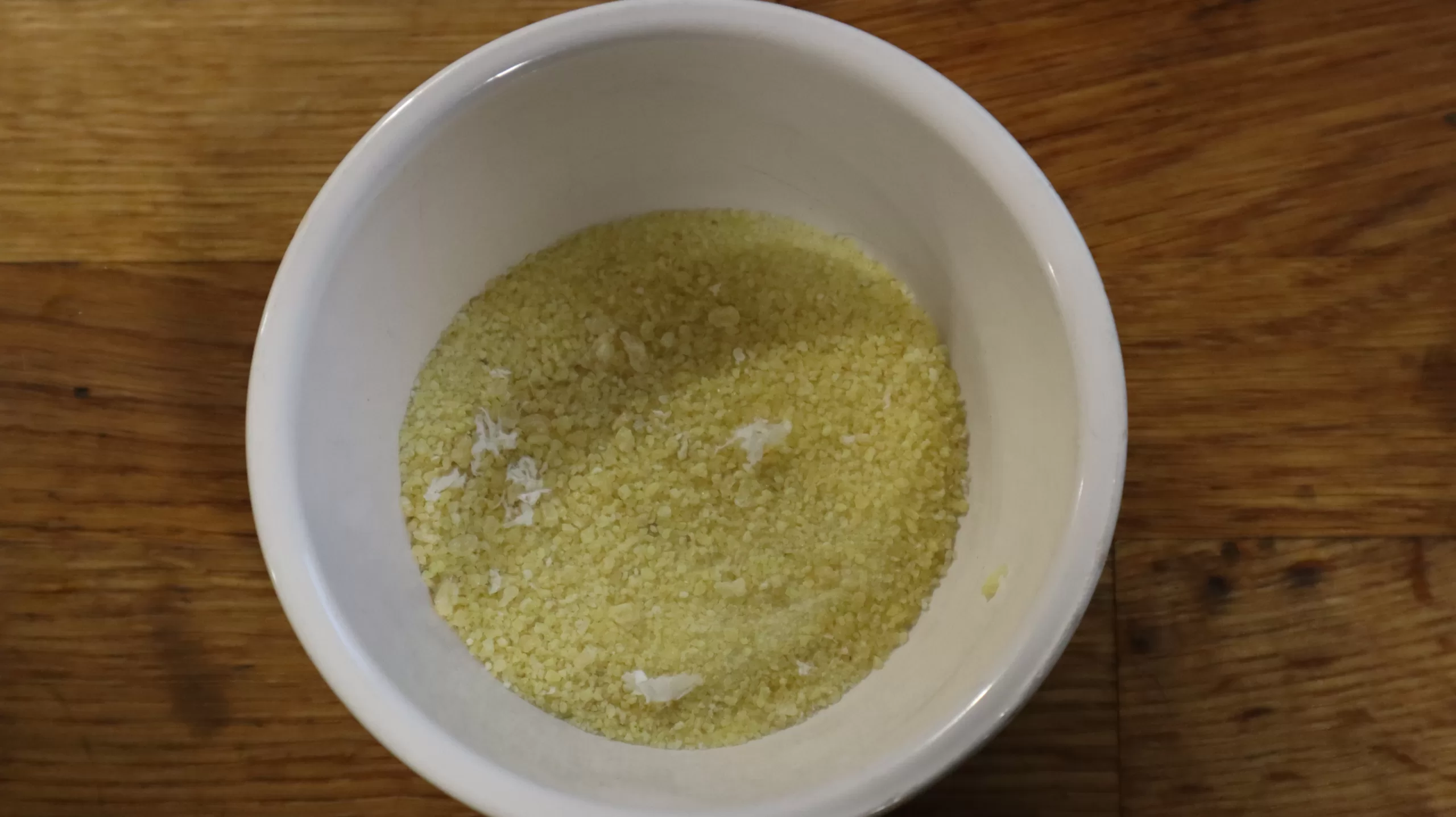
Step 7 – Once your mashed potatoes are completely dry, transfer them to a blender and blend on medium speed until they are completely broken apart into a fine powder.

Step 8 – Store your potato flour in a sealed container in your pantry for up to 1 month.
Watch the Video Version

Troubleshooting Tips
• If you struggle to get the potatoes all mashed together after cooking them, you might find that you simply haven’t given them enough time in the boil; while you can usually get away with not quite cooking your potatoes all the way when just making regular mashed potatoes, you really do have to make sure your potatoes are cooked all the way before trying to dehydrate them, as otherwise you might risk burning the exterior before the inside is completely dehydrated.
• When your potatoes start to dehydrate, one problem you might run into is that the tops of your potatoes dry out, but their undersides are still moist. To avoid incomplete dehydrator, just get a spatula and turn the potatoes to get the bottom on the top, and the crispy top on the bottom. This should ensure that the wetter parts of the mashed potato get a chance to dehydrate as well.
• If your potatoes just will not dehydrate, no matter what you do, the easiest way to ensure that they get thoroughly dry is to dry to space them out on some paper towels and leave them for a while in a well ventilated room. After they have dried a bit more through the paper towels, put them back in the oven, or just open in a thin layer on a baking sheet in that same well-ventilated room, to get them dried the rest of the way.
Nutritional Facts
For the health-conscious out there, here are the nutritional details for 1 cup of potato flour.
Calories: 175
Total Fat: 0.2 grams
Saturated Fat: 0.1 grams
Cholesterol: 0 milligrams
Sodium: 14 milligrams
Total Carbohydrates: 39.6 grams
Dietary Fiber: 5 grams
Sugars: 1.8 grams
Protein: 4.6 gram
Potassium: 955 milligrams
FAQs
This recipe, and most other recipes that use any kind of dehydrated potato, requires you to peel it first, but if there is anything that everyone universally hates in cooking, it’s peeling potatoes.
However, despite how annoying it is to peel potatoes, it is unfortunately a really necessary step. This is because of two main problems when it comes to potato skin: they are super fibrous, and they also tend to be pretty dirty.
Even if you washed your potatoes really well, it would likely still have a bit of dirty still stuck to it. Plus, the skins themselves are so rich in fiber and fats that it could actually affect the long term storage of your potato flour, not to mention discoloring it.
As annoying as it is, peeling your potatoes is a pretty necessary step.
Unlike with other types of flour used from other staple flavors, you can actually go ahead and eat your potato flour without needing to cook it first. This is because you are actually cooking it first before turning it into flour, so it is totally edible. Just make sure to add a little bit of salt first, as otherwise you might find that it tastes incredibly bland without it.
While this recipe does have you cook your potatoes first before dehydrating them, you don’t absolutely have to cook them before turning them into flour. If you wanted, you could grate them and dehydrate them over a much longer time period. If you do this though, make sure that you cook your potato flour before eating it, as otherwise you might end up with a bit of an upset stomach!
How to Make Homemade Potato Flour
Ingredients
1 large potato, approximately 8 ounces
Instructions
Step 1 – Peel your potatoes, ensuring you remove every trace of peel and any spots
Step 2 – Cut your potatoes into more manageable sized pieces, and place them gently in a pot of boiling water, and boil the potatoes at low heat until completely softened.
Step 3 – Remove your now-cooked potatoes from the boiling water and drain them thoroughly.
Step 4 – Once dry, mash your potatoes completely, ensuring no lumps remain whatsoever.
Step 5 – Spread your now-mashed potatoes in a thin layer on a baking sheet, and set it in the oven set to the lowest temperature that it can safely run.
Optionally, if you have a dehydrator:
Step 6 – Spread your now-mashed potatoes onto a dehydrator sheet and set your dehydrator to its “dried grains” setting.
Step 7 – Once your mashed potatoes are completely dry, transfer them to a blender and blend on medium speed until they are completely broken apart into a fine powder.
Step 8 – Store your potato flour in a sealed container in your pantry for up to 1 month.
Nutrition Facts
- Serving Size: 1 cup


