

Factories are closing across America – from Tennessee to California to South Carolina, a stream of mass layoffs is sweeping through towns and cities, cutting into industries that once defined American manufacturing.
Why are some of the world’s most established factories suddenly collapsing overnight? What’s behind this wave of closures, and could your job be next?
Let’s break it down…
Follow The Coconut Mama
• For fun lists, healthy living tips, and bar conversation topics, make sure to follow The Coconut Mama. Click here to access The Coconut Mama’s profile page and be sure to hit the Follow button here or at the top of this article!
• Have feedback? Add a comment below!
Shutterstock

A “mass layoff” usually means one of two things:
– 500 or more full-time workers are laid off at the same location within 30 days,
or
– At least 50 workers are let go, and that’s more than one-third of the company’s staff at that site.
In both cases, companies are supposed to give workers 60 days’ notice, but that doesn’t always happen. And the impact on local communities can be huge.
Shutterstock

Pepsi is closing its manufacturing plant in Detroit – a facility that’s been around for more than 80 years.
Production, transportation, and maintenance operations will all shut down permanently.
The company hasn’t said exactly how many workers are being laid off, but the closure is expected to have a major impact.
And it’s not the only one disappearing…
Shutterstock
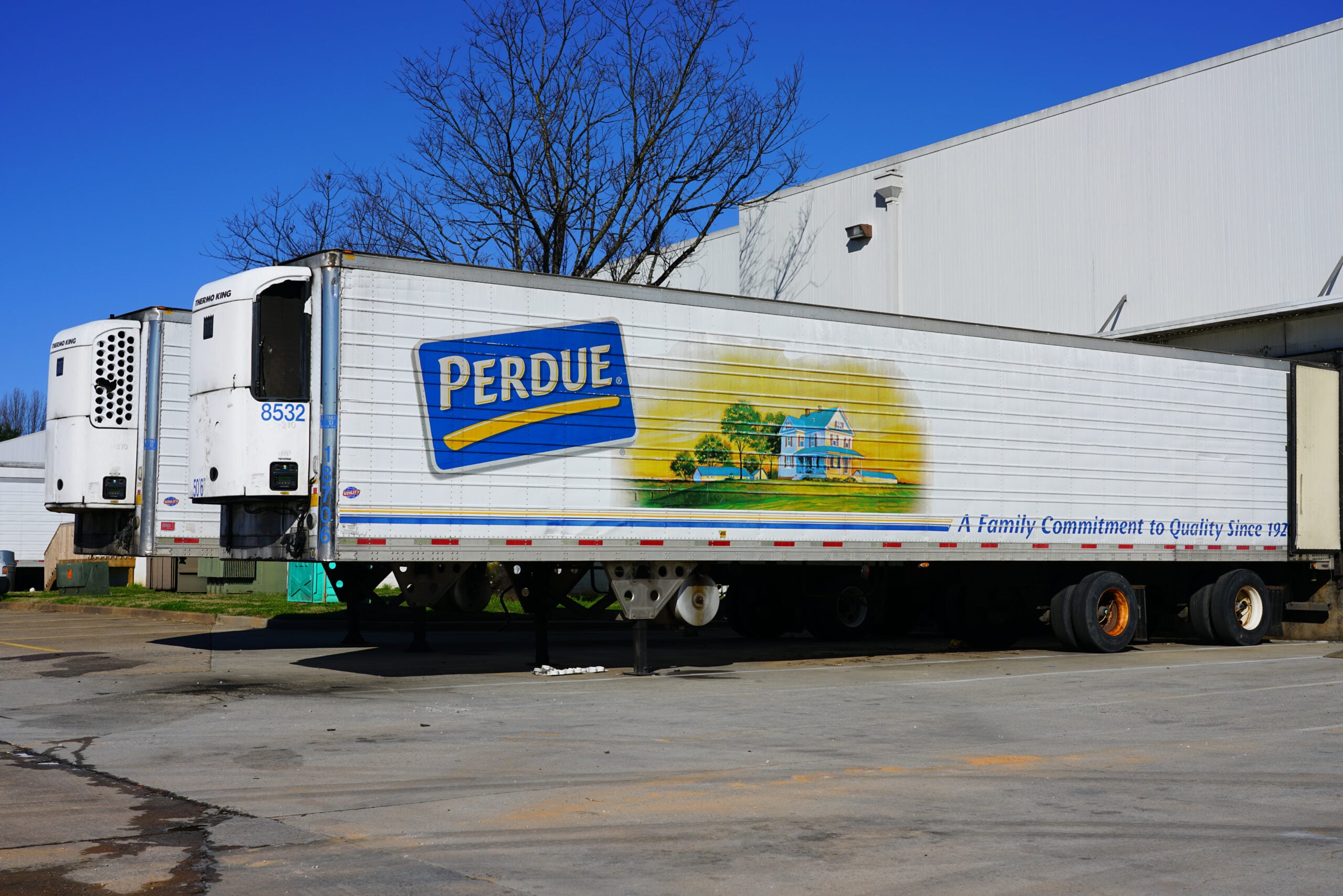
Poultry giant Perdue Farms laid off 433 workers at its Monterey, Tennessee plant.
The cuts were sudden and sweeping – a massive hit to one of the region’s biggest employers.
This is a devastating blow to hundreds of families in a state where food processing is a major employer.
Shutterstock

Del Monte Foods has filed for bankruptcy and permanently closed its Hanford, California plant, cutting 378 jobs.
This facility once processed massive volumes of produce.
But demand has changed, and the plant is now just another empty shell of what once was.
Shutterstock
Cargill, one of the largest privately held food companies in the world, is laying off 5% of its global workforce.
That’s THOUSANDS of jobs.
Why? A downturn in returns from beef, grains, and oilseeds. Rising cattle costs, falling commodity prices, and weaker biofuel demand all played a part.
More than 1,000 people lost their job at thus plant in Arkansas…
Shutterstock

Cargill will close its turkey processing plant in Springdale in August, eliminating another 1,100 jobs.
This is one of the biggest single-site job losses in the food industry so far this year.
Once again, rising costs and strategic shifts were cited, but that’s little comfort to workers facing an uncertain job market.
Shutterstock

In Yankton, South Dakota, Cimpl’s LLC, a longtime meat processing facility, permanently closed, and 277 workers lost their jobs.
For a town of just a few thousand, that’s catastrophic.
Local vendors, schools, and businesses will feel the pain too.
But maybe the most symbolic closure of them all is this next one…
Follow The Coconut Mama
• For fun lists, healthy living tips, and bar conversation topics, make sure to follow The Coconut Mama. Click here to access The Coconut Mama’s profile page and be sure to hit the Follow button here or at the top of this article!
• Have feedback? Add a comment below!
Shutterstock

After nearly 80 years, Tupperware is shutting down its one and only U.S. factory in Hemingway, South Carolina.
148 workers will be let go between September 28 and January 14, 2025.
Production is being shifted to Lerma, Mexico, where Tupperware already makes most of its U.S. and Canada products.
It’s the end of an era. And it says a lot about where American manufacturing is headed.
Shutterstock

There’s no single reason. It’s more like a perfect storm of problems hitting all at once.
Prices are up. Demand is down. And companies are scrambling to protect their profits.
– Inflation has made everything more expensive, from wages to raw materials to shipping
– Tariffs are messing with supply chains and driving up costs even more
– Shoppers are pulling back, especially on “non-essential” stuff like packaged snacks and storage containers
– Commodity prices (like corn, wheat, beef) are dropping, cutting into margins
– A lot of these factories are old and can’t keep up with newer, more automated facilities
– And of course, when companies consolidate or automate, that usually means fewer jobs
It’s tough out there, and for factory workers, the hits just keep coming…
Shutterstock
When a factory closes, it’s not just the workers who suffer.
– Local schools lose funding
– Restaurants and shops lose regular customers
– Town budgets shrink
– Suppliers and truckers lose contracts
These closures hollow out entire communities.
Especially in small towns, where one employer often holds up the whole economy.
Shutterstock

Factory closures can also hit consumers directly:
– Food prices may rise if supply chains tighten
– Product availability may fluctuate
– Fewer U.S.-made goods on store shelves
– Less support for local farms and vendors
It’s a lose-lose scenario for many Americans, and it’s playing out right now.
Shutterstock

Some companies are shifting production to newer facilities elsewhere, including overseas.
Others are quietly winding down less-profitable product lines.
Either way, the message is clear: efficiency is winning out over legacy.
And while some workers may be offered roles elsewhere, the reality is… many won’t.
Shutterstock
Not completely. But it’s definitely not the norm anymore.
More and more companies are moving production elsewhere, chasing lower costs, newer factories, and fewer regulations.
Factories are going dark. Shifts are getting cut. And workers are being left behind.
From poultry to plastic containers, the signs are everywhere, and they’re getting harder to ignore.
Shutterstock

So there you have it – seven major factory closures that signal the end of an era for American manufacturing.
Thousands of good jobs, gone.
Entire communities, shaken.
And more closures could be on the way.
Let’s hope the economy finds some footing soon, because workers across the country are already feeling the squeeze.
Are you worried your local plant might be next? Drop a comment and let us know!
Shutterstock


