
Oat flour and einkorn flour have been gaining popularity in the baking world lately and for good reason. But what exactly are they, and how do they differ from each other?
In this article, I’ll explain everything you need to know about oat flour and einkorn flour, so you can decide which is right for your next culinary creation. So let’s dive in!
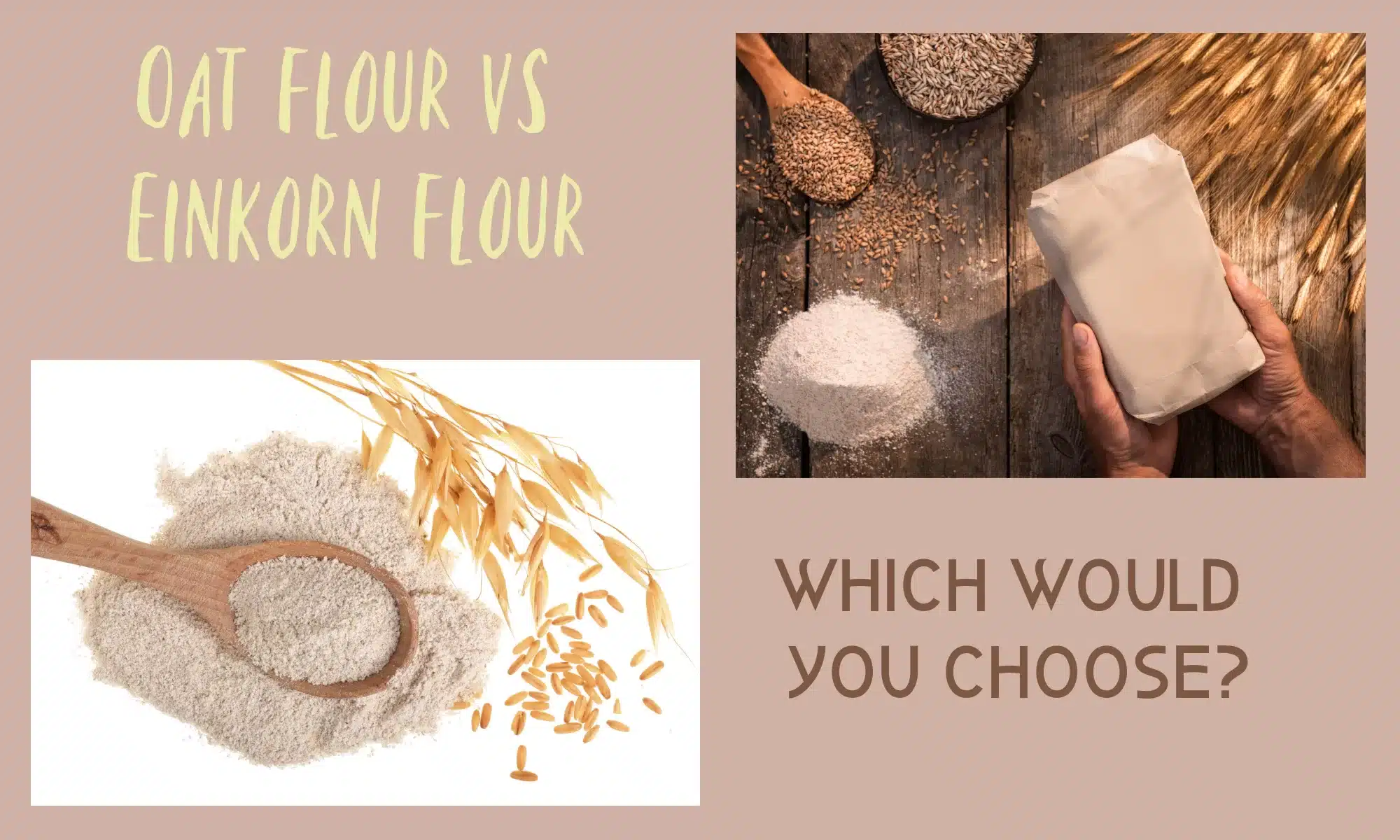
Comparing oat flour vs einkorn flour
| Oat flour | Einkorn flour | All-purpose flour | |
| Substitution ratio | 1.3:1 | 1:1* | N/A |
| Gluten-free? | Yes | No | No |
| Keto-friendly? | No | No | No |
| Paleo-friendly? | No | No | No |
| Common Allergens | None | Wheat, gluten | Wheat, gluten |
| Liquid absorbency | High | Low-medium | Medium |
| Pantry shelf life (unopened/sealed) | 2 months | 6 months | 6-8 months |
| Best for | Pancakes, muffins, cookies, fruit crumbles and crisps | Artisanal bread, pizza dough, pasta, and cookies | Non-yeast recipes, cookies, biscuits, and some breads |
*If substituting 100% of all-purpose, reduce the amount of liquid in your recipe by about 15-20% to prevent your batter from becoming too wet.
Differences between oat flour and einkorn flour
The main difference between oat flour and einkorn flour is that oat flour is made from ground-up oats, which are gluten-free, while einkorn flour is made from the ancient grain einkorn, which is a type of wheat and contains gluten.
So, oat flour is a good choice for people with celiac disease or gluten sensitivities, just make sure it says certified gluten-free on the bag! On the other hand, einkorn flour is a great option for those who are looking for a nutrient-rich flour with a nutty flavor for making bread or pasta. Einkorn flour also ferments well and can be used to make a sourdough bread starter!
Einkorn flour has an earthy flavor that’s a bit stronger than other wheat flours, while oat flour has a more mild, slightly sweet flavor, which complements baked goods like muffins, pancakes, and cookies.
Baking with oat flour vs einkorn flour
Oat flour and einkorn flour are both whole grain flours that have a coarser texture than all-purpose flour. This means that baked goods made with these flours can have a denser and more crumbly texture than those made with all-purpose flour.
Because oat flour and einkorn flour have a lower gluten content than all-purpose flour, baked goods made with these flours may not rise as much either. This is more the case for oat flour, which has no gluten at all, so it tends to yield a denser bake compared to einkorn flour.
When using oat flour or einkorn flour in place of all-purpose flour in a recipe, you may need to adjust the recipe to account for the differences in texture and gluten content. In my experience, adding an extra egg or leavening agents (baking powder, yeast) helps a LOT to help baked goods to bind together and expand!
Another thing to keep in mind is that einkorn flour absorbs less liquid than all-purpose flour and oat flour absorbs more, so I generally recommend sticking to a recipe that specifies either oat flour or einkorn flour for the best results. Otherwise, be prepared to experiment with different flour and/or liquid ratios!
Ingredients in oat flour vs einkorn flour
The ingredients in oat flour (different from ground oats) and einkorn flour are pretty straightforward – oat flour contains only oats, while einkorn flour contains only einkorn wheat.
Both flours are minimally processed and shouldn’t contain a lot of added ingredients.
Oat flour and einkorn flour nutritional facts
| Per 1/4 cup serving | Oat flour | Einkorn flour | All-purpose flour |
| Calories | 120 | 100 | 120 |
| Carbs (g) | 22 | 20 | 24 |
| Fiber (g) | 3 | 2 | 1 |
| Fat (g) | 2 | 0.5 | 0.5 |
| Protein (g) | 4 | 4 | 4 |
| Glycemic index score | 44 | 40-45 | 85 |
Oat flour and einkorn flour have a similar carb and protein content to all-purpose flour. But oat flour is the best source of fiber, with einkorn flour coming in second, and einkorn flour is low in calories – one of the lowest-calorie flours, in fact.
Oat flour also contains more fat and einkorn flour is higher in certain micronutrients than modern wheat flour, such as zinc and lutein (a carotenoid with anti-inflammatory properties).
Oat flour and einkorn flour are also much less likely to mess with your blood sugar compared to all-purpose flour because they are low glycemic index flours!
Oat flour vs einkorn flour storage
Oat flour should go in an airtight container and be stored in a cool, dry place for up to 2-3 months, and you’re good to go!
Einkorn flour requires a bit more attention. Because it’s made from an ancient grain, it can be more prone to rancidity and spoilage. You’ll want to store it in an airtight container in a cool, dry place, just like oat flour, or in the fridge or freezer to keep it fresh for longer. Just be sure to use it within 6 months of purchasing, so you don’t end up with spoiled flour.
Oat flour vs einkorn flour: Everything you need to know
So, there you have it! Oat flour is a great source of fiber, and it’s easy to store and use in a variety of recipes. Einkorn flour is a bit more unique – made from an ancient grain that’s packed with nutrients and adds depth to baked goods.
I have to say, I prefer oat flour because it’s an easy gluten-free alternative to all-purpose flour, but there’s no doubt einkorn flour is better for bread making!
For more types of flour, see our user’s guide of 60+ different types of flour!
FAQ
Einkorn flour is very healthy, but it’s difficult to say if einkorn is THE healthiest flour, as it depends on individual dietary needs and preferences. While einkorn flour has a low glycemic index score and is higher in certain micronutrients than modern wheat flour, other flours like almond or coconut flour may be better for gluten-free or keto diets.
It’s difficult to say which flour is the healthiest in the world, but some of the healthiest flours include whole wheat flour, almond flour, coconut flour, and chickpea flour, as they are high in fiber and protein and have a low glycemic index.
Einkorn flour is made from an ancient variety of wheat and contains higher levels of certain micronutrients like zinc and lutein and is easier to digest due to its simpler gluten structure. Its distinct flavor and texture make it a popular choice for artisanal bread baking and other baked goods.





Leave a Comment