
These two oils are fascinating, with their origins rooted in resourcefulness and sustainability. Olive pomace oil comes from the byproducts of olive oil production – pomace – which is the name given to the skins and flesh of the olives left over after the oil has been extracted. Meanwhile, grapeseed oil (not to be confused with rapeseed oil) is made from the seeds of grapes left over from winemaking.
These neutral-flavored oils are interesting contenders for all-purpose oils in your kitchen, but what is it that makes them different? Read on and find out!
Comparing olive pomace oil vs grapeseed oil
| Olive pomace oil | Grapeseed oil | |
| Solid or liquid? | Liquid | Liquid |
| Smoke point (Fahrenheit) | 460 degrees | 420 degrees |
| Primary fat | Monounsaturated | Polyunsaturated |
| Taste | Bland | Neutral |
| Good for cooking… | Raw, low heat, medium heat, high heat | Raw, low heat, medium heat, high heat |
| Common allergens | Olive, olive pollen | Grapes, grape seeds |
| Gluten-free? | Yes | Yes |
| Keto? | Yes | Yes |
| Paleo? | No | No |
| Vegan? | Yes | Yes |
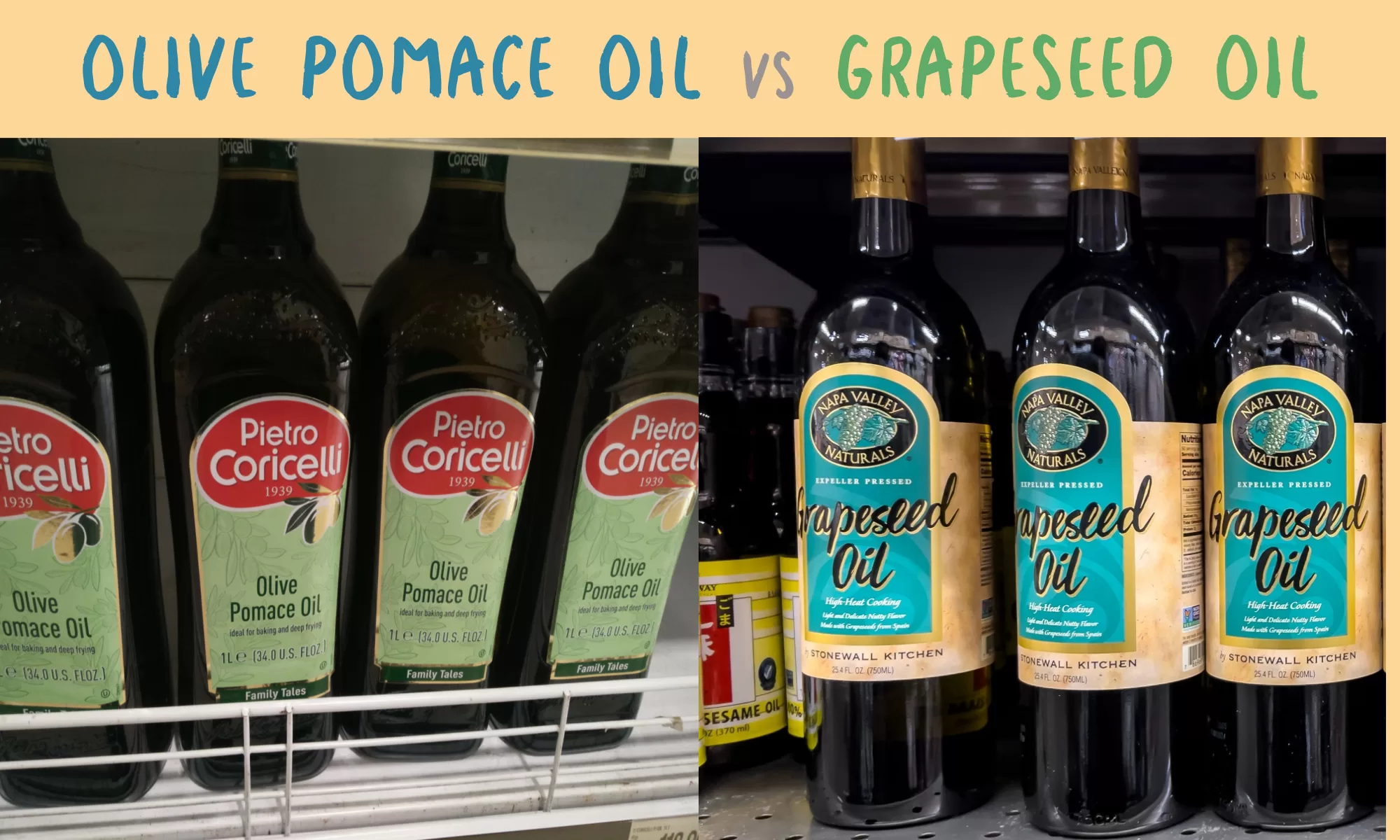
Differences between olive pomace oil and grapeseed oil
The biggest difference that sets olive pomace oil and grapeseed oil apart is their flavors. Although both are considered neutral-flavored or flavorless, olive pomace oil is considered bland. It’ll lack any of the aroma or taste associated with regular olive oils, whether grassy, peppery, or floral. Meanwhile, grapeseed oil has a very, very mild flavor, somewhat close to canola oil.
Interestingly, their extraction processes are quite similar in the modern day. Here’s why. After olive oil is extracted from olives, the pomace leftover contains minimal oil, so chemicals and heat are often used to remove it. This means it doesn’t pass the International Olive Council (yep, there’s a council for it!) requirements for it to be considered olive oil. Similarly, the grape seeds that are collected after the grapes have been pressed to make wine also yield very little oil, which is why many companies extract the oil chemically as well.
Both oils are gluten-free, keto-friendly, and vegan!
Baking and cooking with olive pomace oil vs grapeseed oil
Unlike regular olive oil, which typically has grassy, floral, or nutty notes, olive pomace oil is completely flavorless. But on the plus side, it has a stable high smoke point that most olive oils don’t have. Its number one use is for deep frying, as it is bland in flavor and can stand up to hot temperatures, but it can pretty much be used for anything. So, whether you want to deep fry some chicken, add some to your baked goods for moistness, or pan-sear salmon or vegetables, it’s a great choice to do so.
Grapeseed oil is very similar when it comes to baking and cooking. Its flavorless profile and light and neutral qualities can easily blend into the background, and its high smoke point also makes it suitable for all sorts of applications. It has the added benefit of being cheaper than extra virgin olive oil and is also popular for making salad dressings and marinades. Another useful quality is that it’s a great emulsifier, which can lead to purer baked goods.
Can olive pomace oil and grapeseed oil be substituted for each other?
Olive pomace oil and grapeseed oil can easily work as substitutes for each other in any situation, given their similarities in smoke point and flavor – or lack of! But, of course, if you’re looking for a really close substitute for olive pomace oil, refined olive oil will work best in its place, while cottonseed oil will give you a similar neutral yet not bland flavor profile that’s closest to grapeseed oil.
Nutrition: Olive pomace oil vs grapeseed oil
Olive pomace oil, like its more common counterpart, is made 100% from olives, which means it’ll be high in healthy monounsaturated fats and low in saturated fats. At the same time, grapeseed oil is also high in healthy unsaturated fats but polyunsaturated fats instead. Without any trans fats or cholesterol, this makes both oils a heart-healthy choice in your kitchen. Grapeseed oil has the added benefit of having a significant amount of vitamin E, which has antioxidant properties that are good for skin health, hair health, and heart health.
As all cooking oils and fats are high in calories and fat, use them in moderation.
| Per tablespoon (15mL) | Olive pomace oil | Grapeseed oil |
| Calories | 120 | 120 |
| Polyunsaturated | 2 g | 9.5 g |
| Monounsaturated | 10 g | 2.2 g |
| Saturated | 2 g | 1.3 g |
| Trans | 0 g | 0 g |
| Total fat | 14 g | 13.6 g |
| Cholesterol | 0 mg | 0 mg |
The primary fat source is bolded.
How to store olive pomace oil and grapeseed oil
Olive pomace oil and grapeseed oil should be stored in a dark, cool place away from light and heat sources, ideally in a tightly sealed opaque container made of glass or stainless steel.
Grapeseed oil, in particular, typically has a relatively short shelf life compared to other cooking oils. Open containers will last 3 – 6 months in the pantry and 6 – 12 months in the fridge, while sealed bottles will last 1 – 2 years. For olive pomace oil, its shelf life is particularly long when sealed at 18 – 24 months but quite short once opened at 6 – 12 months.
Olive pomace oil vs grapeseed oil: What’s the verdict?
I’ll be honest – you’re more likely to find grapeseed oil in my kitchen, given that I find olive pomace oil difficult to find at grocery stores. If you’re personally able to find it, it can be an interesting and potentially cheaper alternative to olive oil as an all-purpose oil. Otherwise, grapeseed oil is similar enough to do the trick. It has a neutral flavor, a high smoke point, and is budget-friendly, which is always a win, in my opinion!
FAQ
Grapeseed oil can be a good alternative to olive oil for several reasons. For one, it has a neutral and light flavor profile that lets the true flavors of the ingredients in dishes stand out without overpowering them. Secondly, its high smoke point makes it suitable for all sorts of cooking techniques, from sautéing to frying. Lastly, it’s a budget-friendly choice, typically cheaper than extra virgin olive oil!
With its robust flavor and high smoke point, olive pomace oil is an ideal oil for frying, roasting, and sautéing, helping you achieve perfect crispiness on fried dishes or a delicious seared protein. It’s known mostly for its versatility and bland flavor, which makes it a good “everything” oil in home kitchens.




Leave a Comment