
Born out of cold-pressed wheat kernels, wheat germ oil is an oil popular for both cooking and skincare. It brings a grassy and nutty essence that’s perfect for fresh, raw cooking. On the other hand, we have traditional beef tallow, a savory solid fat that comes from the rendered fat of beef. Its deep umami flavor makes it a go-to for hearty cooking.
With so many differences between the two, how can you figure out which is better? Read on and find out!
Comparing wheat germ oil vs beef tallow
| Wheat germ oil | Beef tallow | |
| Solid or liquid? | Liquid | Solid |
| Smoke point (Fahrenheit) | 225 degrees | 400 degrees |
| Primary fat | Polyunsaturated | Saturated |
| Taste | Grassy | Beefy |
| Good for cooking… | Raw | Raw, low heat, medium heat |
| Common allergens | Gluten, wheat | Mammalian meat allergy (MMA) |
| Gluten-free? | May contain trace amounts* | Yes |
| Keto? | Yes | Yes |
| Paleo? | Yes | Yes |
| Vegan? | Yes | No |
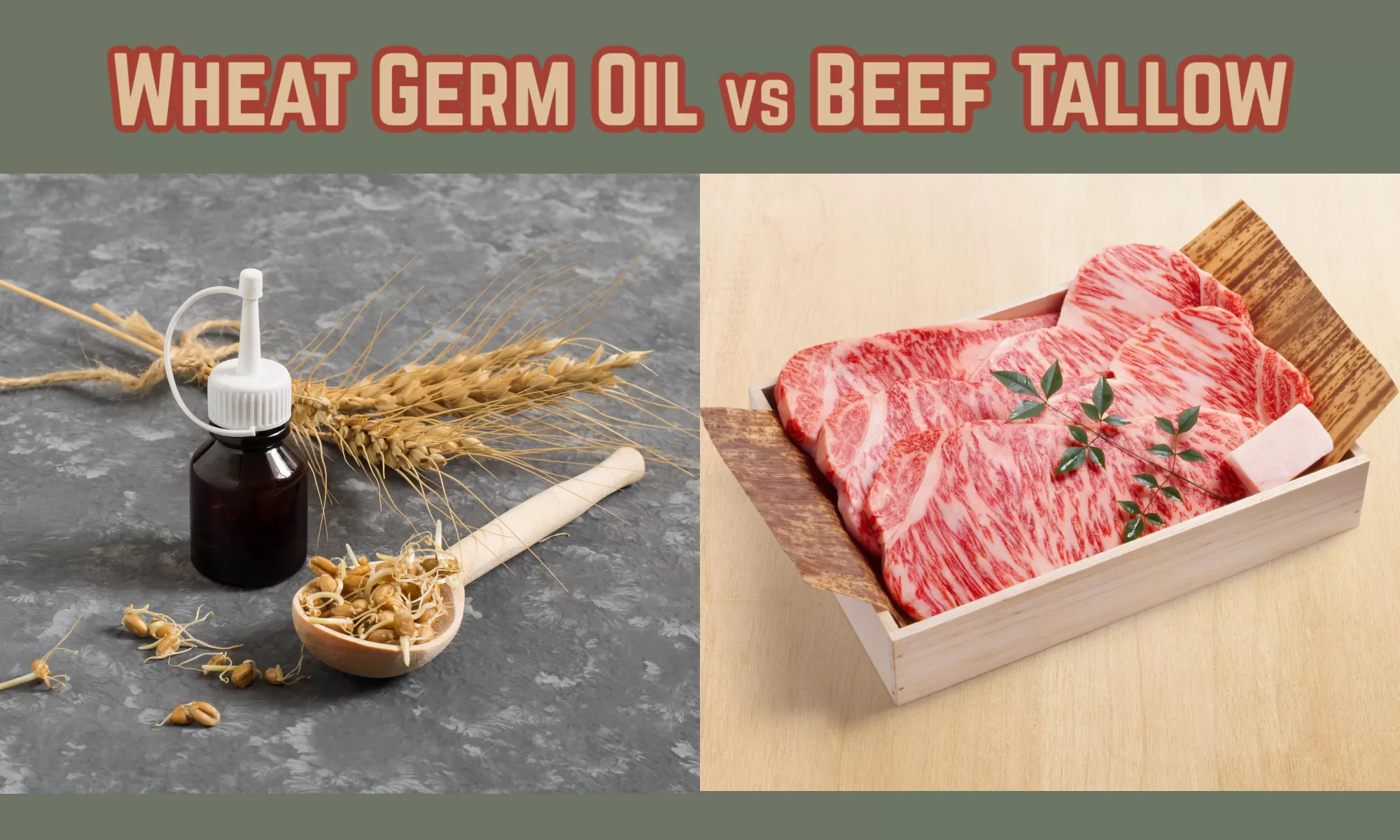
Differences between wheat germ oil and beef tallow
There are lots of differences between wheat germ oil and beef tallow, but their most distinct would be their smoke points, flavor, and texture. While beef tallow has a moderate smoke point of 400 degrees, wheat germ oil has a very low smoke point of 225 degrees, which makes it unsuitable for any type of heat cooking. Beef tallow is also a very savory, beefy solid, while wheat germ oil is a liquid oil with a grassy, nutty flavor.
Both wheat germ oil and beef tallow are keto-friendly and paleo-friendly, but only wheat germ oil is vegan, and beef tallow is the only fully gluten-free one.
Baking and cooking with wheat germ oil vs beef tallow
There’s one rule of thumb you have to follow when dealing with wheat germ oil – only use it in raw cooking. When it comes to baking, I’ve found it to be a great flavor enhancer when added to muffins and quick breads after baking – anything with an oaty, grainy base. In cooking, it’s best used in dressings or as a finishing touch over a delicate fish dish or roasted veggies. With its strong and somewhat grassy, toasty flavor, it’s a star in salad dressings and complements leafy greens and other classic salad ingredients.
Beef tallow brings us to an entirely different world, with its robust meaty flavor and solid texture at room temperature. As it’s so savory, it can’t be used in any sweet dishes. Although it doesn’t have the smoke point for deep frying, beef tallow is most commonly used for general frying – whether it’s crispy potatoes or chicken. With its solid texture, it can also make delicious savory pies and flaky pastries, creating those beloved pockets and layers of flavor.
Can wheat germ oil and beef tallow be substituted for each other?
Wheat germ oil and beef tallow are essentially non-substitutes for each other, given that wheat germ oil can’t be used to cook or bake. They also differ drastically in texture, which makes it that much more difficult.
If you’re looking for a better substitute for wheat germ oil, flaxseed oil has the same low smoke point and is also popular as a finishing oil. If you’re looking for a substitute with a high smoke point, regular olive oil will do the trick. The best all-around substitute for beef tallow is lard, which has a similar meaty flavor (not as intense) and the same solid texture.
Nutrition: Wheat germ oil vs beef tallow
Wheat germ oil and beef tallow are super different in the nutrition arena. While wheat germ oil is high in heart-healthy polyunsaturated fats, beef tallow has somewhat of a balanced profile, being high in both saturated and monounsaturated fats. Although saturated fats have been linked to poor health outcomes when consumed in excess, it’s said that beef tallow, in general, might be more nutritious than other tallow types. Beef tallow also offers other fat-soluble nutrients like vitamins A, D, E, and B12.
While wheat germ itself is packed with many vitamins, minerals, and vegetable proteins, its oil counterpart doesn’t really offer the same nutrient content. However, it is rich in fatty acids, vitamin E, and vitamin K, which is why it’s popularly used in skincare and haircare.
As a rule of thumb, use all cooking oils and fats in moderation.
| Per tablespoon (15mL) | Wheat germ oil | Beef tallow |
| Calories | 120 | 115 |
| Polyunsaturated | 8.4 g | 0.5 g |
| Monounsaturated | 2.1 g | 5.4 g |
| Saturated | 2.6 g | 6.4 g |
| Trans | 0 g | 0 g |
| Total fat | 13.6 g | 12.8 g |
| Cholesterol | 0 | 14 mg |
The primary fat source is bolded.
How to store wheat germ oil and beef tallow
Wheat germ oil is best stored in a cool, dark place and kept away from light and heat sources. Ideally, it should also be in a dark glass container to prevent it from oxidizing and placed in the fridge. Unopened, it can last up to 1 year past its best-by date, and once opened, it should be used within 3 – 6 months.
For beef tallow, the best method of storage is in an airtight container made of glass or stainless steel to prevent oxidation. While it’s recommended to refrigerate it, you can also leave it in a cool, dry place if you live in a colder climate. Sealed or opened, beef tallow can last a year in the pantry, 12 – 18 months in the fridge, and more than 2 years in the freezer.
Wheat germ oil vs beef tallow: Which is better?
In the kitchen, wheat germ oil and beef tallow have both carved their own specific niche thanks to their unique qualities. Wheat germ oil, with its toasty, grassy notes, is my pick for salads and dressings, and as a finish oil to add a little finesse to whatever I’m making. With beef tallow, its ability to transform the simplest ingredients like potato and green beans into yummy, savory bistro eats is why I have it on hand more often than not.
FAQ
Wheat germ oil is full of nutrients like omega-3 fatty acids and antioxidants, making it a good choice if you’re looking to infuse your meals with heart-healthy benefits. It’s primarily made up of polyunsaturated fats, which can lower bad cholesterol and keep your cells healthy.
The general term ‘tallow’ refers to rendered animal fat that typically has a hearty, meaty essence to it and a savory flavor. Depending on the type of animal fat used, they can come with different flavor profiles. For example, beef tallow has a strong umami flavor, while pork tallow will taste a little ‘porkier’ in comparison.


Leave a Comment