
Rosemary is one of the best natural remedies to enhance hair strength and growth. But is rosemary oil or water better for hair?
In this article, I’ll be comparing their benefits, applications, effectiveness, and more to find out which one you should choose. Let’s get started!
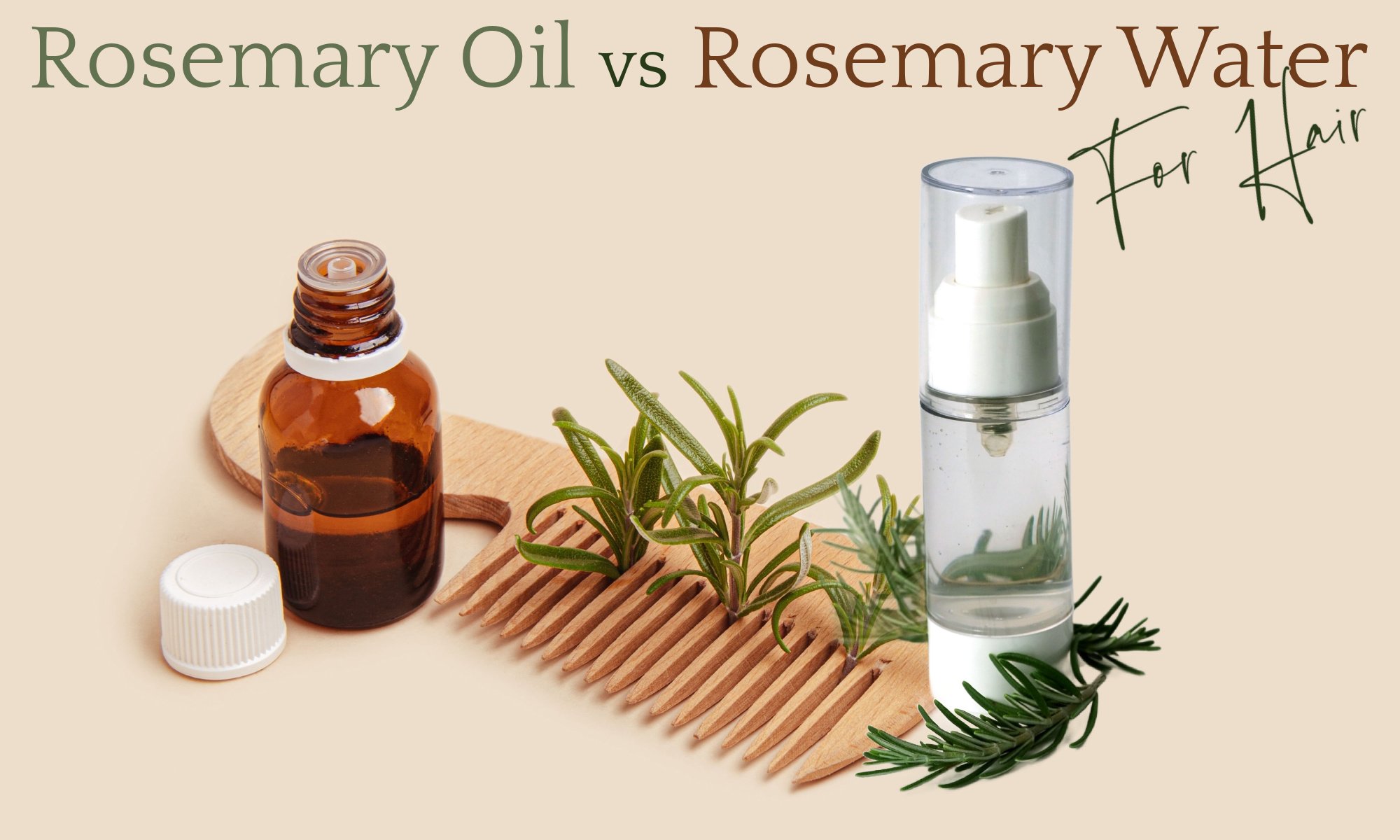
Rosemary oil vs rosemary water for hair
Rosemary oil is extracted from the leaves of the rosemary plant through a distillation process, resulting in a concentrated form rich in antioxidants and nutrients. When applied to the scalp, it can promote hair growth, improve circulation, and strengthen follicles.
On the other hand, rosemary water is made by steeping rosemary leaves in water, creating an infused liquid that’s lighter and less potent compared to the oil. While it may not be as concentrated, rosemary water still carries many of the herb’s benefits, such as soothing the scalp and adding shine.
| Rosemary oil | Rosemary water | |
| Extraction method | Steam distillation of leaves | Boiling fresh rosemary leaves |
| Concentration | Highly concentrated | Less concentrated |
| Application | Scalp massage | Hair rinse |
| Benefits | Stimulates hair growth, strengthens follicles | Refreshes scalp, clarifies hair, promotes shine and volume |
| Usage frequency | 2-3 times per week | Daily or as needed |
Differences between rosemary oil and rosemary water
The key difference between rosemary oil and rosemary water is their concentration. Rosemary oil is highly concentrated and potent due to the extraction process, containing a higher concentration of essential oils and active compounds. Rosemary water, also known as rosemary hydrosol, while still containing beneficial properties of rosemary, is more diluted compared to the oil.
This has to do with their extraction method. Rosemary oil is typically extracted through a distillation process where the essential oil is separated from the plant material, resulting in a highly concentrated form of rosemary extract. Rosemary water, on the other hand, is made by steeping rosemary leaves in water, allowing the herb’s properties to infuse into the liquid.
Both rosemary oil and rosemary water offer similar benefits for hair care, such as potentially stimulating hair growth, improving circulation to the scalp, strengthening hair follicles, and adding shine. However, due to its higher concentration, rosemary oil may be more effective in promoting these benefits in smaller quantities.
Note that rosemary oil may cause skin irritation or allergic reactions in some individuals, especially if used in high concentrations or on sensitive skin. Rosemary water is generally milder and less likely to cause irritation, making it suitable for those with sensitive scalps or skin.
How to use rosemary oil vs rosemary water
Rosemary oil is usually applied to the scalp or hair in small amounts, as it can be too strong if used undiluted. So, pure rosemary oil must be mixed with carrier oils before application, while rosemary water can be applied directly to the scalp and hair.
Rosemary water can be used as a rinse for the hair after shampooing or as a refreshing spray for the scalp and hair throughout the day.
Here’s how to use each:
- Rosemary oil: Mix a few drops of rosemary oil with a carrier oil like coconut or jojoba oil. Massage the mixture into the scalp and leave it on for at least 30 minutes before shampooing. Repeat 2-3 times per week for optimal results.
- Rosemary water: After shampooing, rinse your hair with rosemary water as a final rinse. You can also use it as a scalp spray between washes to refresh and revitalize your scalp. It can be applied daily or as needed.
Which is better for hair growth?
If hair growth is your top goal, I recommend choosing rosemary oil over rosemary water. Some research suggests regular use of rosemary oil (studies used a very high concentration of a specific type of rosemary essential oil), can significantly improve hair thickness and overall health over time (6 months), but there is very limited research on the benefits of rosemary water for hair growth.
Given its more potent concentration, rosemary oil can stimulate blood circulation in the scalp, promoting hair growth and preventing premature hair loss.
Verdict
When deciding between rosemary oil and rosemary water for your hair, consider your hair type and needs.
Those with dry or damaged hair may benefit more from the concentrated nourishment of rosemary oil, while individuals with oily or sensitive scalps might find rosemary water to be a gentler option.
Additionally, some may prefer the convenience and ease of use offered by rosemary water, especially for daily or frequent use. I know I don’t always feel like oiling my hair with rosemary oil, waiting 30 minutes to an hour, and then washing it out.
That said, if you’re looking for maximum hair growth benefits, rosemary oil is the way to go.
FAQs
In my experience, both rosemary water and oil have their unique advantages for hair care. It depends on your hair needs and preferences. I find that rosemary water is refreshing and hydrating for my scalp, promoting overall hair health and shine. On the other hand, rosemary oil, with its concentrated properties, penetrates deeply into my scalp, potentially stimulating hair growth and improving circulation.
Both are beneficial, but rosemary essential oil, being more concentrated, is often preferred for promoting hair growth due to its potent effects on stimulating circulation and follicle health.
Rosmarinus officinalis, commonly known as true or garden rosemary, is best for hair growth due to its high levels of beneficial compounds like rosmarinic acid and antioxidants.
Rosemary water may have less concentrated nutrients compared to rosemary oil, potentially providing milder effects. Additionally, it has a shorter shelf life and requires refrigeration, making it less convenient for long-term use.




Leave a Comment