
Today, I want to talk about two very different but popular cooking oils: sesame oil and canola oil.
So, let’s dive right in and uncover the unique characteristics of these oils to help you make an informed decision.
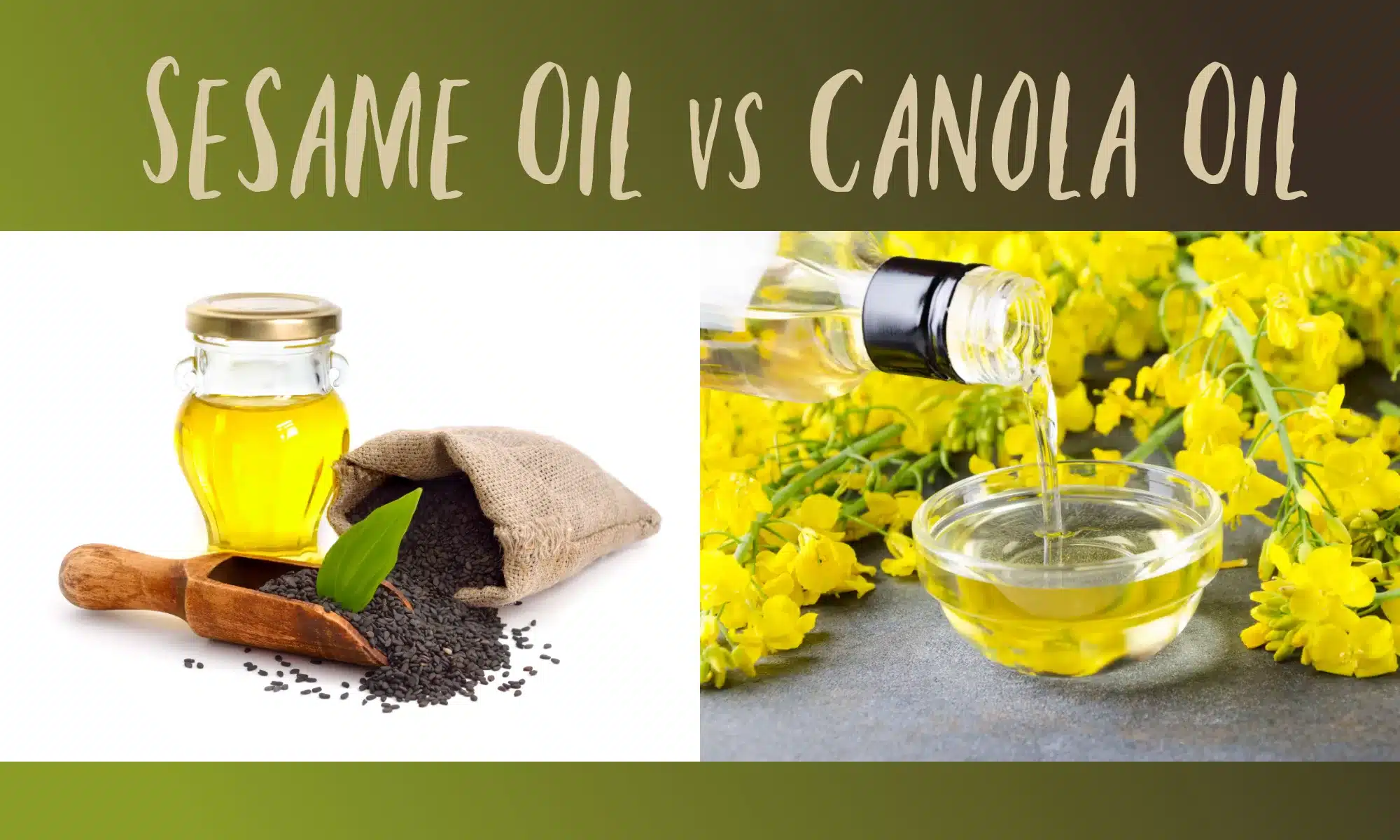
Comparing sesame oil vs canola oil
| Sesame oil | Canola oil | |
| Solid or Liquid? | Liquid | Liquid |
| Smoke Point (Fahrenheit) | 350-450 degrees | 225-445 degrees |
| Primary Fat | Polyunsaturated | Monounsaturated |
| Taste | Nutty | Neutral |
| Good for Cooking… | Raw, low heat, moderate heat | Raw, low, moderate, and high heat |
| Allergens | Sesame seeds | Rapeseed, canola |
| Gluten-free? | Yes | Yes |
| Keto? | Yes | Yes |
| Paleo? | Mostly yes (some debate) | No |
| Vegan? | Yes | Yes |
Differences between sesame oil and canola oil
Sesame oil is extracted from sesame seeds, which have been cultivated for centuries and are commonly found in Asian cuisine.
Canola oil, on the other hand, is derived from the seeds of the canola plant, which is a variation of rapeseed bred to have low levels of erucic acid and glucosinolates. Canola oil is widely used in North America and other parts of the world.
Sesame oil has a distinctive nutty, aromatic flavor that is highly pronounced, especially in its unrefined form. It adds a rich, toasted taste to dishes and is commonly used as a finishing oil or in stir-fries and marinades.
Canola oil, on the other hand, has a more neutral flavor profile. It is often described as mild and light, allowing the natural flavors of other ingredients to shine through in cooking and baking.
Baking and cooking with sesame oil vs canola oil
So, sesame oil and canola oil are pretty different when it comes to cooking…
Sesame oil has this awesome nutty flavor that’s often used in Asian dishes, like stir-fries and dressings. It adds a unique taste that’s hard to beat.
Canola oil, on the other hand, is more of a neutral player. It doesn’t have a strong taste, so it won’t overpower your food. You can use it for all sorts of cooking, like frying, stir-frying, and grilling.
Canola oil also has a lighter texture, which can contribute to moist and tender baked goods.
Oh, and there’s another thing to consider—the smoke point. Sesame oil has a lower smoke point, so it’s not commonly used for high-heat baking or frying as it can easily burn and develop a bitter taste. It’s better for low to medium-heat cooking, while canola oil can handle higher temperatures without smoking.
Can sesame oil and canola oil be substituted for each other?
If a recipe calls for sesame oil and you don’t have any on hand, you can substitute it with canola oil. However, keep in mind that canola oil has a much milder flavor compared to sesame oil. This means that the dish may lack the distinct nutty and aromatic flavor that sesame oil imparts. In such cases, you might want to consider adding a small amount of toasted sesame seeds or another ingredient with a similar flavor to compensate for the substitution.
On the other hand, if a recipe calls for canola oil, you can substitute it with sesame oil, but with caution. Sesame oil has a much stronger flavor, and using it as a one-to-one replacement may overpower the dish. In this situation, it’s best to use a smaller amount of sesame oil or dilute it with a more neutral oil, such as canola or vegetable oil, to achieve a milder flavor.
Nutrition: Sesame oil vs canola oil
Sesame oil has higher levels of monounsaturated and polyunsaturated fats, especially omega-6 fatty acids.
On the other hand, canola oil has a better balance of omega-6 and omega-3 fatty acids.
Since both oils are plant-based, they are also free from cholesterol.
In terms of additional nutrients, sesame oil contains vitamin E and antioxidants, while canola oil is also a good source of vitamin E.
| Per tablespoon (15mL) | Sesame oil | Canola oil |
| Calories | 120 | 124 |
| Polyunsaturated | 5.7 g | 3.9 g |
| Monounsaturated | 5.4 g | 8.9 g |
| Saturated | 1.9 g | 1.0 g |
| Trans | 0 g | 0.1 g |
| Total Fat | 13.6 g | 14 g |
| Cholesterol | 0 | 0 |
The primary fat source is bolded.
How to store sesame oil and canola oil
To keep sesame oil fresh, I store it in the refrigerator. This is especially useful if you don’t use it frequently. The cold temperature slows down oxidation and prevents the oil from going rancid. Sometimes, the oil may solidify or become cloudy in the fridge, but that’s normal and doesn’t affect its quality.
On the other hand, you don’t need to refrigerate canola oil. It can be safely stored at room temperature in a cool, dark place like the pantry. Canola oil has better stability due to its composition, making it less prone to oxidation, but it can still go bad if not stored correctly.
Sesame oil vs canola oil: Which is better
So, it depends on what you’re making and how you want it to taste. Personally, I have found that sesame oil is my favorite when it comes to noodle dishes and Asian cuisine in general. It has a rich, nutty flavor that adds a distinct and delicious taste to stir-fries, marinades, and dressings.
On the other hand, when it comes to versatility and adaptability, canola oil takes the lead. Canola oil has a high smoke point/greater stability and a neutral taste, making it suitable for various cooking methods and all sorts of cuisines.
FAQs
Yes, you can use sesame oil as a substitute for canola oil in certain recipes, but be aware that it will impart a strong, distinctive flavor to the dish.
Sesame oil can be a healthy oil when consumed in moderation due to its beneficial fatty acid profile and various nutrients, but it is high in calories, so portion control is important.
Each oil has its unique nutritional profile, so it’s difficult to make a definitive claim. However, when consumed as part of a balanced diet, sesame oil can provide valuable health benefits.




Leave a Comment