
New York still does not have a Buc-ee’s, and for some road-trippers, that feels increasingly strange.
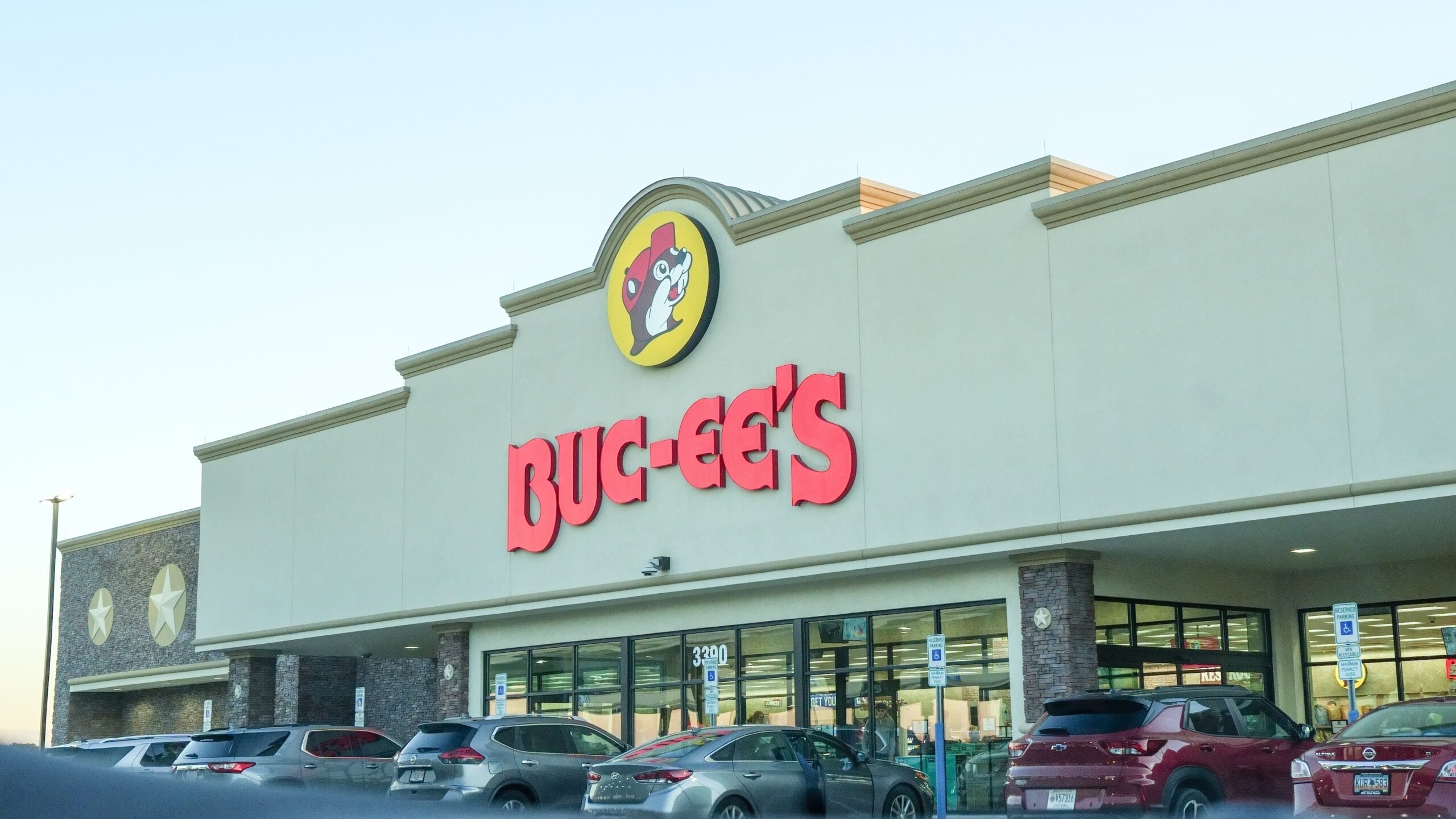
The Texas-based travel center chain has been expanding across the country with massive stores, clean bathrooms, barbecue sandwiches, Beaver Nuggets, branded merchandise and rows of fuel pumps. Buc-ee’s has already moved well beyond Texas, and the company keeps pushing into new states.
That has left New York drivers asking the obvious question: Why not here?

The question has only become more noticeable as Buc-ee’s expands farther north and east. The chain is opening or planning first locations in several new states — Arizona, Arkansas, Kansas, Louisiana, North Carolina and Wisconsin among them — and Ohio already has its first Buc-ee’s in Huber Heights, with a second site approved in Mansfield (currently targeting a Q2 2028 opening). As we’ve seen with other states still waiting for their first Buc-ee’s, the company tends to move carefully, picking highway-heavy sites where its giant travel center format makes the most sense.
New York has the traffic. It has the road trips. It has long interstate corridors. It has millions of drivers.
But it still has no confirmed Buc-ee’s project. The closest current Buc-ee’s to New York is the Mount Crawford, Virginia location on Interstate 81, which opened in June 2025 — still hours away from New York’s southern tier.
One likely reason is the size of the stores. Buc-ee’s is not a normal gas station or convenience store. Its newer travel centers can require enormous sites, often around 74,000 to 75,000 square feet with 100-plus fueling positions, large parking areas and major traffic flow in and out of the property.
That kind of land can be hard to find in the right parts of New York.
A Buc-ee’s would not make much sense in New York City, where land is too dense and expensive for the chain’s road-trip model. It would almost certainly need to be upstate, near a major highway corridor such as I-87, I-90, I-81, I-84 or I-86.
On paper, several parts of New York could work. The Thruway corridor has steady long-distance traffic. The Hudson Valley sees heavy travel between New York City, Albany and points north. Western New York has cross-state travel, Canadian traffic and access toward Ohio and Pennsylvania. Central New York has interstate junctions and long-haul drivers moving across the state.
But Buc-ee’s does not just need traffic. It needs the right site, local approvals, utility access, road improvements and enough room to handle crowds.
That can be a major hurdle. Just look at Pennsylvania: in May 2026, Buc-ee’s publicly denied a viral rumor that it was planning a Plainfield Township location, with the company’s general counsel calling a circulating letter of intent invalid. The chain’s caution about which projects get confirmed — and which get shut down — applies just as much to New York.
Buc-ee’s projects often bring excitement because they promise jobs, tax revenue and tourism buzz. But they can also raise concerns about traffic, lighting, noise, fuel infrastructure and the scale of development. In New York, where local land-use decisions can be complicated, a Buc-ee’s-sized proposal would likely face close scrutiny.
Another factor is the state’s existing travel-stop system. The New York State Thruway operates 27 service areas along its 570-mile system, and the entire network was just rebuilt as part of a $450 million private redevelopment project that was completed in November 2025 with operator Applegreen. Every service area now offers gas, restrooms, free Wi-Fi and modernized amenities. Buc-ee’s is different from a highway rest stop, but New York’s recently overhauled service area system already captures a lot of the travel-center behavior on the state’s most important road-trip route.
Buc-ee’s also tends to favor big, standalone travel centers just off major highways, not small service plazas built directly into toll-road infrastructure. That could make some of New York’s most obvious corridors less simple than they appear — the Thruway is a toll road, and its service areas are part of a contracted system with Applegreen.
Competition may also matter.
New York has strong regional convenience-store brands and travel stops, especially upstate. Stewart’s Shops, Byrne Dairy, Mirabito and QuickChek (which operates in the Hudson Valley and Long Island, with expansion planned into the Capital Region) already serve everyday convenience customers. Buc-ee’s is more of a destination than a normal convenience store, but it would still be entering a market where customers already have familiar options.
That does not mean Buc-ee’s will avoid New York forever.
In fact, the opposite may be true. The company’s expansion into Ohio, Virginia and other eastern states suggests it is getting closer. The closest hint the chain has dropped near the region was a Buc-ee’s billboard along the New Jersey Turnpike in 2024, which read “Buc-ee’s: 581 miles South” — a tongue-in-cheek pointer to the chain’s then-nearest location in Florence, South Carolina. A company spokesperson confirmed it was a brand-awareness play, not a coming-soon sign, but it was the first time the chain publicly winked at Mid-Atlantic drivers. If Pennsylvania eventually lands a confirmed store, that would bring the beaver even closer to New York’s southern tier and Hudson Valley travelers.
For now, though, New York remains on the outside.
There have been online rumors and plenty of fan speculation, but there is no official New York Buc-ee’s location, no confirmed opening date and no public project that puts the state on the chain’s map.
If Buc-ee’s eventually comes to New York, the first location would likely be far from Manhattan and closer to a major highway corridor with room to build. Possible fits could include areas near the Thruway, the Southern Tier, the Capital Region, Central New York or western New York.
Those places have the kind of long-distance traffic Buc-ee’s likes. They also have more space than the state’s densest metro areas.
Still, Buc-ee’s has shown that it does not rush into every obvious market at once. The chain seems willing to let demand build while it expands one carefully chosen site at a time.
That may be the real answer for New York.
The state is not too big for Buc-ee’s. It is not too far away anymore. And it is not lacking drivers who would visit.
But a New York Buc-ee’s would need the right highway, the right parcel, the right local approvals and the right moment.
Until that happens, New Yorkers who want Beaver Nuggets will still have to cross state lines.
Links on this page may be affiliate links, for which the site earns a small commission, but the price for you is the same


Leave a Comment