

In case you haven’t heard, food dyes are on the way out. The FDA (under the guidance of Robert F. Kennedy, Jr., United States Secretary of Health and Human Services) is asking food and beverage manufacturers to undergo a voluntary ban on artificial food dyes by the end of 2026.
Some foods rely heavily on food dyes to give them their signature looks, and are on the chopping block with the proposed ban. Let’s look at the top 10…
Follow The Coconut Mama
• For fun lists, healthy living tips, and bar conversation topics, make sure to follow The Coconut Mama. Click here to access The Coconut Mama’s profile page and be sure to hit the Follow button here or at the top of this article!
• Have feedback? Add a comment below!
Shutterstock
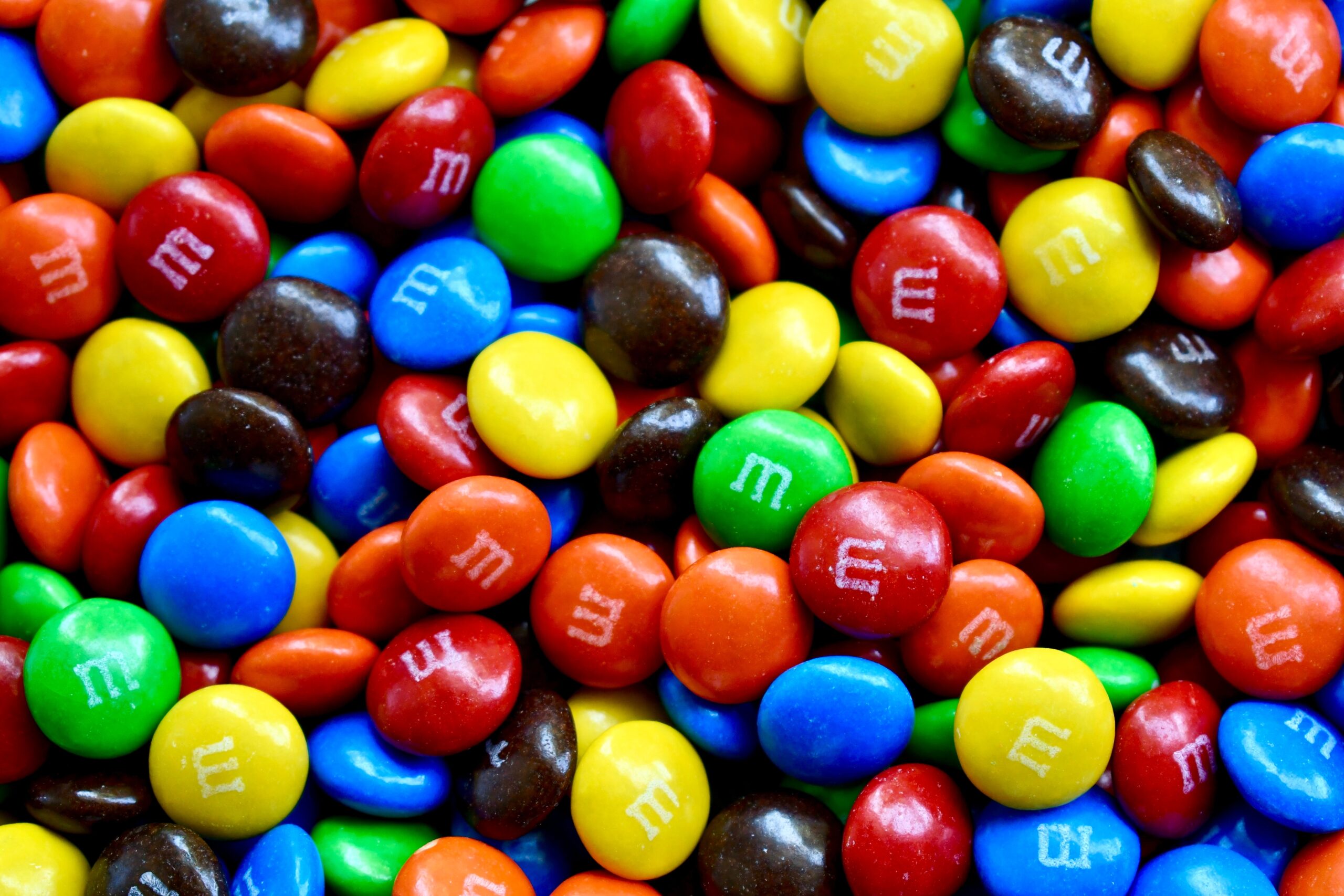
If you’ve ever had a handful of M&Ms for more than a few seconds, you’re probably already aware of the melted dye mess that gets on your palms.
The candy coating that gives M&Ms their bright, distinct colors includes artificial dyes. These are all of the dyes in M&Ms:
- Blue 1 Lake
- Yellow 6
- Red 40
- Yellow 5
- Blue 1
- Yellow 6 Lake
- Red 40 Lake
- Yellow 5 Lake
- Blue 2 Lake
- Blue 2
(Lake dyes are made by combining the regular dye with an insoluble binder. This helps it not to dissolve in water.)
Shutterstock

Like M&Ms, a lot of the appeal of Skittles comes from their fruity-looking colors. Check out all of the banned dyes in original Skittles:
- Red 40 Lake
- Yellow 5 Lake
- Blue 2 Lake
- Yellow 6 Lake
- Titanium Dioxide
- Blue 1 Lake
- Yellow 6
- Red 40
- Yellow 5
- Blue 1
Wrigley (the maker of Skittles and a division of Skittles) can choose natural alternatives to color Skittles. We haven’t seen any announcements from Wrigley about going dye-free yet, though.
Shutterstock

Mountain Dew isn’t the only soda with dyes, but it’s one of the most popular sodas with a distinct color.
The nearly fluorescent shade of greenish yellow in Mountain Dew is from Yellow 5, and other flavors of Mountain Dew (Baja Blast, Code Red, etc.) also have banned dyes.
Shutterstock

The color of red licorice is so important that it’s half of its name! Twizzlers have been around since 1929, and they get their red hue from Red 40.
Red Vines (a competing licorice brand) has a “Made Simple” line of red licorice that uses radish extract for coloring. Another common natural red dye is beet juice, so we’ll see if Twizzlers chooses one of those sources if it reformulates its products.
Shutterstock

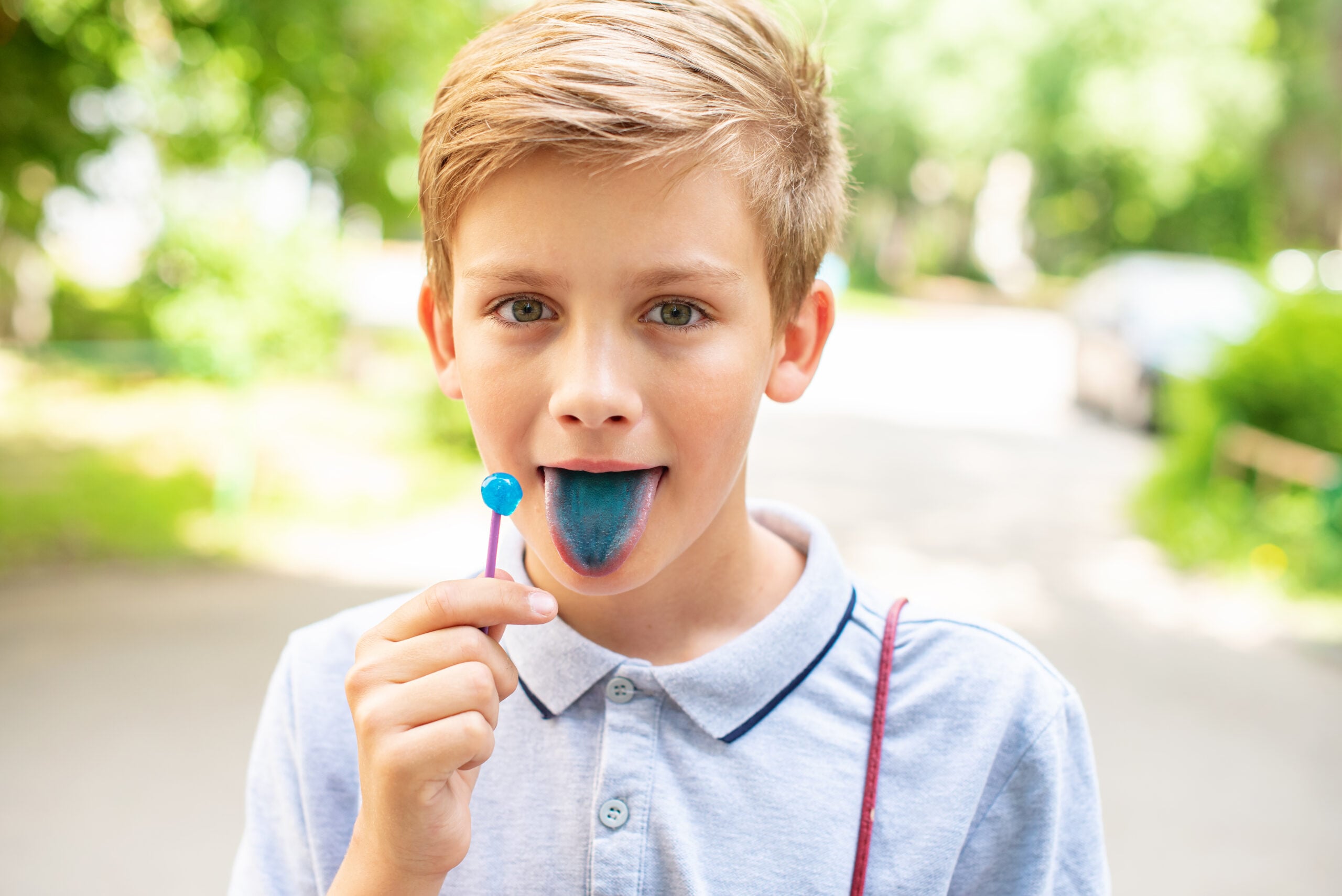
I can’t think of any candy that stains kids’ tongues more intensely than Ring Pops. Give a kid a ring pop, and their tongue will still be blue hours later, and that just shows how much dye is packed in there.
The dyes will vary depending on the flavor, like Blue 1 and Red 40. (Interestingly, the watermelon flavor has Blue 1 and turmeric as a natural color, so maybe we’ll see more natural dye alternatives soon?)
Shutterstock

Toucan Sam and the brightly-colored O’s are a classic breakfast cereal that was introduced in 1963. The flavor of the O’s is the same regardless of the flavor, but the dyes used to create the red, orange, yellow, purple, and blue colors are:
- Red 40
- Yellow 5
- Blue 1
- Yellow 6
Shutterstock
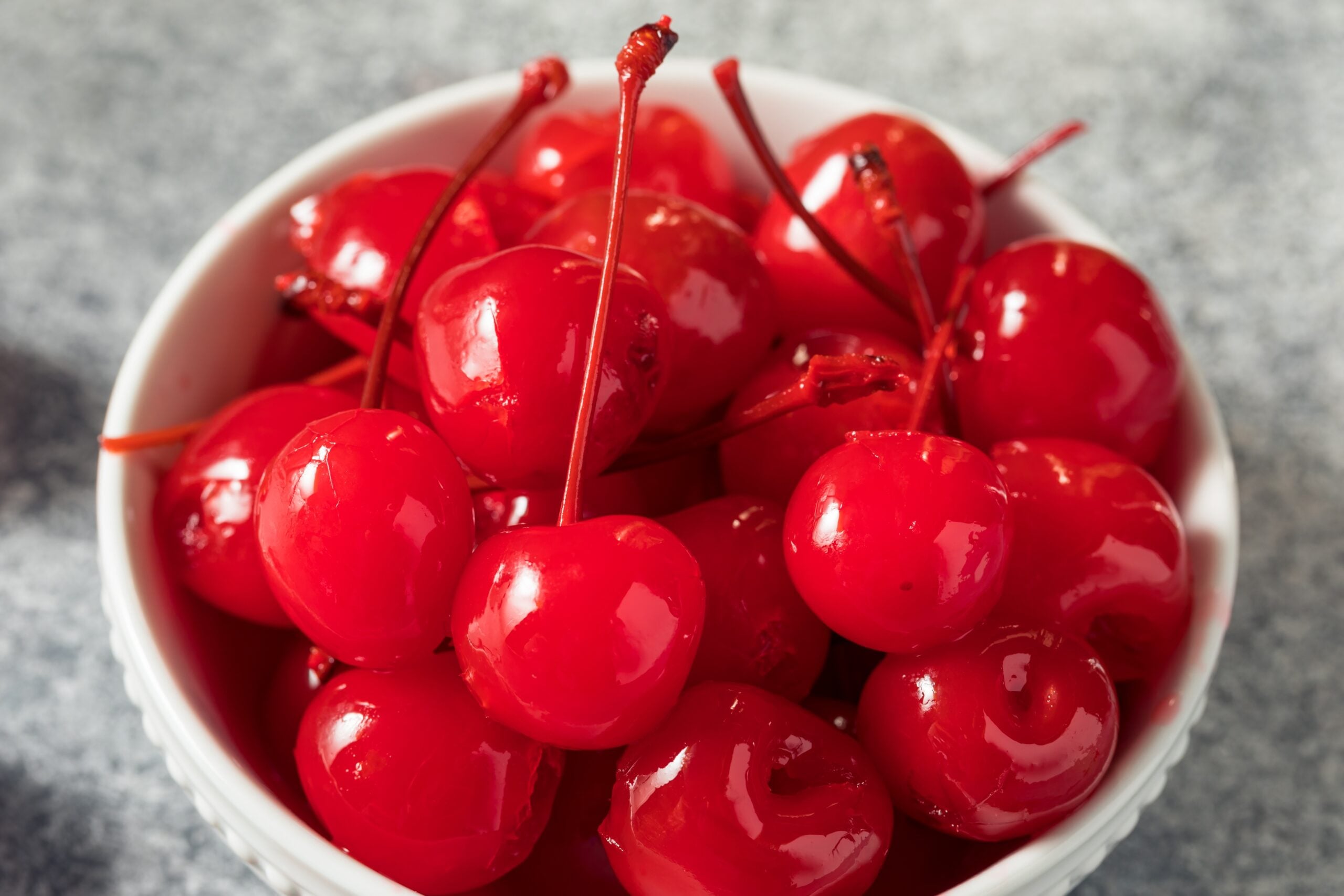
The saying “the cherry on top” comes from the maraschino cherry that tops sweet treats like milkshakes and ice cream sundaes. You’ve probably noticed that maraschino cherries are an intense shade of red, and that’s because they usually contain Red 40.
Dye-free maraschino cherries DO exist, but many of the kinds used in restaurants still use Red 40.
Follow The Coconut Mama
• For fun lists, healthy living tips, and bar conversation topics, make sure to follow The Coconut Mama. Click here to access The Coconut Mama’s profile page and be sure to hit the Follow button here or at the top of this article!
• Have feedback? Add a comment below!
Shutterstock

Like Ring Pops staining a kid’s tongue, Cheetos leave you with a fluorescent orange coating on your fingertips. Think that’s all from natural cheese? Not even close!
Cheetos use Yellow 6 to make them look even cheesier. It’s easy enough to make Cheetos without dye, though. Just look at Simply Cheetos – White Cheddar, which is free of artificial dyes.
Shutterstock
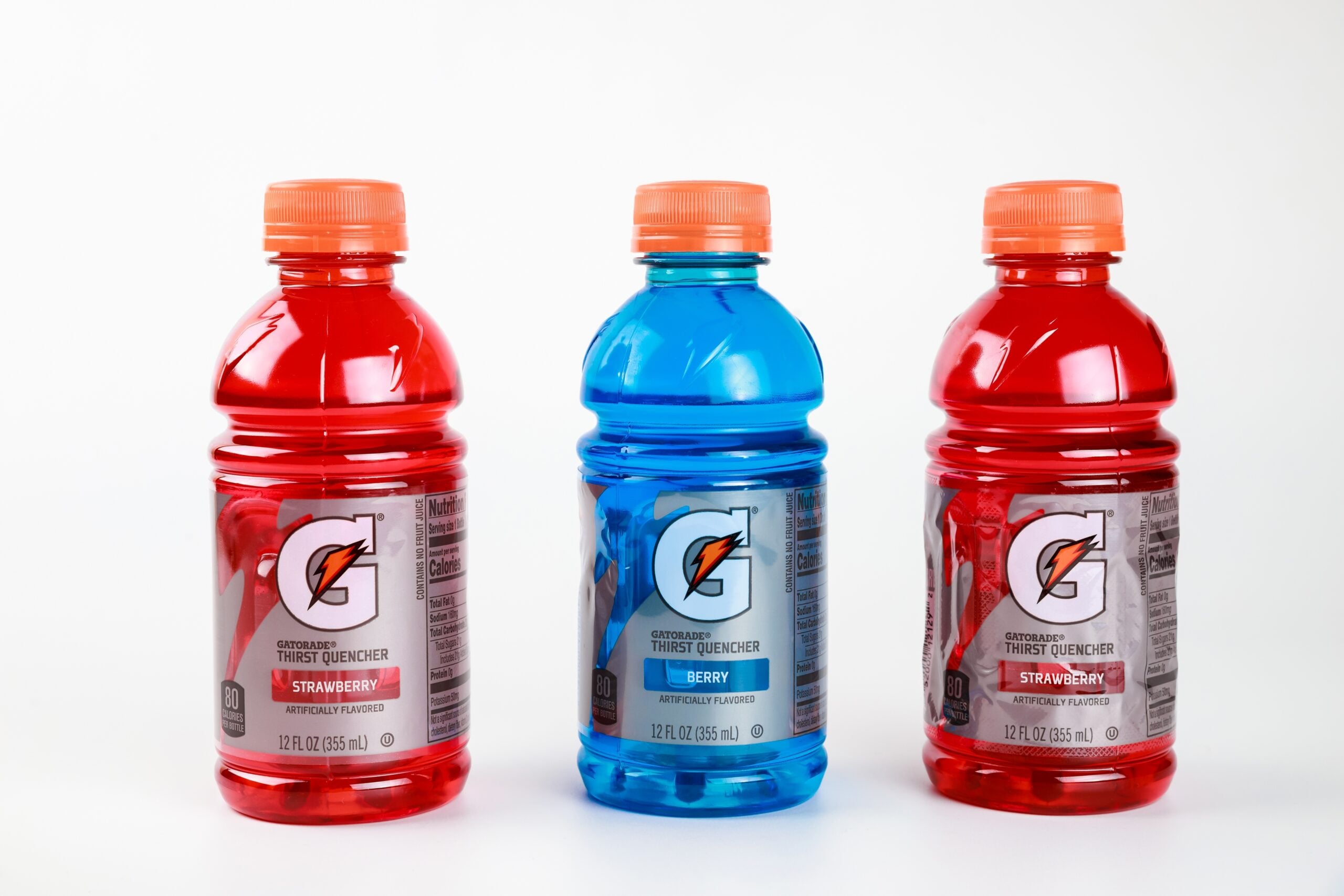
Sports drinks are meant to replace lost fluids and electrolytes…but do we need the dye in there? Nope, not a bit…
Gatorade and other sports drinks are often colored red, orange, and blue, and therefore contain tons of artificial food dyes.
Shutterstock

The soft pink and blue colors that classic cotton candy is famous for come from artificial dyes. The light pink uses Red 40, and the soft blue comes from Blue 1. (Other colors and dyes are used, too — but pink and blue are classics.)
Dye-free cotton candy is white, but it tastes the same as colored cotton candy. It’s harder to find, but many online retailers sell dye-free cotton candy.
Shutterstock
There you have it – some of the most dye-laden foods and drinks out there! As food manufacturers are pledging their commitment to going dye-free to honor the FDA’s ban, we might see these formulations changing, and sooner rather than later.
What would you think of these foods using natural dyes, or no dyes at all? Let me know in the comments!
Shutterstock


Leave a Comment