

Texas has long been one of the strongest, most resilient economies in the country.
But right now, it’s flashing warning lights.
Spending has cratered. Food industry jobs are disappearing. And for the first time in years, even Texans are cutting back.
This isn’t just a Texas story – it’s a sign of what could happen everywhere next…
Follow The Coconut Mama
• For fun lists, healthy living tips, and bar conversation topics, make sure to follow The Coconut Mama. Click here to access The Coconut Mama’s profile page and be sure to hit the Follow button here or at the top of this article!
• Have feedback? Add a comment below!
Shutterstock

The May 2025 Texas Retail Outlook Survey recorded a jaw-dropping 33-point drop in retail activity.
That’s the sharpest monthly decline since April 2020 – aka peak lockdown.
And it’s not just big-ticket items that are falling.
People are spending less and less at grocery stores, restaurants, and fast-food chains.
Shutterstock

With inflation still biting and wages barely moving, food is one of the first things people are cutting back on.
Families are eating out less. Grocery trips are getting smaller.
Even fast food isn’t safe, because when you’re worried about rent or gas, that $5 burger doesn’t feel “cheap” anymore.
Shutterstock

Texas-based brands like Whataburger, Golden Chick, Taco Cabana, and Pappadeaux built empires off consumer loyalty.
But now? Slower foot traffic. Shorter hours. Quiet closures.
Chains that once thrived in oil-boom towns and busy suburbs are scaling back fast.
Shutterstock

The Dallas Fed survey shows retail employment shrinking across the board.
The employment index? Still negative at -8.1.
The average workweek? Down again.
That means fewer shifts, fewer tips, less money – especially for food service workers already on thin margins.
Shutterstock

It’s not just restaurants. Texas has lost multiple major food production facilities in the past year:
– TreeHouse Foods closed its San Antonio plant
– Tyson pulled out of Amarillo
– Several meatpackers and bottlers downsized or outsourced
That’s thousands of workers.
Shutterstock

When a single food plant shuts down, the damage spreads:
Truck drivers lose contracts.
Local ranchers and farms lose buyers.
Even schools lose vendors for lunches.
In rural Texas, one factory might be the biggest employer for miles.
Shutterstock

Even Texans who still have jobs are getting nervous.
The company outlook index is deep in the red at -25.3, and spending is down across the board.
People aren’t buying unless they have to, and that’s a dangerous cycle to be in.
Follow The Coconut Mama
• For fun lists, healthy living tips, and bar conversation topics, make sure to follow The Coconut Mama. Click here to access The Coconut Mama’s profile page and be sure to hit the Follow button here or at the top of this article!
• Have feedback? Add a comment below!
Shutterstock

Even as inflation slows, the cost of food is still pretty high across the U.S.
Essentials like bread, eggs, etc. are all more expensive, and it adds up.
Texans are working just as hard, but their dollars aren’t going as far.
Shutterstock

Normally, when budgets get tight, people turn to fast food.
But not this time. Now, eating out is often MORE expensive than making something at home.
As a result, foot traffic is down at restaurants, even at places like McDonald’s, Wendy’s, and Popeyes.
Chains are responding with deals and rewards apps, but even that might not be enough…
Shutterstock
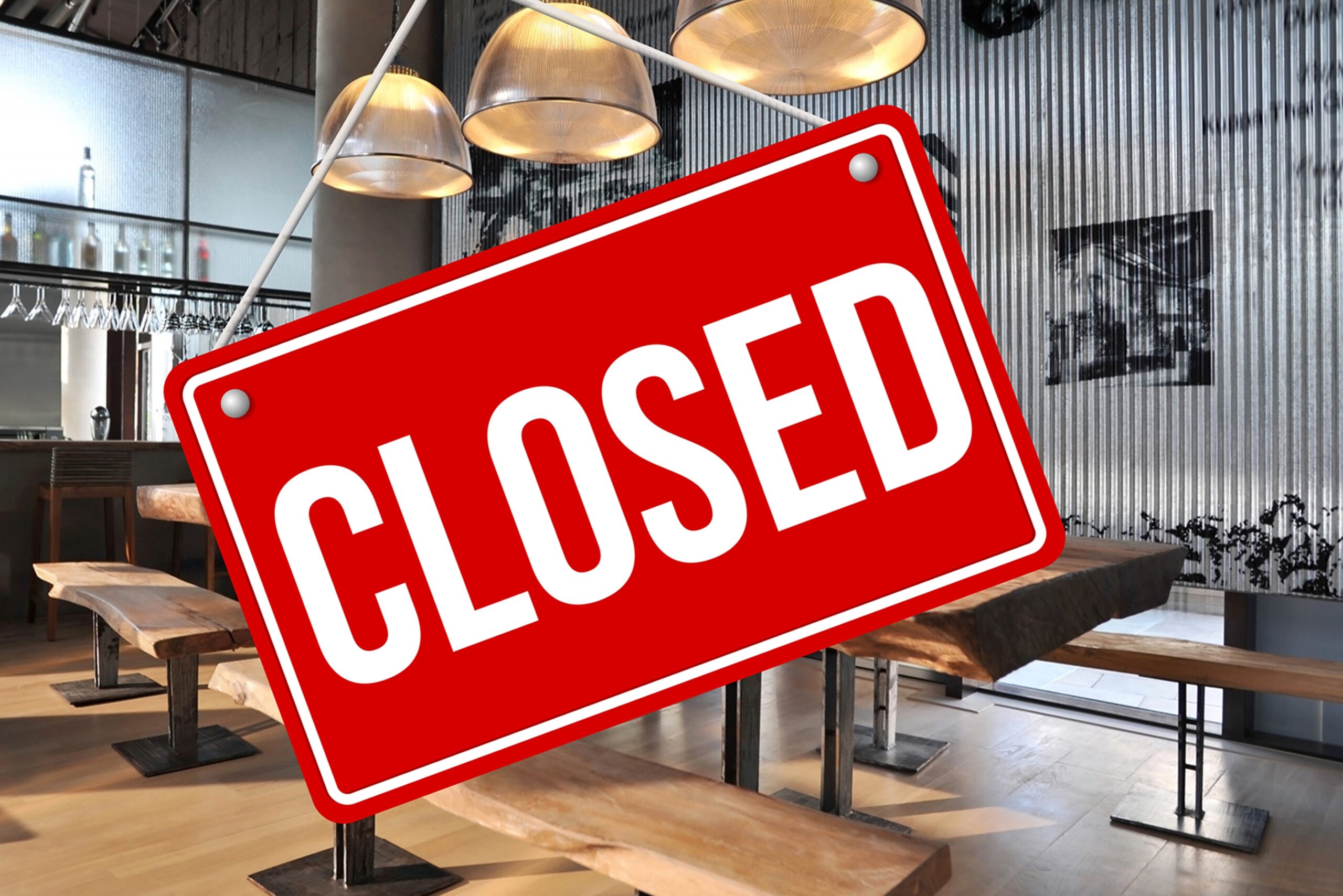
Many chains aren’t officially announcing closures, but leases aren’t being renewed, locations are disappearing, and new store growth is pausing.
Expect to see more empty buildings where your favorite sandwich shop or smoothie place used to be.
Shutterstock

It’s not just restaurants. Grocery stores are feeling it too.
High-end spots are bleeding customers. Independent grocers in small towns? Barely staying afloat.
Even H-E-B – Texas’ grocery giant – is seeing shoppers pull back, trade down, and buy less.
As middle-class budgets tighten, we’re seeing fewer options, emptier shelves, and more communities slipping toward food deserts.
Shutterstock

Let’s not forget: Texas is one of the top five contributors to U.S. GDP.
It’s a major hub for food production, distribution, and consumption.
So if consumer spending is tanking here…what happens next in the rest of the country?
Shutterstock

What’s happening in Texas is starting to show up everywhere.
In California, food factories are shutting down.
Georgia’s seen major disruptions to its grocery supply chain.
Illinois and Michigan have quietly lost plants, bottlers, and bakery jobs.
From coast to coast, the same story is playing out:
Less spending. More layoffs. And more economic uncertainty ahead.

What do YOU think? Are you spending less on food lately?
Have you seen your favorite burger joint, bakery, or grocery store shut its doors?
Let us know in the comments!
Shutterstock





Leave a Comment