
When it comes to vinegar, there’s a wide array of options available, each with its own unique flavor profile and potential health benefits.
Two popular types are apple cider vinegar and champagne vinegar. While they may seem similar at first glance, these vinegars actually have distinct characteristics that set them apart.
In this article, I’ll delve into the differences between apple cider vinegar and champagne vinegar, explore their best uses, discuss nutritional aspects, and answer some common questions regarding their substitution and properties!
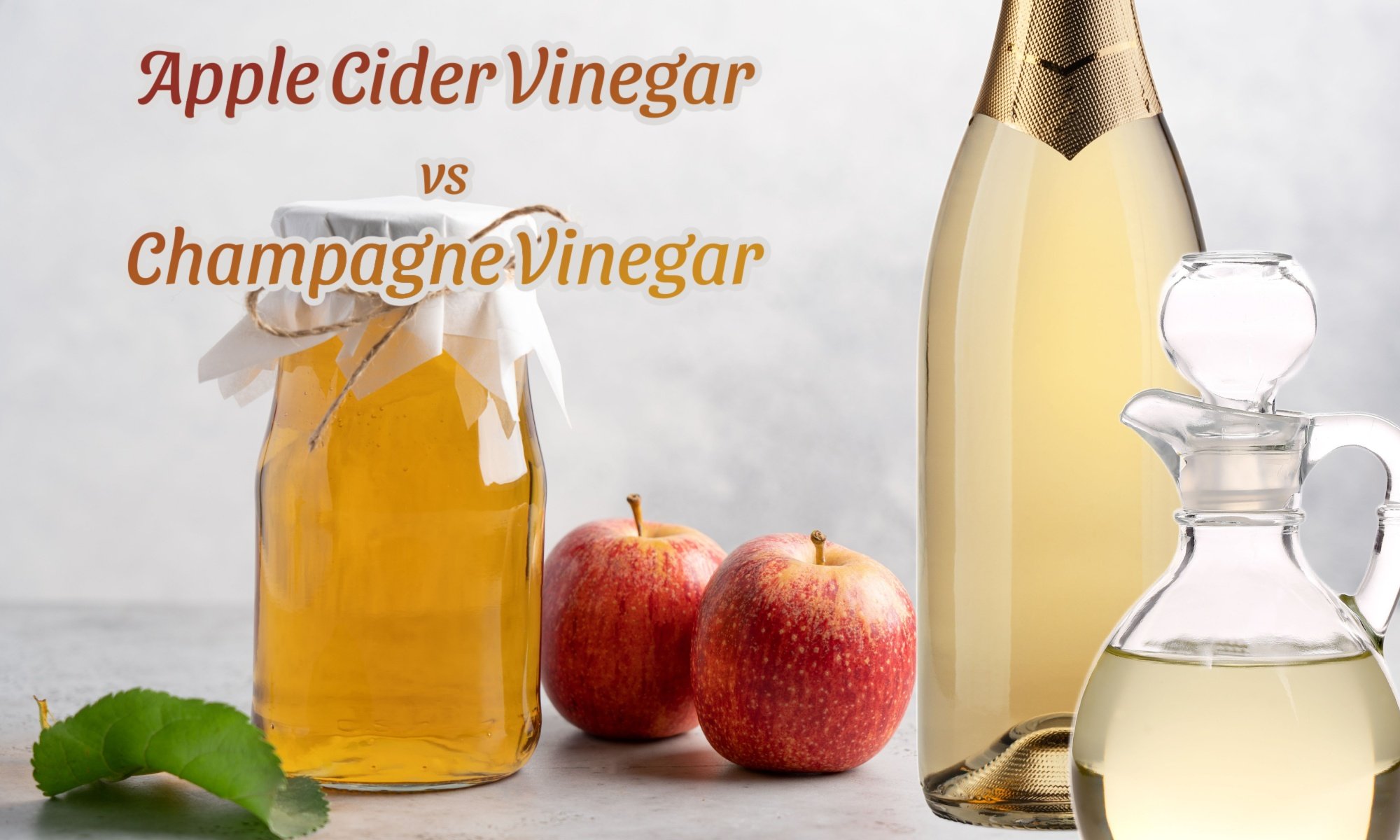
Apple cider vinegar vs champagne vinegar
Apple cider vinegar (ACV) is made from fermented apples, offering a tart, fruity flavor with higher acidity levels. It’s commonly used in salad dressings, marinades, and for household cleaning, with potential health benefits including aiding digestion and blood sugar control.
Champagne vinegar, derived from fermented champagne grapes, has a lighter, delicate taste with lower acidity. It’s often used in vinaigrettes and sauces, may contain antioxidants, and is typically pricier and found in specialty stores. Both have long shelf lives but differ in flavor, cost, and availability.
| Apple cider vinegar | Champagne vinegar | |
| Source | Made from fermented apples | Made from fermented champagne grapes |
| Flavor profile | Tart, fruity, with a hint of apple flavor | Light, delicate, slightly acidic |
| Acidity level | Generally has a lower acidity level | Generally has a higher acidity level |
| Color | Light to medium amber | Light gold to pale yellow |
| Common uses | Salad dressings, marinades, pickling, household cleaning | Salad dressings, vinaigrettes, sauces, reductions |
| Health benefits | Contains acetic acid, may aid in digestion, weight loss, and blood sugar control | May contain antioxidants and phenolic compounds, potentially beneficial for heart health |
| Shelf life | Can last indefinitely if stored properly | Generally has a long shelf life |
| Cost | Usually less expensive compared to champagne vinegar | Typically more expensive than apple cider vinegar |
| Availability | Widely available in most grocery stores | May be found in specialty stores or gourmet markets |
Differences between apple cider vinegar and champagne vinegar
At first glance, the most obvious disparity between apple cider vinegar and champagne vinegar lies in their raw materials and production processes.
Apple cider vinegar, as the name suggests, is derived from fermented apple juice. This results in a slightly fruity, tangy flavor profile with a hint of sweetness.
On the other hand, champagne vinegar is made from champagne or sparkling wine, imparting a more delicate and nuanced taste reminiscent of the wine it originates from (typically Chardonnay or Pinot noir).
Apple cider vinegar typically has a deeper amber hue, owing to its apple base, while champagne vinegar boasts a clearer, paler appearance.
Additionally, their acidity levels can vary, with apple cider vinegar typically ranging between 5-6% acidity and champagne vinegar often having a slightly higher acidity level, around 6-7%.
How to use apple cider vinegar and champagne vinegar
Apple cider vinegar, with its robust, tangy and slightly fruity profile, is great in dishes like marinades, dressings, and sauces. Its natural sweetness adds depth to dishes, particularly those featuring pork, poultry, or hearty salads. Plus, its acidity can help tenderize meats and balance richer flavors.
On the other hand, champagne vinegar offers a more delicate and nuanced taste, with subtle hints of floral and fruit notes derived from the champagne grapes. This vinegar can enhance lighter dishes without overpowering them, making it an excellent choice for delicate salads, seafood, and fruit-based vinaigrettes.
Can you substitute champagne vinegar for apple cider vinegar?
Yes, these two vinegars can be substituted for one another in recipes. They have similar acidity levels, so swapping them usually works well. However, apple cider vinegar can be stronger, so keep that in mind. You may want to add a bit less.
Similarly, If a recipe calls for apple cider vinegar and you’re using champagne vinegar as a substitute, be mindful that the champagne vinegar’s lighter flavor may not provide the same depth or fruity undertones. Wine vinegars typically work best as a substitute for apple cider vinegar.
Nutrition: Apple cider vinegar vs champagne vinegar
In terms of nutritional content, both apple cider vinegar and champagne vinegar offer similar benefits. They are low in calories and contain minimal amounts of carbohydrates, fats, and proteins.
Additionally, both vinegars contain acetic acid, which is believed to have various health benefits, including aiding in digestion, stabilizing blood sugar levels, and promoting weight loss.
However, it’s essential to consume vinegar in moderation, as excessive intake can lead to adverse effects such as tooth enamel erosion or digestive issues.
Verdict: Apple cider vinegar vs champagne vinegar
Ultimately, the choice between apple cider vinegar and champagne vinegar comes down to personal taste preferences and what you’re cooking! Apple cider vinegar offers a slightly fruitier and tangier flavor, making it well-suited for heartier dishes and pickling. On the other hand, champagne vinegar’s delicate flavor lends itself beautifully to lighter dishes and seafood preparations. Whichever vinegar you choose, both apple cider vinegar and champagne vinegar are valuable additions to any kitchen pantry, offering versatility and flavor enhancement to a wide range of creations!
FAQs
Yes, you can generally substitute champagne vinegar for apple cider vinegar and vice versa, although it may slightly alter the flavor profile of the dish.
Apple cider vinegar is made from fermented apple juice, while wine vinegar, such as champagne vinegar, is made from wine or champagne.
White wine vinegar, rice vinegar, or sherry vinegar can be used as substitutes for apple cider vinegar, depending on the recipe.
Apple cider vinegar is made from fermented apple juice and retains some of the fruit’s flavor, while distilled vinegar is made from distilled alcohol and has a more neutral taste.


Leave a Comment