
Duck fat and sesame oil both, in their own right, bring a richness in flavor that transforms and elevates otherwise ordinary dishes. Sesame oil, extracted from sesame seeds, has a robust nutty flavor with a distinctive tahini flavor, while duck fat is a solid that comes from an animal source – it has a savory depth that’s hard to match. So, if you’re looking for flavor and aren’t sure which option to go for, read on to find out how these two fare in the kitchen!
Comparing duck fat vs sesame oil
| Duck fat | Sesame oil | |
| Solid or liquid? | Solid | Liquid |
| Smoke point (Fahrenheit) | 375 degrees | 350 – 450 degrees |
| Primary fat | Monounsaturated | Polyunsaturated |
| Taste | Sweet, rich | Nutty |
| Good for cooking… | Raw, low heat, medium heat | Raw, low heat, medium heat |
| Common allergens | Other meat allergies | Sesame seeds |
| Gluten-free? | Yes | Yes |
| Keto? | Yes | Yes |
| Paleo? | Yes | Mostly yes |
| Vegan? | No | Yes |
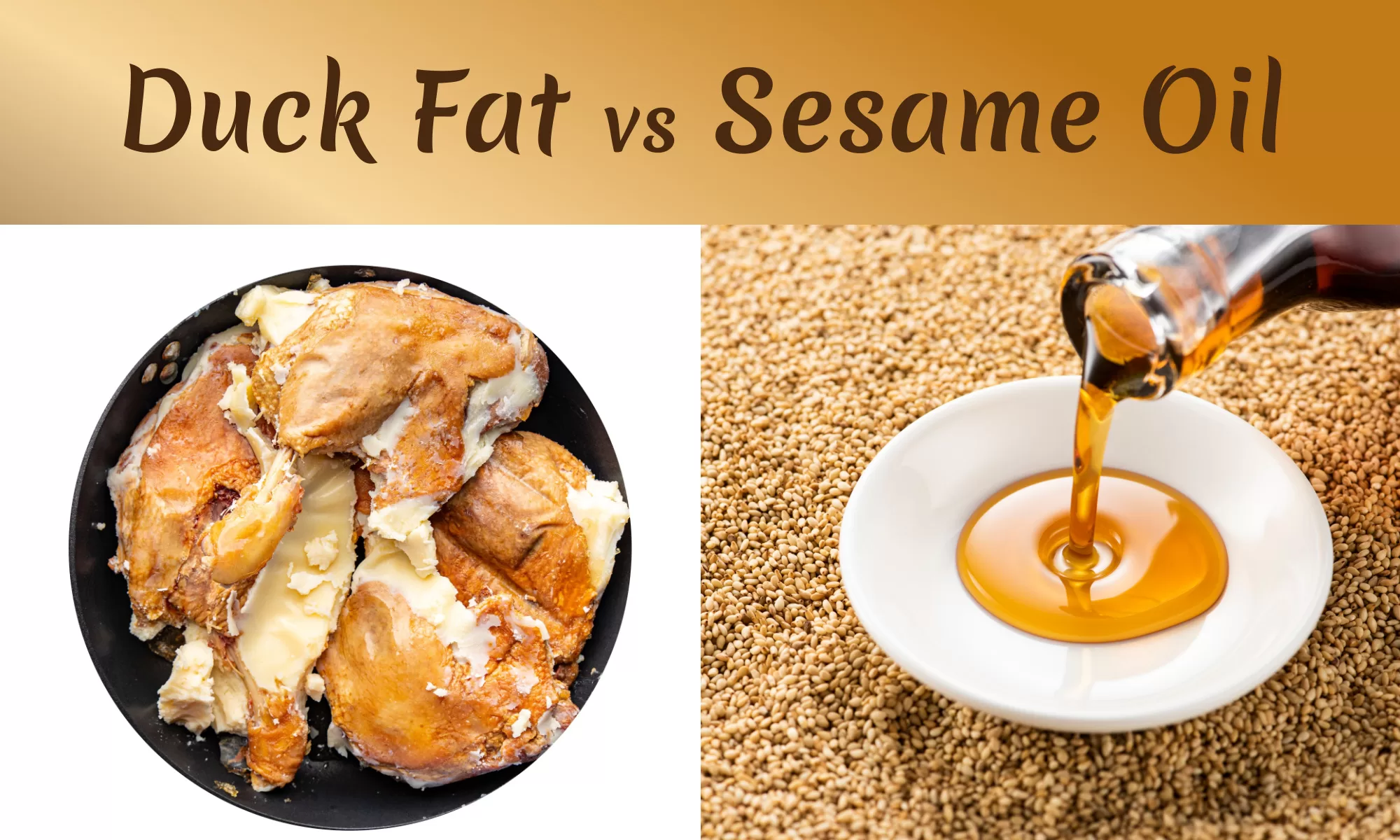
Differences between duck fat and sesame oil
While they’re both packed with incredible flavor, duck fat and sesame oil are very different when it comes to their flavors and textures. Sesame oil boasts a nutty essence that magnifies the flavor of sesame tenfold and is a versatile, liquid oil. On the other hand, duck fat has a distinct sweet-savory poultry flavor. You can get a variety of sesame oils at different price points, but duck fat is quite a luxurious fat that can be pretty expensive in comparison.
Although they’re so different in nature, duck fat and sesame oil both accommodate gluten-free, keto, and paleo diets.
Baking and cooking with duck fat vs sesame oil
I personally associate duck fat with Sunday roasts with potatoes crisped to perfection, heavenly savory gravy, savory pies and pastries, and roasted vegetables. With duck fat, it’s all about hearty cooking and baking, thanks to its magical flavors. Its solid texture and sweet, rich flavor make it an ideal pairing for anything comfort food – and some people even choose to spread it on toast!
When baking, you can even try replacing half of the butter content with duck fat and create an even flakier and tender crust with a new depth of flavor. The only downside to this delicious fat is that it has a more moderate smoke point, which means you won’t want to crank up the heat too high when using it.
Sesame oil is most known for its role in Asian-inspired dishes. Unrefined sesame oil has a classic rich and nutty flavor that is perfect for salad dressings, noodle soups, and general cooking, while the refined version will offer a higher smoke point and a more neutral flavor profile. There’s also toasted sesame oil, a bolder option that is ideal to infuse in stir-fries and marinades.
While it’s not the most commonly used in baking, it works wonders in sesame desserts like sesame oil cake, sesame balls, and chewy sesame cookies.
Can duck fat and sesame oil be substituted for each other?
Because they’re so distinct, directly substituting duck fat and sesame oil for each other will be challenging. Sesame oil doesn’t typically pair well with the hearty cuisine duck fat is known to be used in, while duck fat would be an odd pairing with Asian cuisine and things like noodle dishes and fried rice.
The best substitute for duck fat is chicken fat, as it will offer that same richness and sweet poultry flavor. Meanwhile, the best substitute for sesame oil is peanut oil, which will provide a nutty flavor that works well in Asian dishes – although it won’t have that intense flavor. For something more similar in flavor, go with perilla oil (it’s most popular in Korean cuisine!).
Nutrition: Duck fat vs sesame oil
Both duck fat and sesame oil have a relatively balanced fat makeup. Although both are highest in heart-healthy monounsaturated fats, they also have significant amounts of polyunsaturated fats as well as saturated fats.
Duck fat is very high in calories, at 130 calories per tablespoon. Its saturated fat content is also higher than sesame oil, and it contains cholesterol – both of which you’ll want to limit in your diet. In contrast, sesame oil is on the low end when it comes to fats and calories among cooking oils.
Interestingly, duck fat is also made up of healthy oleic acids and linoleic acids, which means it has a similar fatty acid profile to that of olive oil and avocados. Sesame oil contains compounds with antioxidant properties, mainly sesamol. It’s also a good source of vitamin K, required for healthy bones and blood clotting purposes.
Like all cooking oils and fats, duck fat and sesame oil are high in calories and fat overall, so use them in moderation.
| Per tablespoon (15mL) | Duck fat | Sesame oil |
| Calories | 130 | 100 |
| Polyunsaturated | 4 g | 3.4 g |
| Monounsaturated | 6 g | 5.5 g |
| Saturated | 4 g | 2.1 g |
| Trans | 0 g | 0 g |
| Total fat | 14 g | 11.3 g |
| Cholesterol | 15 mg | 0 |
The primary fat source is bolded.
How to store duck fat and sesame oil
To maintain freshness, duck fat should be stored in an airtight container made of stainless steel or glass in the fridge. This will help keep it fresh and protect it from going rancid. If you have shelf-stable duck fat, it won’t need to be refrigerated and can often last several years! Once opened, duck fat should last up to 6 months in the fridge. When frozen, duck fat can last for up to a year or longer.
Sesame oil should be stored in a cool, dark place away from heat and light sources. It’s especially sensitive to air exposure, so make sure the lid is tightly sealed. For best results, sesame oil should be used up within six months once opened and within a year if stored in the fridge. Sealed bottles should last around a year in the pantry or two in the fridge.
Duck fat vs sesame oil: Which is better?
Choosing between duck fat and sesame oil really depends on what flavor profile you’re aiming for and the type of cooking and baking you’re doing. If you’re after a slightly sweet, savory richness, particularly in hearty dishes like confit or roasted potatoes, duck fat is better. It’ll elevate all the flavors in your dish and provide a luxurious touch to various recipes. On the other hand, sesame oil is the right pick if you’re looking for distinct nutty and aromatic notes, especially in Asian cuisine.
FAQ
Duck fat contains a mix of saturated and unsaturated fats but may be higher in saturated fats compared to some plant-based oils. However, the healthiness of oil can depend on the type – whether it’s olive, sesame, or another variety. Many plant-based oils are popular for their higher heart-healthy monounsaturated or polyunsaturated fats and vitamin and mineral content, while duck fat contains more of a mix of less healthy compounds like cholesterol and other vitamins.
Duck fat contains 15 mg of cholesterol per tablespoon, but it’s important to note that not all cholesterol is “bad.” Duck fat is a source of both HDL “good” and LDL (“bad”) cholesterol, which can contribute to a healthier fat profile. Like with any fat, moderation is key!




Leave a Comment