
Ghee, essentially clarified butter, adds a rich, nutty essence to everything it touches, from Indian curries to delicious sweet treats, while shortening is a reliable plain wonder that offers its fantastic texture to flaky pastries and pie crusts. There’s one thing that these two kitchen fats have in common, and that’s their ability to transform the dish you’re making into something special. Ready to see what they can offer? Read on!
Comparing shortening vs ghee
| Shortening | Ghee (clarified butter) | |
| Solid or liquid? | Solid | Semi-solid |
| Smoke point (Fahrenheit) | 360 degrees | 480 degrees |
| Primary fat | Monounsaturated | Saturated |
| Taste | Buttery | Buttery |
| Good for cooking… | Raw, low heat, medium heat | Raw, low heat, medium heat, high heat |
| Common allergens | Depends on ingredients | Milk |
| Gluten-free? | Yes | Yes |
| Keto? | Yes | Yes |
| Paleo? | Palm shortening only | Mostly yes |
| Vegan? | No | No |
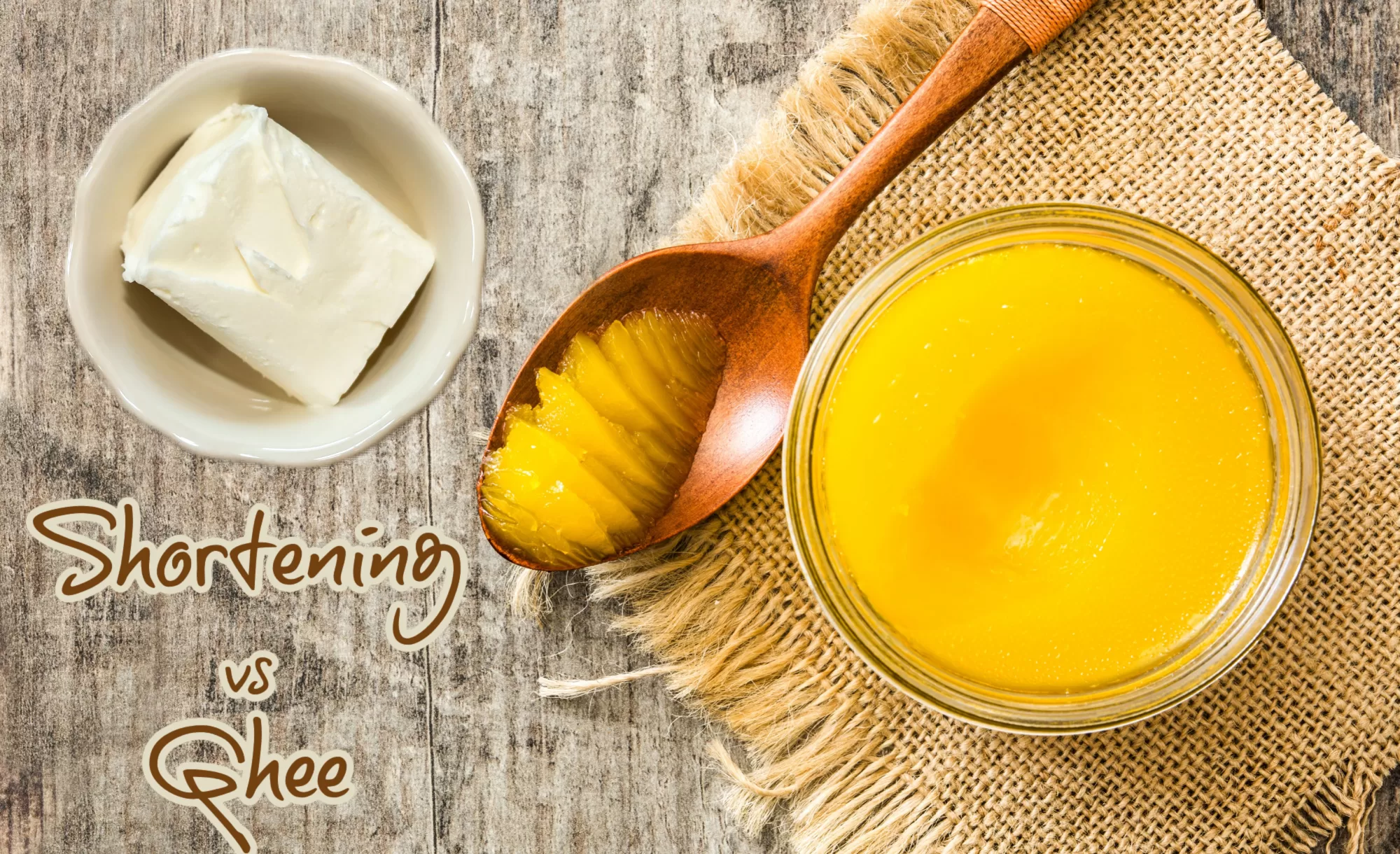
Differences between shortening and ghee
Shortening and ghee have different origins, which makes their flavor profiles extremely different! While shortening is typically a vegetable-based solid fat, ghee is a clarified butter, which means that it goes through a process where the milk solids and water are removed. Shortening has a neutral flavor that won’t impart any particular taste to your food, but ghee boasts a rich, nutty, almost caramel-like flavor. Thanks to the clarifying process, it has a lighter but grainier mouthfeel than butter does.
Both shortening and ghee are keto-friendly and gluten-free. You can even make your own ghee if you’re feeling adventurous!
Baking and cooking with shortening vs ghee
When I’m baking, I always reach for my trusty can of shortening when I’m making classic pastries and pies – whether savory or sweet. Shortening has the ability to create amazing layers, whether for biscuits or pastries. Ghee, being more distinct in nature, is less for general baking and more for adding a touch of luxury to your goods. If you have recipes that call for butter, you can substitute in ghee for a little more nuttiness and depth of flavor for decadent treats.
In the cooking realm, ghee can withstand much higher temperatures compared to shortening – without splattering either, thanks to its semi-solid texture. Even though it has a nutty essence and a fragrant quality to it, it can be used for just about anything – adding to a biryani, coating your veggies before roasting, thickening up stews and curries, brushing on Indian breads like chapati and naan, or even making cozy hot drinks like moon milk. Meanwhile, shortening is popular in Southern cooking – frying up okra and chicken, adding texture to gumbo, or even using it in biscuits and gravy. Just be sure to keep the heat to a moderate level.
Can shortening and ghee be substituted for each other?
While shortening and ghee both serve the purpose of adding richness and texture, they have distinct flavors and properties that might not always swap seamlessly. Shortening has a neutral flavor, which means it’s typically only used for its textural properties, while ghee provides both a textural and flavor change, which you’ll have to keep in mind before adding to your dish.
If you’re looking for a better substitute for ghee, butter is ultimately the most suitable choice. However, for those pesky high-heat scenarios, avocado oil can withstand the highest of heat and provide a buttery quality as well. The best all-around substitute for shortening is Crisco or lard, given their neutral flavor and solid texture.
Nutrition: Shortening vs ghee
When we look at the nutritional makeup of shortening and ghee, we can see the biggest difference lies in their fat composition. Shortening is usually made with hydrogenated vegetable oil and/or other animal fats, which makes it highest in heart-healthy monounsaturated fats. However, it has quite a balanced fat content overall, providing a significant amount of saturated fats and some polyunsaturated fats as well.
Ghee leans more towards a high saturated fat content, which is something you’ll want to limit in your diet. It also has a much higher cholesterol content than shortening (almost 5 times!). While there is both good and bad cholesterol, you’ll still want to watch your consumption of ghee because of this. Interestingly, ghee contains less lactose than butter, which could be good news for butter lovers who are lactose-intolerant. It can also up your vitamin A intake and support heart health through its omega-3 fatty acids.
As all cooking oils and fats are high in fat and calories, be sure to use them in moderation.
| Per tablespoon (15mL) | Shortening | Ghee (clarified butter) |
| Calories | 115 | 123 |
| Polyunsaturated | 2.5 g | 0.5 g |
| Monounsaturated | 5.2 g | 4.0 g |
| Saturated | 4.6 g | 8.7 g |
| Trans | 0 g | 0 g |
| Total fat | 12.8 g | 14 g |
| Cholesterol | 7.2 mg | 35.8 mg |
The primary fat source is bolded.
How to store shortening and ghee
Shortening and ghee both need to be stored in a glass or plastic jar that is tightly sealed and placed in a cool, dark place. If you happen to live in a hot or humid climate, it might be better to refrigerate them – just be sure to leave them out to soften before using. Unopened ghee can last up to 12 months, while it’s recommended to consume ghee within 3 months of opening. Shortening cans can last for two years from the manufacture date unopened and about one year opened. The stick varieties can also last for about two years unopened but only around six months once opened.
Shortening vs ghee: Which is better?
I lean towards ghee for its rich and flavorful qualities and delicious aroma – it’s such a unique fat that can work wonders in both savory and sweet creations. But I can’t forget about shortening, which has a nostalgic, traditional charm in Southern cuisine and classic baking recipes. If you’re looking for a touch of indulgence and a burst of flavor, ghee is the better choice. On the other hand, if you want a neutral solid for a comforting down-home goodness, shortening is the right pick!
FAQ
Swapping shortening for ghee when making fried chicken can add a new depth of flavor to your dish. Ghee’s higher smoke point makes it a great alternative for deep-frying, letting you achieve that golden-brown coasting. But you’ll want to keep its distinct flavor profile in mind, as its buttery and nutty flavor might not be what you want in the moment.
Professional bakers often turn to shortening as a versatile, neutral solid in various baked goods. Its high melting point and ability to stay solid at room temperature make it a reliable pick for tender cakes, delicate pastries, and flaky pie crusts. Its neutral flavor also allows other ingredients to stand up, making it suitable for recipes where you don’t want the taste of butter to overpower it. Shortening can also add to the texture and mouthfeel of certain treats, which many bakers love.


Leave a Comment