
Dark rye flour, sometimes also known as pumpernickel flour, is one of those niche products that you might end up needing for a few different recipes, but can never find at the store.
So, instead of having to hunt some dark rye flour down in different supermarkets, why not learn how to make your own?
How Can I Use My Homemade Dark Rye Flour?
Dark rye flour can be used as a direct replacement for any other kind of flour that you would normally use in a recipe.
The key difference is that dark rye flour has an intensely nutty, browned flavor that you won’t really find in any other type of flour, even the ones advertised as wholemeal.
Just keep in mind that whatever you use your dark rye flour in, you can expect to take on the coloring of brown rye – in fact, you might even find that anything you bake with it takes on a dark red tinge as well!
What Kind Of Special Equipment Do I Need To Make Dark Rye Flour?
Making dark rye flour at home is as simple as slightly dehydrating your rye grains, and then pulverizing them in the blender until they are completely milled, and then running it all through a sieve to catch any particulate.
So a high-powered blender and a fine-meshed sieve are definitely super helpful, but if you don’t have a good blender, you could absolutely just crush up your grains in a mortar and pestle instead.
Ingredients
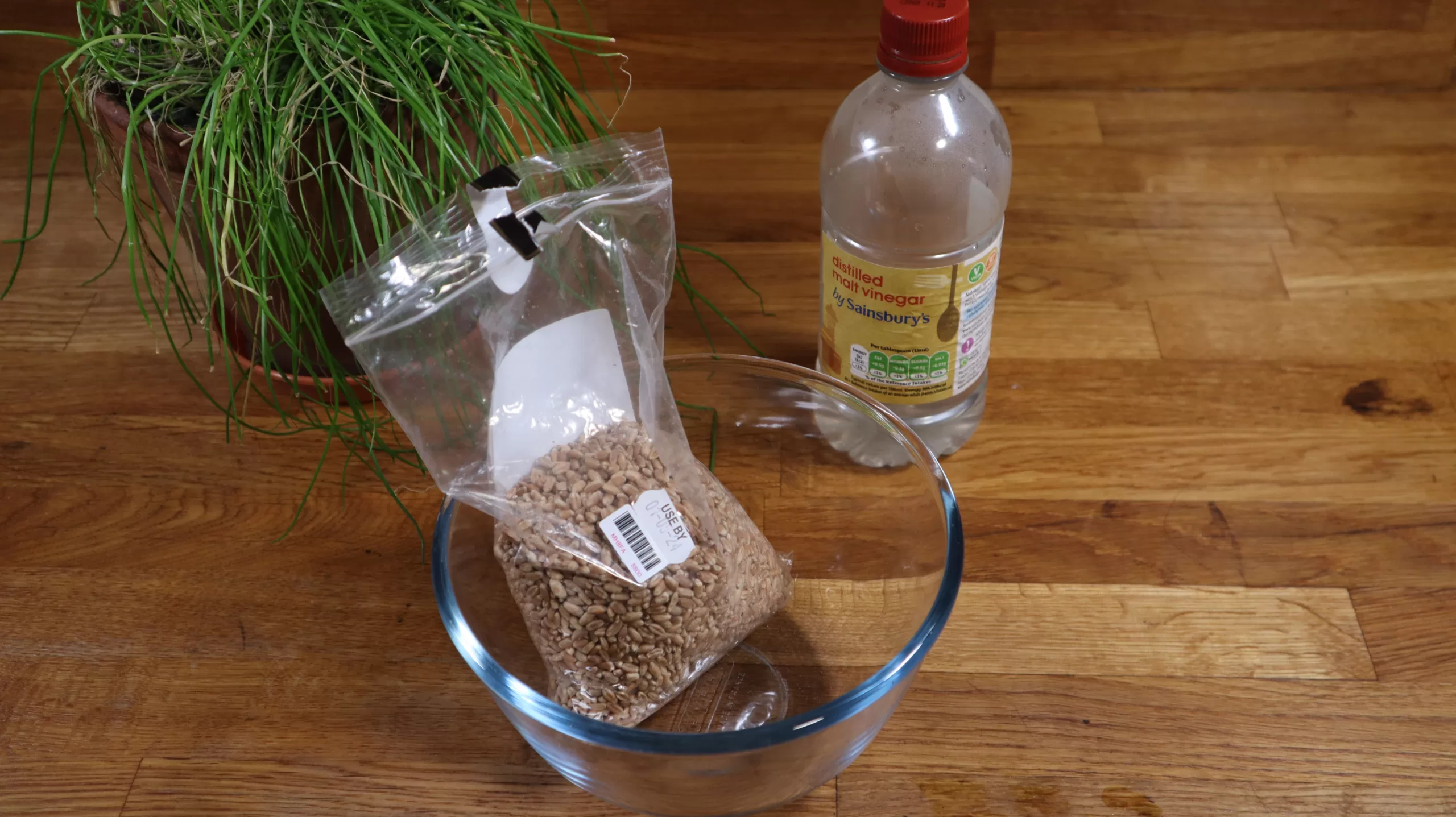
1 cup dark rye grains
How To Make Homemade Dark Rye Flour
Step 1 – Dry out your grains in a single layer on a baking sheet by dehydrating them in an oven set to the lowest temperature it can safely maintain.

Step 2 – Once totally dry, place your rye grains in a blender, grain mill, or seed grinder, and grind on low speed until everything is completely pulverized.

Step 3 – Run the resulting rye grain powder through a sieve to catch any errant pieces of rye grain.

Step 4 – Transfer your dark rye flour to a sealed container and keep it in your pantry for up to 3 months.
Troubleshooting Tips
• If your dark rye grains just don’t seem to want to dry out in the oven, you might need to just give it a bit longer in the oven. Just how much you need to dehydrate is going to depend on the brand of your rye grains and the moisture level of your pantry where you store the rye grains. Just give them enough time in the oven, and you should be just fine.
• While trying to push your rye grains through the sieve, you might find that there are these particularly big chunks of rye grain that just don’t seem to want to break down. If this happens, finish pushing through the fine particulate, but then re-add the chunks back to the blender (or mortar and pestle, or whatever you are using) and give them another minute to get them broken down.
Watch the Video Here:

Nutritional Facts
For the health-conscious out there, here are the nutritional details for 1/4 cup of dark rye flour.
Calories: 104
Total Fat: 0.9 grams
Saturated Fat: 0.1 grams
Cholesterol: 0 milligrams
Sodium: 0 milligrams
Total Carbohydrates: 22 grams
Dietary Fiber: 7.2 grams
Sugars: 0.3 grams
Protein: 4.5 gram
Potassium: 234 milligrams
FAQs
One thing to keep in mind when making your own flour at home, especially when you don’t separate out the bran or the wheatgerm, is that it isn’t going to last as long as conventionally milled flour.
This is because it is the fat in the bran and wheatgerm in the rye berry that actually starts to turn rancid. So a great way to check if your rye flour has started to go bad is to simply give it a smell! If it has started to go rancid, you should be able to pretty easily tell by smelling it and getting rid of it if you smell any rancidity.
While you are drying your rye grains, you might find yourself accidentally leaving them a bit too long, resulting in a bit of a darker coloring on the grains than you first intended.
Don’t worry, though – so long as they aren’t burnt totally black, then you can still process them into flour. Just keep in mind that they will probably have a much darker flavoring and coloring when you use them, resulting in a slightly more bitter taste than you might have first expected.
While some people might be lucky enough to be able to get their hands on some rye grain pretty easily at their local supermarket, you will most likely have to try and source it online.
If you do buy your rye grain online, make sure that what you are buying actually is rye grains, and not some generic grain that an unscrupulous seller might try and pawn on you!
How to Make Homemade Dark Rye Flour
Ingredients
1 cup dark rye grains
Instructions
How To Make Homemade Dark Rye Flour
Step 1 – Dry out your grains in a single layer on a baking sheet by dehydrating them in an oven set to the lowest temperature it can safely maintain.
Step 2 – Once totally dry, place your rye grains in a blender, grain mill, or seed grinder, and grind on low speed until everything is completely pulverized.
Step 3 – Run the resulting rye grain powder through a sieve to catch any errant pieces of rye grain
Step 4 – Transfer your dark rye flour to a sealed container and keep it in your pantry for up to 3 months.
Nutrition Facts
- Serving Size: 1/4 cup


Leave a Comment