
Sesame seeds are one of those useful little things that have a place in any good kitchen. Whether for topping bagels and ramen or for turning into tahini to make hummus, sesame seeds are incredibly versatile.
One of the lesser-known uses for that savory little seed is to turn them into sesame flour and use it as an ingredient in cooking.
But instead of having to buy it, why not instead learn how to make it at home yourself?
How Can I Use My Homemade Sesame Flour?
Sesame flour can be used in pretty much any kind of recipe you can imagine, so long as it would benefit from that nutty, savory flavor that sesame seeds are so rich in.
Use them to make cookies, sesame flour bread, or even turn it into sesame seed butter with the addition of some oil; it is an incredibly versatile ingredient that you can use in pretty much any kind of recipe you could like.
What Kind Of Special Equipment Do I Need To Make Sesame Flour?
Making sesame flour is incredibly simple, and really only requires a high-powered blender to blitz the seeds into a powder. If you didn’t have a blender, though, you could just as well use a pestle and mortar to crush the seeds down instead!
Ingredients
1 cup sesame seeds

How To Make Homemade Sesame Flour
Step 1 – Measure out your sesame seeds.
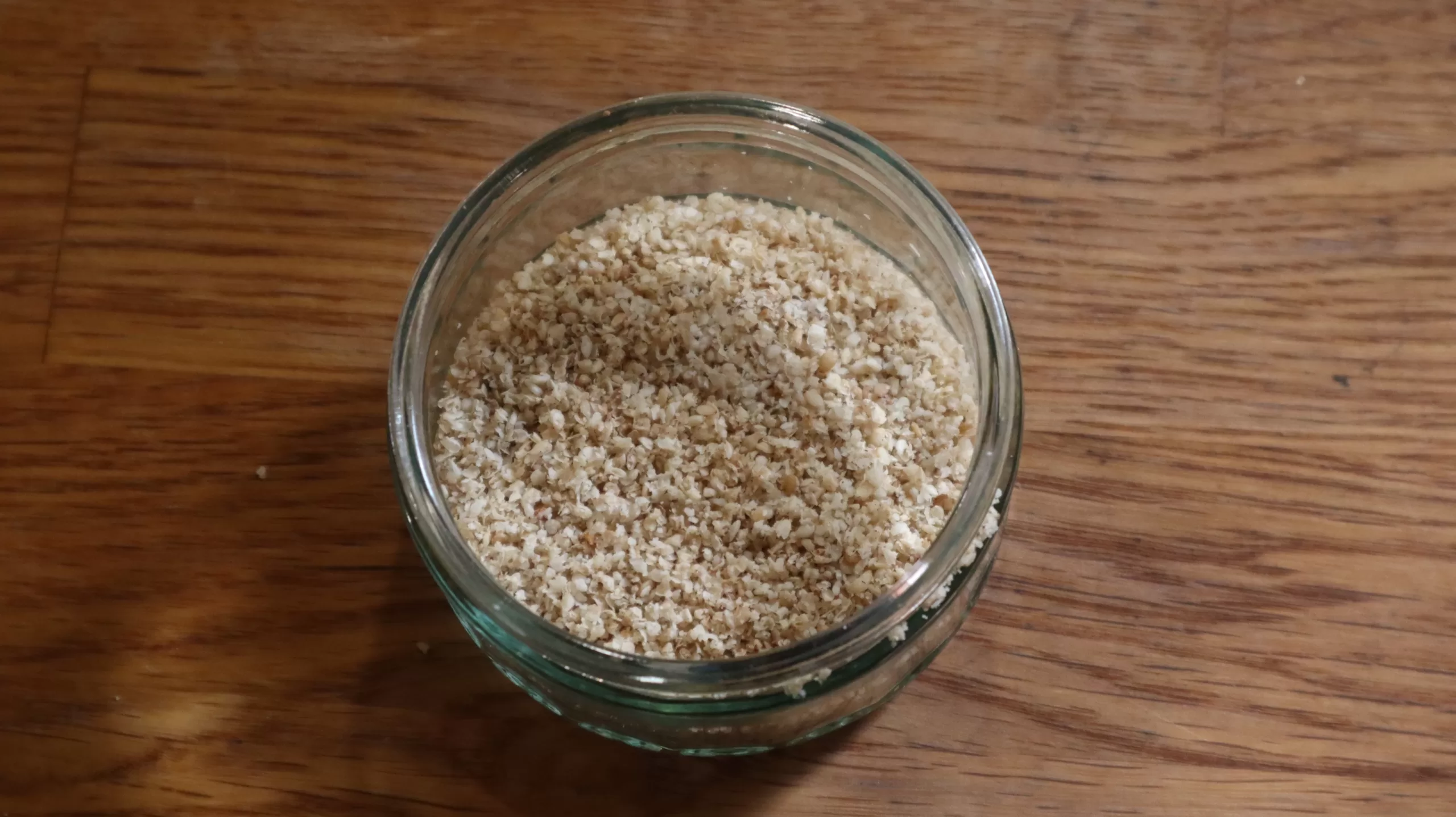
Step 2 – Pour your seeds into a blender and blend the seeds on medium speed, or until they are a fine powder.

Step 3 – Store in a sealed container in the cupboard for up to 2 months.
Optionally, if you prefer a roasted flavor:
Step 4 – Pour your sesame seeds out onto a roasting tray, and bake them for 10 minutes in an oven set to 350 Fahrenheit.
Step 5 – Once roasted, leave to cool for 5 minutes before blending and storing.
Watch the Video Version…

Troubleshooting Tips
• One problem you might encounter when trying to blend your sesame seeds into flour is that they seem to clump up and start to get a bit greasy. This is a lot more likely to happen if you roasted your seeds first, but what is happening is that the natural oils of the sesame seeds are beginning to leak out of the seeds and congeal everything. This is actually your seeds starting to turn to sesame seed butter. To best avoid this, make sure not to blend your sesame seeds at too high a speed. If everything turns into butter, it is best to just start again with fresh seeds.
• For those who prefer a more roasted flavor, one problem you might encounter is that your seeds burn seemingly instantly in the oven. If this happens to you, try and set your oven to a lower temperature, and keep a really sharp eye on the seeds in the oven, and pull them out before they have the opportunity to burn.
• If your sesame seeds just don’t seem to want to blend down properly, even using your blender on a low speed, you might need to stir everything with a rubber spatula to scrape up the stuck parts on the bottom of your blender.
Nutritional Facts
For the health-conscious out there, here are the nutritional details for ¼ cup of sesame seed flour.
Calories: 78
Total Fat: 0.1 grams
Saturated Fat: 0 grams
Trans Fat: 0 grams
Polyunsaturated Fat: 0. grams
Monounsaturated Fat: 0grams
Cholesterol: 0 milligrams
Sodium: 594 milligrams
Total Carbohydrates: 17.7 grams
Dietary Fiber: 2.3 grams
Sugars: 4.1 grams
Protein: 1.6 gram
Potassium: 386 milligrams
FAQs
Sesame flour will have a lot of the same flavor that regular sesame seeds have: nutty, crunchy, and a little bit sweet, with that uniquely sesame-forward flavor that all good Asian dishes have.
However, one thing to keep in mind if you use this sesame flour in other recipes is that the flavor of the sesame won’t necessarily carry forward throughout the whole dish.
Even if you used only sesame flour, with no other flours as additives, you might find that the other ingredients you use in your recipe slightly overwhelm the flavor of sesame seeds. Don’t worry though, because sesame seeds flavor is best when it is in the background anyhow.
You can expect that your sesame seed flour will last around 2 months if you store it properly, in a sealed container in a cupboard with all of the air pressed out of the container. Luckily though, sesame seeds have a very distinctive, rancid smell when they start to go off, so as long as you are giving everything a good sniff before you use it, you shouldn’t be just fine.
While a high-powered blender is definitely the best tool for making sesame flour, you could absolutely still make this recipe without it.
You would just need to use a mortar and pestle to grind down the sesame seeds instead. Just make sure that you don’t press too hard, or grind it too aggressively, as otherwise, you might be at risk of turning it into sesame seed butter.
A pinch of salt added to your mortar and pestle might help you grind everything down without getting it too hot as well.
How to Make Homemade Sesame Flour
Ingredients
1 cup sesame seeds
Instructions
Step 1 – Measure out your sesame seeds
Step 2 – Pour your seeds into a blender and blend the seeds on medium speed, or until they are a fine powder.
Step 3 – Store in a sealed container in the cupboard for up to 2 months.
Optionally, if you prefer a roasted flavor:
Step 4 – Pour your sesame seeds out onto a roasting tray, and bake them for 10 minutes in an oven set to 350 Fahrenheit.
Step 5 – Once roasted, leave to cool for 5 minutes before blending and storing.
Nutrition Facts
- Serving Size: 1/4 cup


Leave a Comment