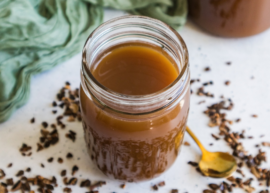
Making your own fats and oils at home is an exciting and rewarding project. Why? Because getting the oil out is a real challenge, and when you finally get it, it’s like striking liquid gold! This natural, unrefined sunflower seed oil can be used for cooking, skincare, or even as a base for homemade cosmetics and is considerably healthier than the refined, solvent-extracted version you buy at supermarkets.
Not going to lie; it took me four attempts of various methods to finally get some oil out of the seeds, and it wasn’t a lot. But this is why this guide is helpful….I have made the mistakes, so you don’t have to!
So, let’s jump into what to do (and what not to do) to press sunflower oil yourself at home!

Using The Right Kind Of Sunflower Seed
As it turns out, there’s more than one kind of sunflower seed. There are the regular ones that you can snack on and use to make sunflower seed butter, and then there are those that are grown specifically for oil.
Sunflower seeds and sunflower oilseeds can be a bit confusing to distinguish because they are essentially the same thing but used for different purposes.
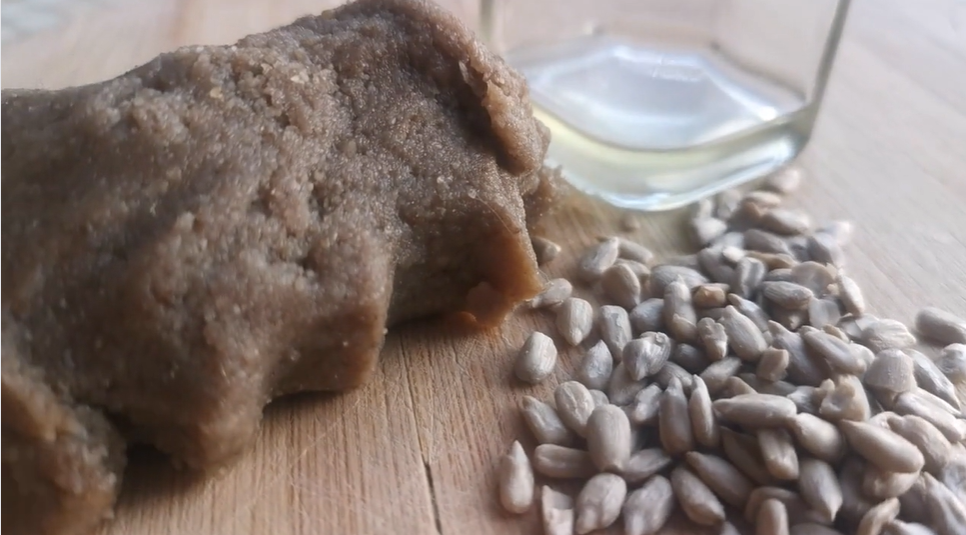
When people talk about sunflower seeds, they often refer to the seeds that are typically roasted and salted and eaten as a snack or used in bird feeders. These seeds are usually black and white striped and have a hard shell that needs to be cracked open to eat the kernel inside. Or, they have already been cracked and are sold in a package with just the kernel without the shell. These are the ones I used to make sunflower oil, as I could not find oilseeds.
Sunflower oilseeds are the ones you want to find. It refers to sunflower seeds that are intended to be used for oil extraction. These seeds come from a specific variety of sunflower that has smaller seeds with thinner shells, which makes it easier to extract the oil. They are usually solid black in color and contain a much higher oil content than the typical snacking sunflower seeds.
Do I Need Any Special Equipment To Make Sunflower Oil At Home?
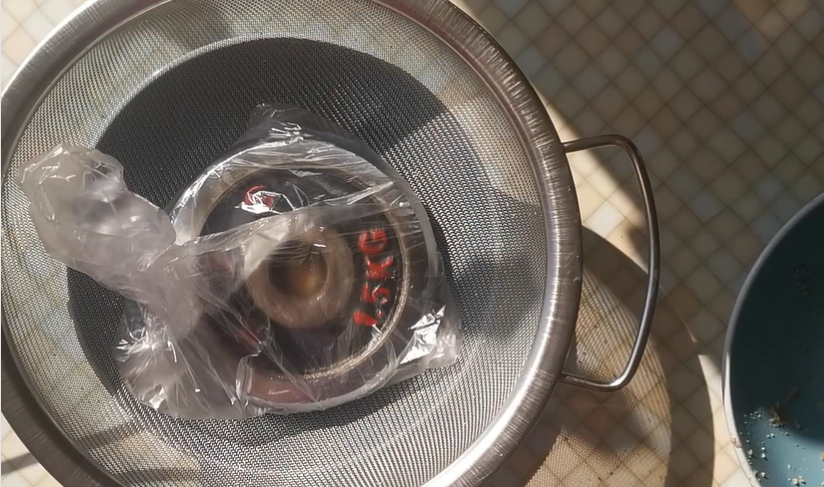
Once you have your oilseeds and have extracted the kernels, or if you have your kernels already pre-extracted, then you will need a food processor, a strainer, and some kind of heavy weight. I used a weight from my dumbbells, as you will see in the picture!
Ingredients To Make Sunflower Oil At Home
1 cup of sunflower oilseeds (should make at least 3 tablespoons of oil)
Water
How To Make Sunflower Oil At Home
Step 1: Place your sunflower seeds into a food processor and blend until the seeds begin to stick to the sides.

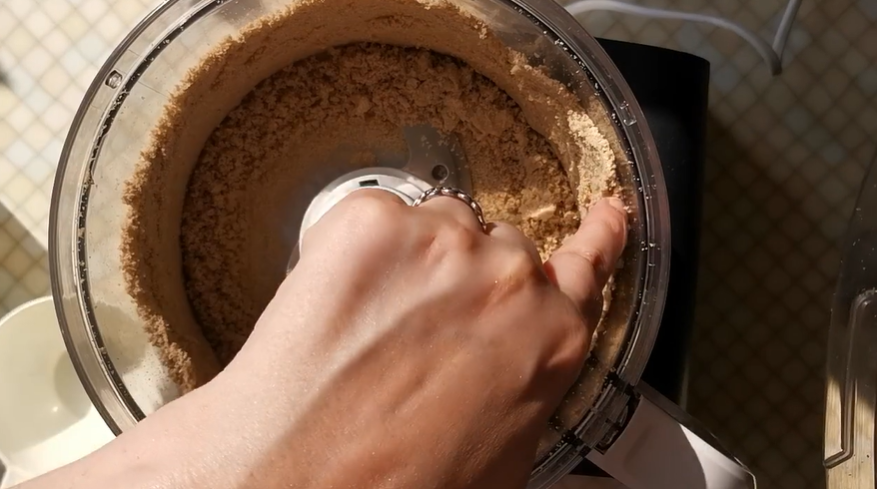
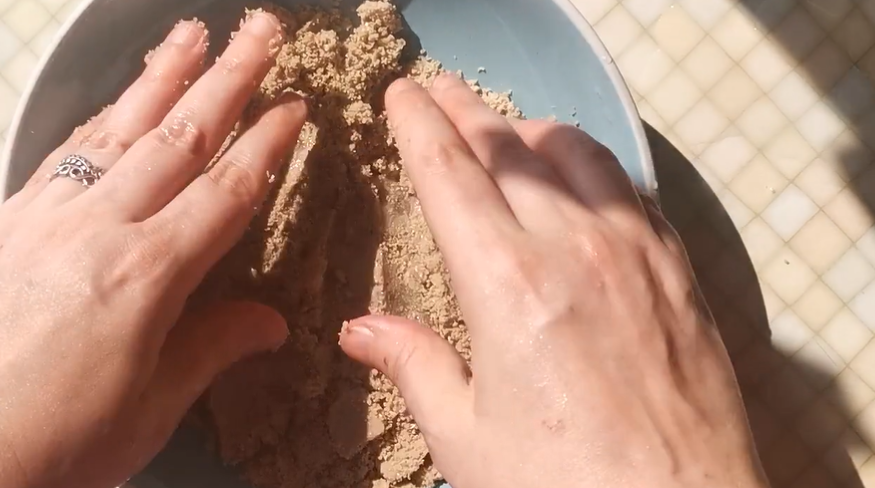
Step 2: Transfer your meal into a bowl, add a few teaspoons of water, and massage until you can feel it coming together into what could almost be described as an oily pattie.
Step 3: Now comes the exciting part – extracting the oil. There are different methods to do this, but the one that worked for me was to place the pattie/cake of ground seeds into a strainer over a bowl and set a weight over the top. The weight I used was 1.5 kg.
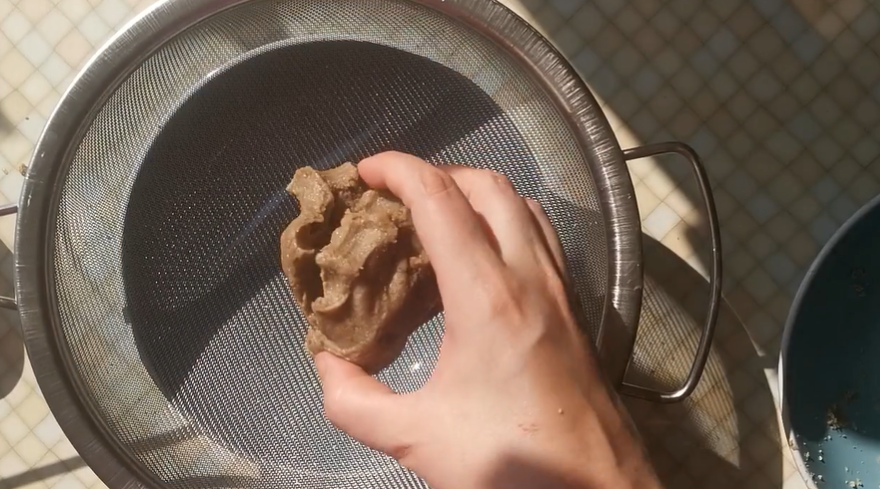
Step 4: Leave it overnight. Slowly, the oil will move down to the bottom and into the bowl.
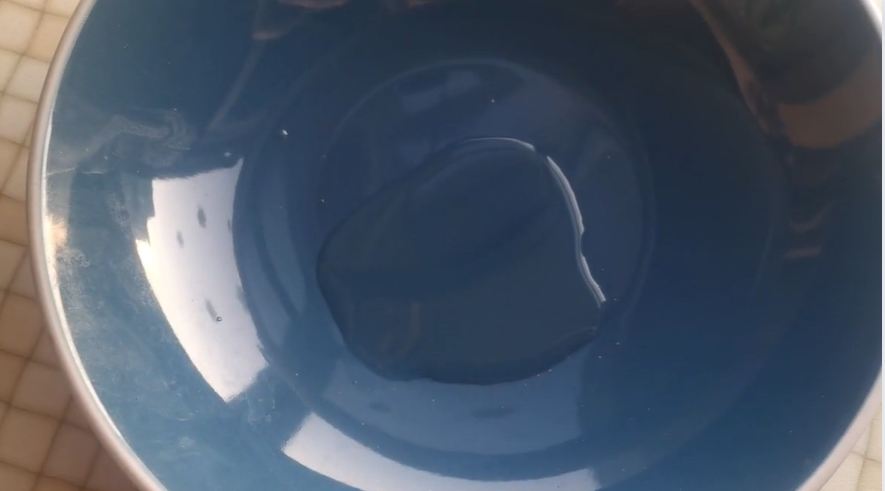
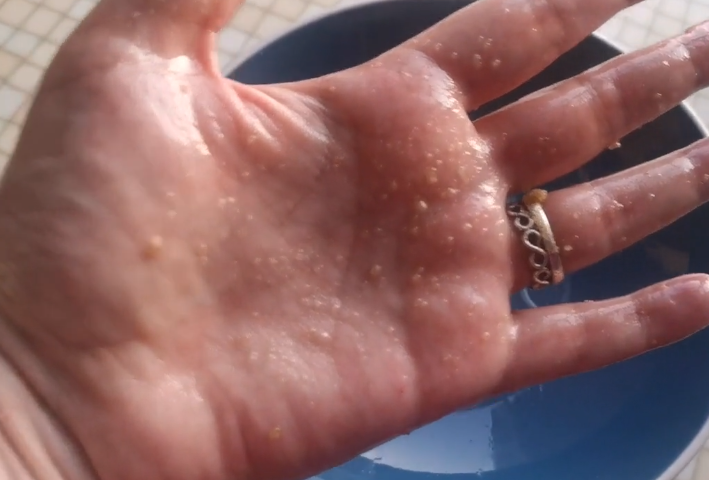
Step 5: Remove the cake from the strainer and physically squeeze any remaining oil out with your hands.
Step 6: Optional – roast the ground seeds. Spread the paste on a roasting pan and roast in the oven at 300 degrees Fahrenheit, stirring every five minutes for about 20 minutes. This process helps to release the oil from the sunflower seeds. Then repeat the pressing process.
Step 7. Strain the extracted oil through a fine-mesh strainer into a clean glass jar. You may need to strain the oil several times to remove all the solid particles.
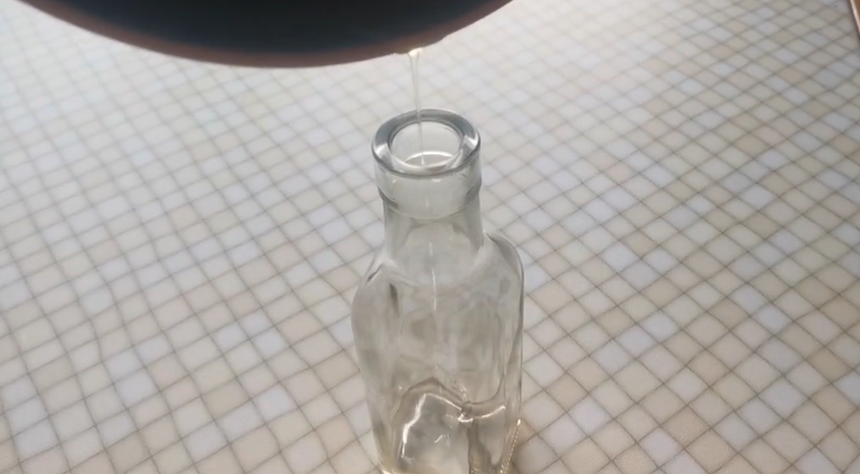
Step 8: Store your homemade sunflower oil in a cool, dark place. It should last for a couple of months in the right conditions. Remember to check the oil regularly for any signs of rancidity.
Watch the Video Version

Notes/Tips/Troubleshooting
- Again, buy the oilseeds. For one cup of non-oilseeds that I used, I ended up with just a tablespoon of oil. You should get at least three times that amount with the oilseeds.
- The optional toasting step for the paste will get more oil out of it, but it means your oil is no longer technically raw and cold-pressed.
- The cake of mushed-up ground seeds make great food for birds! Let it dry a bit, then break it up and put it in your bird feeder.
- The methods online show people massaging the seeds with water, and the oil easily flowing out of them…don’t bother! Doesn’t seem to work, though maybe it was because I did not have oilseeds. Other methods of extraction involve expensive oil presses.
Nutritional Facts
1 tablespoon (15mL) cup of sunflower oil contains:
- 120 calories.
- 3.9 grams of polyunsaturated fat.
- 7.8 grams of monounsaturated fat.
- 0 grams of saturated fat.
- 0 grams of trans fat.
- 13.6 grams of total fat.
- 0 grams cholesterol.
Related Recipes
How to make sunflower seed flower
FAQs
Commercial refining of sunflower oil uses specialized machinery but also chemical solvents to separate the oil from the seed. This is not possible to do at home when you are cold pressing.
Refined/commercial sunflower oil has a high smoke point, which makes it suitable for high-heat cooking methods like frying. Your homemade cold-pressed version should be used only for raw to low-heat cooking and skincare, as it is more volatile.
Sunflower oil has a mild, neutral flavor that doesn’t overpower the taste of the food it’s used with. This makes it a versatile choice in many commercial kitchens.
While it’s rare, some people may have an allergy to sunflower oil. If you know you’re allergic to sunflower seeds, it’s best to avoid sunflower oil.
How to Make Your Own Sunflower Oil
Ingredients
1 cup of sunflower oilseeds (should make at least 3 tablespoons of oil)
Water
Instructions
Step 1: Place your sunflower oilseeds into a food processor and blend until the seeds begin to stick to the sides.
Step 2: Transfer your meal into a bowl and add a few teaspoons of water and massage until you can feel it coming together into what could almost be described as an oily pattie.
Step 3: Now comes the exciting part – extracting the oil. There are different methods to do this, but the one that worked for me was to place the pattie/cake of ground seeds into a strainer over a bowl, and set a weight over the top. The weight I used was 1.5 kg.
Step 4: Leave it overnight. Slowly, the oil will move down to the bottom and into the bowl.
Step 5: Remove the cake from the strainer and physically squeeze any remaining oil out with your hands.
Step 6: Optional – roast the ground seeds. Spread the paste on a roasting pan and roast in the oven at 300 degrees Fahrenheit, stirring every five minutes for about 20 minutes. This process helps to release the oil from the sunflower seeds. Then repeat the pressing process.
Step 7. Strain the extracted oil through a fine-mesh strainer into a clean glass jar. You may need to strain the oil several times to remove all the solid particles.
Step 8: Store your homemade sunflower oil in a cool, dark place. It should last for a couple of months in the right conditions. Remember to check the oil regularly for any signs of rancidity.