
Sunflower seed flour is an amazingly versatile (and gluten-free!) alternative to traditional flours. It’s also got a lot more nutrition and adds a wonderfully delightful nutty flavor to your baked goods and other recipes.
Making your own sunflower seed flour at home is also surprisingly simple, and allows you to have control over the quality and freshness of your ingredients, as well as the exact texture you want your flour to end up being.
With just a few pieces of kitchen equipment, you can change sunflower seeds from a handy, crunchy snack into a kitchen staple ingredient in under 15 minutes!
How Can I Use My Homemade Sunflower Seed Flour?
Besides being really fun to say (Sun flour? Sunflower flour? So many options!), sunflower seed flour is also one of the most versatile ways to use sunflower seeds there is!
You can use your sunflower seed flour pretty much as a direct substitute for flour in many recipes. This is especially useful for those trying to avoid gluten by skipping flour, but it is also great for anyone just trying to add that little extra hit of nuttiness to whatever they bake!
Since sunflower seeds have this intense, nutty, slightly oily flavor, anything you bake with them will hold on to that intensely rich, nutty flavor as well!
What Kind Of Special Equipment Do I Need To Make Sunflower Seed Flour?
The great thing about this recipe is that it really doesn’t require any special equipment other than a blender!
The only really vital part about this recipe is that you need to be able to cut up the sunflower seeds using a blender or food processor. You sadly can’t substitute this for a pestle and mortar, or any other tool that would smash the seeds, rather than blitz them into a powder, as otherwise, you would end up with SunButter!
Ingredients
1 cup raw sunflower seeds
1 pinch of salt
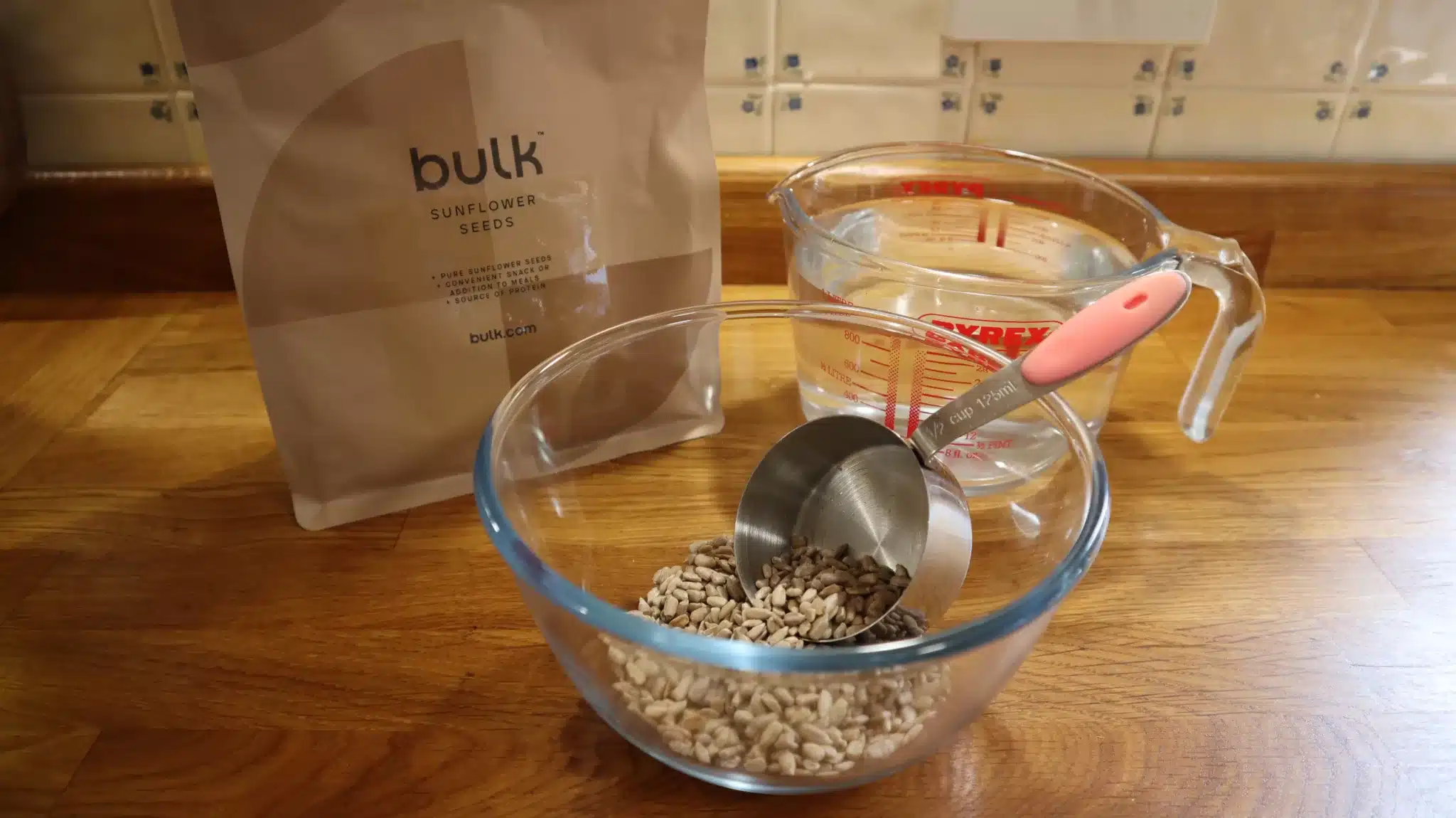
How To Make Homemade Sunflower Seed Flour
Step 1 – Add the sunflower seeds and salt into your blender

Step 2 – Begin pulsing the sunflower seeds in the blender at a low speed, until the pieces start to visibly break apart
Step 3 – Blend on low-medium speed until the sunflower seeds are a uniform powder
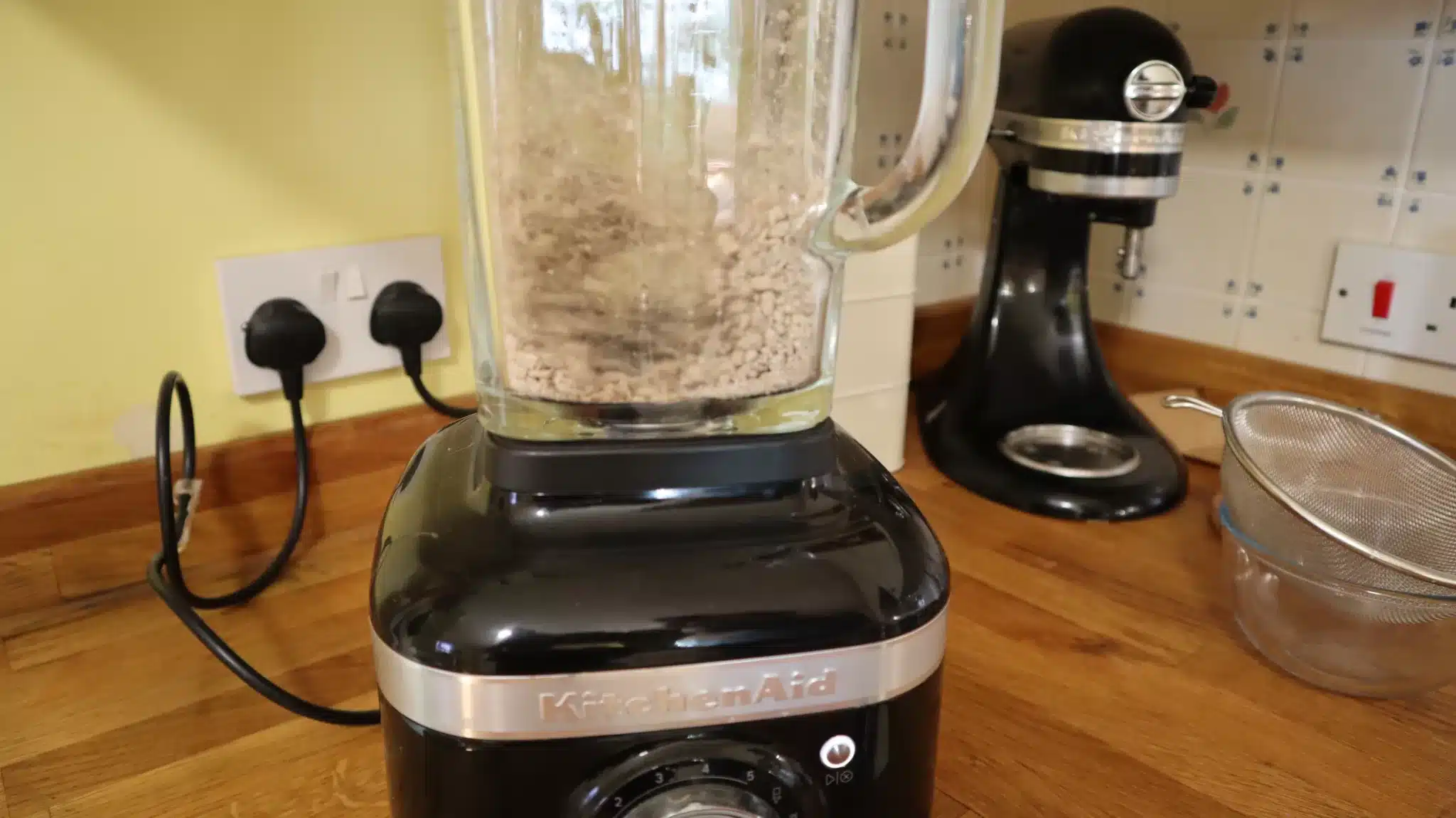
Step 4 – Pour the now-powdery sunflower seeds into a sieve placed over a bowl, and gently press and shake the sunflower seed powder through the sieve to leave behind any un-blended husks/

Step 5 – Store your sunflower seed flour in a tightly lidded container, ideally in the fridge, and enjoy!
Watch the Video Version…

Troubleshooting Tips
• If you are finding that your sunflower seeds are starting to congeal or turn a bit pasty, this is the sunflower seeds accidentally turning into sunbutter! While delicious, if you want to keep it as sunflower seed flour, simply turn off the blender and remove the mixture. Separate out the congealed bits from the still loose powder, give it a minute or two to cool off, and then resume blending into flour.
• After blending your sunflower seeds, you then need to press them through a sieve to extract the finer flour, leaving behind any un-blended husks. If you are struggling to get everything separated, try putting the sieve over a much larger bowl and really firmly tapping it with the palm of your hand. The additional force should agitate everything, and force the flour particles through, leaving behind those dry husks.
Nutritional Facts
For the health-conscious out there, here are the nutritional details for about 1/4 cups of sunflower flour
Calories: 52
Total Fat: 0.3 grams
Saturated Fat: 0 grams
Trans Fat: 0 grams
Polyunsaturated Fat: 0 grams
Monounsaturated Fat: 0grams
Cholesterol: 0 milligrams
Sodium: 0 milligrams
Total Carbohydrates: 5.7 grams
Dietary Fiber: 0.8 grams
Sugars: 0.5 grams
Protein: 7.7 gram
Potassium: 11 milligrams
FAQs
Whenever you make something like sunflower seed flour and intend to use to use it as a substitute in other recipes, there is always the hope that it will be necessarily healthier than anything it replaces.
Unfortunately, sunflower seeds are typically going to be more calorific than white flour. However, more of their calories will come from fat, rather than sugar, unlike white flour which is basically all sugar.
So, alongside its incredibly nutty, robust flavor, sunflower seed flour could be a great option for those looking for a bit less sugar in their diet overall.
Most recipes involving sunflower seeds will have you toast the seeds to a roasty, nutty brown before using them, but make sure that you don’t do that here!
If you roast the sunflower seeds, they will begin to release the oils within the seed kernels. When you go to blend them to make the flour, they will instead leak that oil and congeal, turning into sunflower seed butter, or sunbutter! While completely delicious, it is closer to peanut butter than it is to flour, so you would end up simply making a totally different dish!
Plus, you will most likely be using your sunflower seed flour in a recipe that ends up getting cooked, so if you toasted it before grinding it into flour, you might find that it tastes too burnt!
After blending your sunflower seeds and pressing them through a sieve, you will likely be left with a small collection of sunflower seed husks that just didn’t want to blend.
You can easily throw these away (ideally in the compost!) but you could also absolutely just use them as part of your sunflower seed flour! It would add some much-needed fiber to your diet, as well as give a little bit of textural contrast, just like if you used wholemeal flour!

How to Make Homemade Sunflower Seed Flour
Easy to make, rich in fat and protein, and filled with nutty flavor, this is a great flour substitute!
Ingredients
1 cup raw sunflower seeds
1 pinch of salt
Instructions
Step 1 – Add the sunflower seeds and salt into your blender
Step 2 – Begin pulsing the sunflower seeds in the blender at a low speed, until the pieces start to visibly break apart
Step 3 – Blend on low-medium speed until the sunflower seeds are a uniform powder
Step 4 – Pour the now-powdery sunflower seeds into a sieve placed over a bowl, and gently press and shake the sunflower seed powder through the sieve to leave behind any un-blended husks
Step 5 – Store your sunflower seed flour in a tightly-lidded container, ideally in the fridge, and enjoy!


Leave a Comment