

In less than a year, five major food, beverage, and cannabis facilities across Massachusetts have shuttered or announced plans to close. We’re talking everything from industrial bakeries and nonprofit grocery stores to farms and beer distributors.
Let’s take a look at what’s gone, and why more could follow…
Follow The Coconut Mama
• For fun lists, healthy living tips, and bar conversation topics, make sure to follow The Coconut Mama. Click here to access The Coconut Mama’s profile page and be sure to hit the Follow button here or at the top of this article!
• Have feedback? Add a comment below!
Shutterstock

In Agawam, both facilities run by Diana’s Commonwealth Bakery are shutting down, taking away 229 jobs.
That’s a serious hit for a town of less than 30,000.
But Diana’s was a key regional supplier for schools, grocery stores, and institutions across New England.
So, what happened?
Shutterstock

According to the official notice filed with the state, Diana’s owner, Connecticut Pie, LLC, said the layoffs and shutdown would be “permanent in nature.”
They didn’t say much more, but if I had to guess, it probably came down to the usual issues: rising costs, trouble finding workers, and contracts that just didn’t pay enough to keep things running.
When you’re supplying big institutions, you often have to lock in low prices… and if your costs go up, your profit disappears fast.
Shutterstock

Daily Table, the nonprofit grocery chain founded by former Trader Joe’s president Doug Rauch, announced in April that it was shutting down all locations.
They served low-income neighborhoods across Greater Boston, offering steeply discounted groceries with a mission to “make healthy food affordable to all.”
Their impact was enormous with 3 million customers served, $16 million saved.
And still, it wasn’t enough to survive.
Shutterstock

From their board of directors:
“With heavy hearts, we share that Daily Table will be closing our doors within the next few days. This was not an easy decision… The past several years have been particularly hard – navigating the challenges of COVID-19, food price increases, and a difficult funding environment.”
They added:
“Without immediate funding to bridge us through 2025, we cannot continue.”
It’s so sad to see a mission-driven model crushed by modern economics.
Shutterstock

In Medford, Anheuser-Busch is closing its distribution center, cutting 193 jobs, according to a state WARN filing.
This isn’t a one-off. It’s part of a much broader realignment in the beer industry.
Beer volumes are down nationally. And the ripple effects are hitting local warehouses hard.
Shutterstock

AB InBev’s U.S. Chief Sales Officer, Simon Wuestenberg, explained:
“We assessed our operational footprint to ensure our entire system is set up for long-term success.”
He said consolidating operations under Quality Beverage, a regional distributor, would help the company “continue to drive growth.”
Basically: cut now, scale elsewhere.
Shutterstock
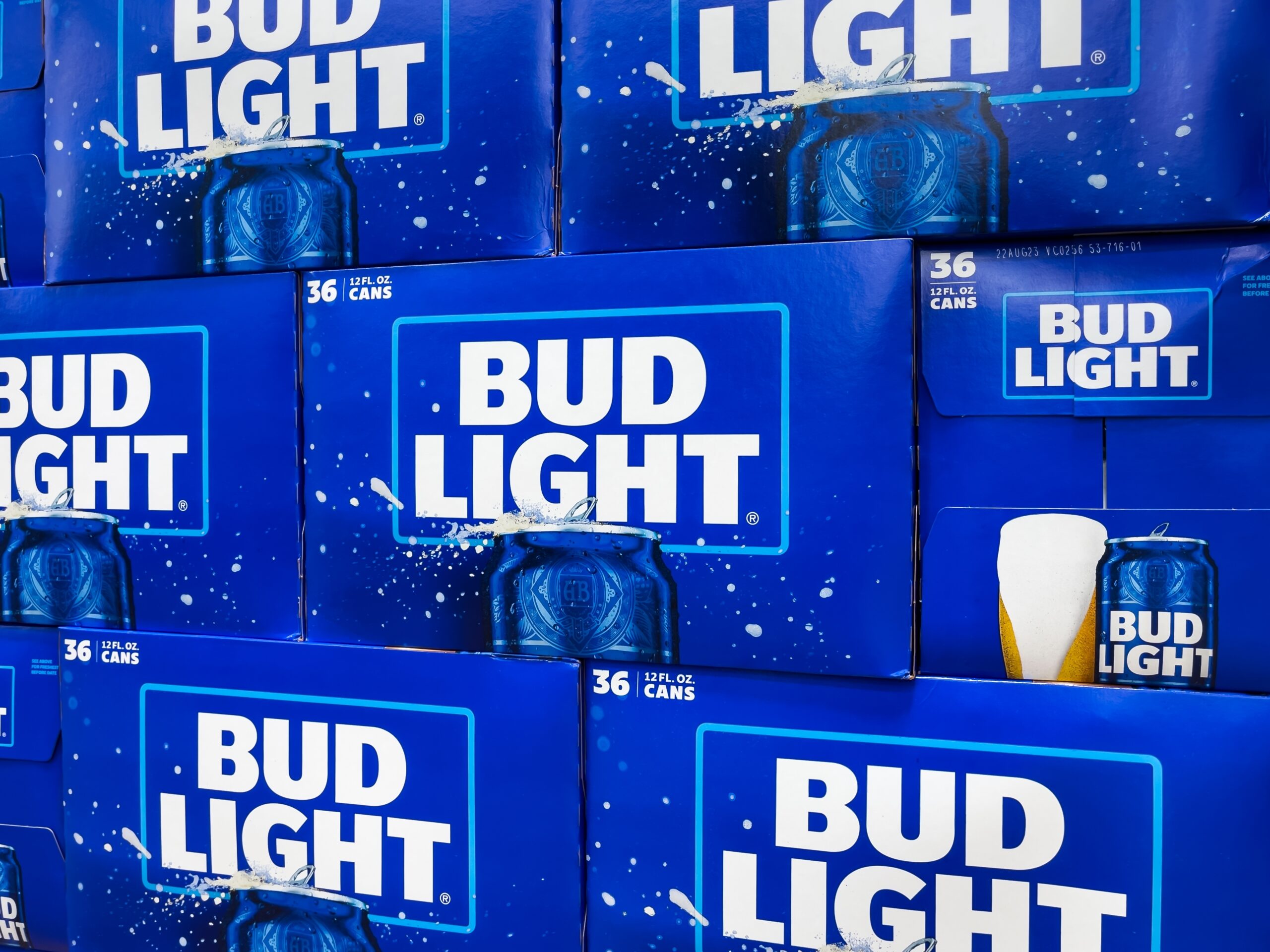
Since early 2023, Bud Light has been reeling from a high-profile boycott and declining market share.
Beer sales are down, competition is fierce, and companies are scrambling to stay profitable.
Medford just got caught in the crossfire.
Follow The Coconut Mama
• For fun lists, healthy living tips, and bar conversation topics, make sure to follow The Coconut Mama. Click here to access The Coconut Mama’s profile page and be sure to hit the Follow button here or at the top of this article!
• Have feedback? Add a comment below!
Shutterstock

PharmaCann, one of the largest vertically integrated cannabis companies in the U.S., laid off 19 workers at its Holliston facility.
This may sound small on paper, but it’s part of a much bigger trend across the country.
Cannabis operators across the state are downsizing, closing, or fleeing entirely.
Shutterstock

Analysts and industry leaders say Massachusetts cannabis is going through a serious correction.
Here’s what’s happening:
– Licensing costs are steep (it’s expensive just to stay legal).
– Oversupply is flooding the market (there’s way more product than demand).
– Wholesale prices have collapsed (some growers are selling flower for less than it costs to produce).
All of that adds up to one thing: a lot of cannabis companies are deep in the red, and many can’t hold on much longer.
So while PharmaCann just cut 19 jobs, it’s likely just the start…
Shutterstock

Freight Farms, the Boston startup known for growing leafy greens inside high-tech shipping containers, shut down in May.
At its peak, the company was producing around 10,000 pounds of greens each month – all grown hydroponically with minimal water, no soil, and no pesticides. They were supplying local schools, restaurants, and businesses.
It was a smart, sustainable idea. But even smart ideas aren’t enough right now.
Shutterstock

In their own words:
“This was a very difficult decision… We are incredibly proud of our team, our technology, and our mission – but the economic environment made it unsustainable.”
It’s a tough time to be a startup… especially in food and ag. Funding is tight, costs are high, and there’s not much room for error.
Freight Farms had the vision. But in this economy, that just wasn’t enough.
Shutterstock

These closures didn’t all happen for the same reason, but they’re all being squeezed by the same forces.
Costs are up across the board – ingredients, labor, rent, and insurance. Consumer habits have changed post-COVID, and people are spending less on extras.
Big players in food, alcohol, and cannabis are consolidating to cut costs, which leaves smaller operations (and their workers) on the chopping block.
And for startups and nonprofits? It’s a brutal funding environment.
No matter the industry, it’s getting harder to survive, and Massachusetts is feeling the pressure from all sides.
Shutterstock

These five closures have already cut over 660 jobs, but the impact goes way beyond that.
Local farmers lost buyers. Vendors lost contracts. And thousands of families just lost access to affordable, reliable food.
Stores like Daily Table weren’t just places to shop – they were a key part of the neighborhood.
When places like this disappear, whole communities feel it.
Shutterstock

Here’s what’s now gone in Massachusetts:
– Diana’s Bakery (Agawam) – 229 jobs
– Daily Table (Greater Boston) – all stores closed
– Anheuser-Busch (Medford) – 193 jobs cut
– PharmaCann (Holliston) – 19 layoffs
– Freight Farms (Boston) – fresh produce halted
So, what do YOU think?
Have you been impacted by these shutdowns, or know someone who has? Drop your thoughts in the comments!
Shutterstock


Leave a Comment