
The old saying of one bad apple spoiling the bunch doesn’t necessarily apply here. One moldy strawberry does not automatically mean you have to throw away the entire carton. Throw out the moldy strawberry and every berry that was directly touching it. Then inspect the remaining fruit. If the other strawberries show no mold, are not overly mushy, and look otherwise sound, you can thoroughly rinse them before eating. This is the approach recommended by the U.S. Department of Agriculture (USDA).
Do not try to save a fuzzy strawberry by cutting off the bad spot. If you have good berries left after sorting, use them soon: a strawberry smoothie is one easy way to use a small amount of sound fruit. The key distinction is between a berry that has developed mold and neighboring berries that have not.
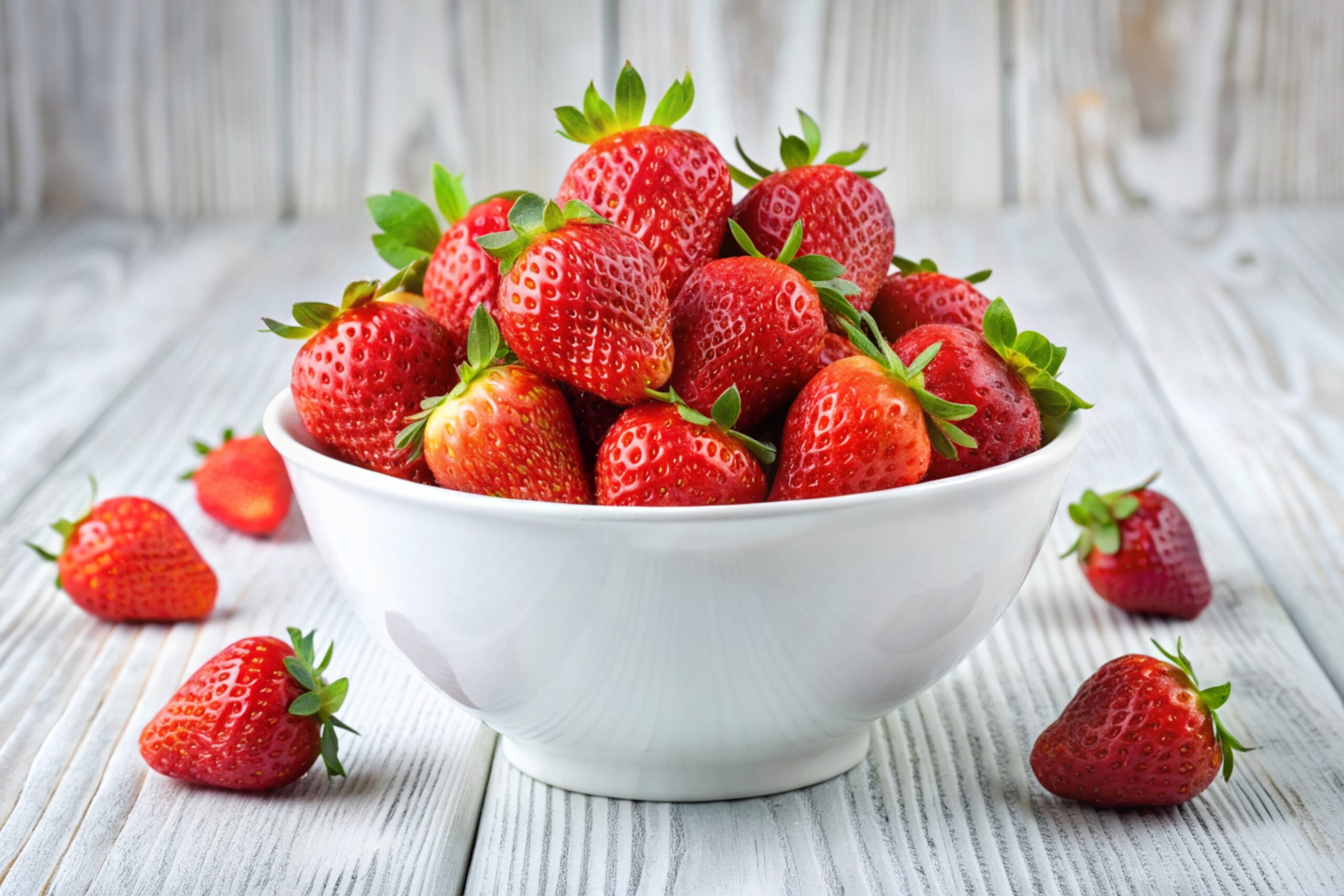
Which strawberries should you throw away?
The USDA’s guidance for moldy fruit found in a shared container makes an important distinction: discard the moldy pieces and the ones directly touching them, then carefully assess the rest. That is more useful than either extreme of throwing out every berry automatically or keeping everything that looks mostly red.
| What you find in the carton | What to do | Why |
|---|---|---|
| A strawberry with visible fuzzy mold | Discard the entire strawberry. | Mold can extend into soft fruit below the visible patch. |
| A strawberry directly touching a moldy one | Discard it, even if you cannot see mold. | The USDA specifically advises throwing away fruit in direct contact. |
| A separate berry that is firm, not overly mushy, and shows no mold | Keep it after careful inspection; wash thoroughly before eating. | The USDA allows sound remaining fruit to be salvaged. |
| A berry that is collapsed, leaking, rotting, or showing mold | Discard it. | It is no longer sound fruit. |
| A carton with widespread mold, liquid, or many collapsing berries | Discard the batch rather than trying to recover a questionable few. | It may be impossible to identify reliably which berries are unaffected. |
If berries are piled tightly together, take your time identifying which ones touched the moldy fruit. This is a practical judgment, not a laboratory test. If you cannot tell which berries were in contact, the safer choice is to discard more, not less.
Why isn’t cutting the mold off enough?
Strawberries are soft, high-moisture fruit. Mold growth is not necessarily confined to the fuzzy spot you can see. Threadlike fungal growth may extend into the berry’s flesh, so slicing off a little patch does not make the rest reliably safe. The same caution applies to other soft fruits that have developed mold.
This is different from the guidance sometimes given for firm produce, such as carrots or cabbage, where a substantial margin around a small mold spot can be cut away. Do not apply that firm-vegetable rule to strawberries. And do not blend a moldy berry into a smoothie or cook it in a sauce in an attempt to make it usable.
How do you sort a carton with one moldy berry?
- Set out a clean work area. Wash your hands, and use a clean plate or tray so you can see individual berries.
- Remove the moldy fruit without squeezing it. Place it in the trash along with any strawberries that were touching it.
- Inspect every remaining berry. Turn each one over and check around the leafy cap, sides, and underside for fuzzy growth or signs of rot. Pay attention to berries wedged against the bottom of the package.
- Set aside fruit that is overly mushy or breaking down. Do not assume a strawberry is sound merely because its red surface hides obvious fuzz.
- Rinse the berries you plan to eat. Use cool running water, handling delicate fruit gently. Drain and dry with a clean towel or paper towel.
- Use or refrigerate the sound berries promptly. Keep the refrigerator at 40°F or below. Avoid putting wet berries back into a closed, dirty carton.
Do not sort by sniffing the fuzzy area close up. Also, don’t taste a questionable strawberry to decide whether it is safe. Visible mold and deteriorating texture are reasons to discard it, regardless of flavor.
Can you wash mold off strawberries with water or vinegar?
No rinse is a reliable way to rescue a strawberry that already has visible mold. Washing is useful for cleaning strawberries that remain sound after you have removed the moldy berries and those in contact with them; it does not reverse spoilage inside a moldy berry.
For strawberries you are keeping, rinse gently under cool running water before eating. The FDA advises against using soap, detergent, or commercial produce wash on fresh produce. Plain water reduces surface contamination but cannot eliminate every microorganism. A vinegar soak should not be treated as a safety guarantee, and it does not change which berries should be discarded under the USDA’s guidance.
If you intend to refrigerate good berries for later rather than eat them immediately, generally leave them unwashed until use. Excess moisture can speed quality loss; University of Minnesota Extension recommends waiting to rinse strawberries until they are about to be prepared or eaten.
When should you throw away the whole container?
The USDA’s answer about a few moldy pieces assumes you can identify remaining fruit that is not moldy and not overly mushy. When mold is widespread or a carton contains pooling liquid, crushed berries, and extensive softening, that assumption may no longer be reasonable.
Discard the entire batch if almost every strawberry seems to have contacted moldy fruit, you cannot separate the sound berries confidently, or the carton is in broadly poor condition. A few salvageable-looking berries are not worth guessing about when there are signs of extensive decay.
Be especially cautious when preparing food for people at higher risk of serious foodborne illness, including older adults, young children, pregnant people, and people with weakened immune systems. For them, avoiding uncertain produce is a sensible precaution.
Does white fuzz always mean strawberry mold?
Strawberries have tiny surface seeds, a leafy cap, and sometimes pale areas near the stem. These normal features can look unusual, but fuzzy or cottonlike growth on the fruit is a warning sign. Mold may appear white, gray, or another color and may become obvious around bruises and damp spots.
Color alone is not a dependable test. If the berry is soft, leaking, or has a suspicious fuzzy coating, discard it rather than trying to identify the mold species at home. You cannot determine whether a questionable berry is safe simply by photographing it or smelling it.
How can you keep fresh strawberries from molding so quickly?
Prevention starts at the store. Choose cartons with dry, intact berries and inspect the underside of the package if possible. Avoid packages with visible fuzz, crushed fruit, or liquid collecting at the bottom. Once home, remove any spoiled berries so they are not left pressed against good fruit.
Refrigerate strawberries at 40°F or below in a clean container that protects them from crushing and does not trap excessive moisture. Avoid washing an entire carton days before you need it; rinse the fruit just before you use it. Handle berries gently, because bruises and damage make them more prone to deterioration.
For fruit that is fresh and sound but unlikely to be eaten in time, freezing is an option. Wash and dry it first, remove the leafy tops if desired, spread the berries on a tray to freeze individually, and then transfer them to a freezer-safe container. Freeze them while they are in good condition—not as a last-minute attempt to save moldy fruit.
Can you still make smoothies or jam with the good berries?
Yes, provided you first discard every moldy strawberry and any that directly touched it, then carefully inspect and wash the sound remaining fruit. Use those sound berries in a smoothie, yogurt bowl, or cooked recipe if you wish. Using sound berries in cooking does not make the original moldy strawberries salvageable.
Do not scrape or trim mold off a strawberry and put it into a blender, jam pot, or baking dish. Food preservation is not a way to repair ingredients that have already spoiled. If you are making shelf-stable jam, use a tested preserving recipe and begin with wholesome fruit.
Frequently asked questions
If one strawberry is moldy, are the others contaminated?
Not necessarily. The USDA says to discard the moldy fruit and all pieces directly touching it, inspect the others, and thoroughly wash fruit that has no mold and is not overly mushy. Being in the same carton does not automatically require throwing away every berry.
What if I accidentally ate a strawberry with mold?
Stop eating the questionable fruit. Moldy foods can sometimes cause stomach symptoms or allergic reactions, though not every accidental bite results in illness. Seek prompt medical care for severe symptoms or breathing difficulty, and contact a healthcare professional if you have concerns about your health or an exposure.
Can I keep the berries if I can’t see any mold?
Only after checking whether they touched a moldy berry and examining them for excessive softening or rot. Visible appearance alone does not overrule the USDA’s direct-contact guidance. Discard any strawberry that touched the moldy one, even if it still looks red and firm.
Should you wash strawberries before storing them?
Usually wash them just before eating or preparing them, rather than washing the whole carton before refrigeration. If you have already washed sound berries, dry them well and refrigerate promptly. Washing does not preserve moldy fruit or make it safe to keep.
The bottom line
One moldy strawberry is a reason to inspect the carton, not automatically a reason to discard every berry. Throw out the moldy strawberry and any berries that touched it. Check the rest carefully, discard anything mushy or suspicious, and rinse the sound berries thoroughly before eating. When a carton shows widespread decay or you cannot reliably identify unaffected fruit, throw it out.
Links on this page may be affiliate links, for which the site earns a small commission, but the price for you is the same


Leave a Comment