
Peanut oil and grapeseed oil both thrive in high temperatures – but one is robust and nutty, while the other is light and neutral. With these unique qualities between the two of them, they are sure to have plenty of versatile uses in your kitchen. Let’s go ahead and see how these incredible oils can transform your next culinary creation!
Comparing peanut oil vs grapeseed oil
| Peanut oil | Grapeseed oil | |
| Solid or liquid? | Liquid | Liquid |
| Smoke point (Fahrenheit) | 440 – 450 degrees | 420 degrees |
| Primary fat | Monounsaturated | Polyunsaturated |
| Taste | Nutty | Neutral |
| Good for cooking… | Raw, low heat, medium heat, high heat | Raw, low heat, medium heat, high heat |
| Common allergens | Peanut | Grapes, grape seeds |
| Gluten-free? | Yes | Yes |
| Keto? | Yes | Yes |
| Paleo? | No | No |
| Vegan? | Yes | Yes |
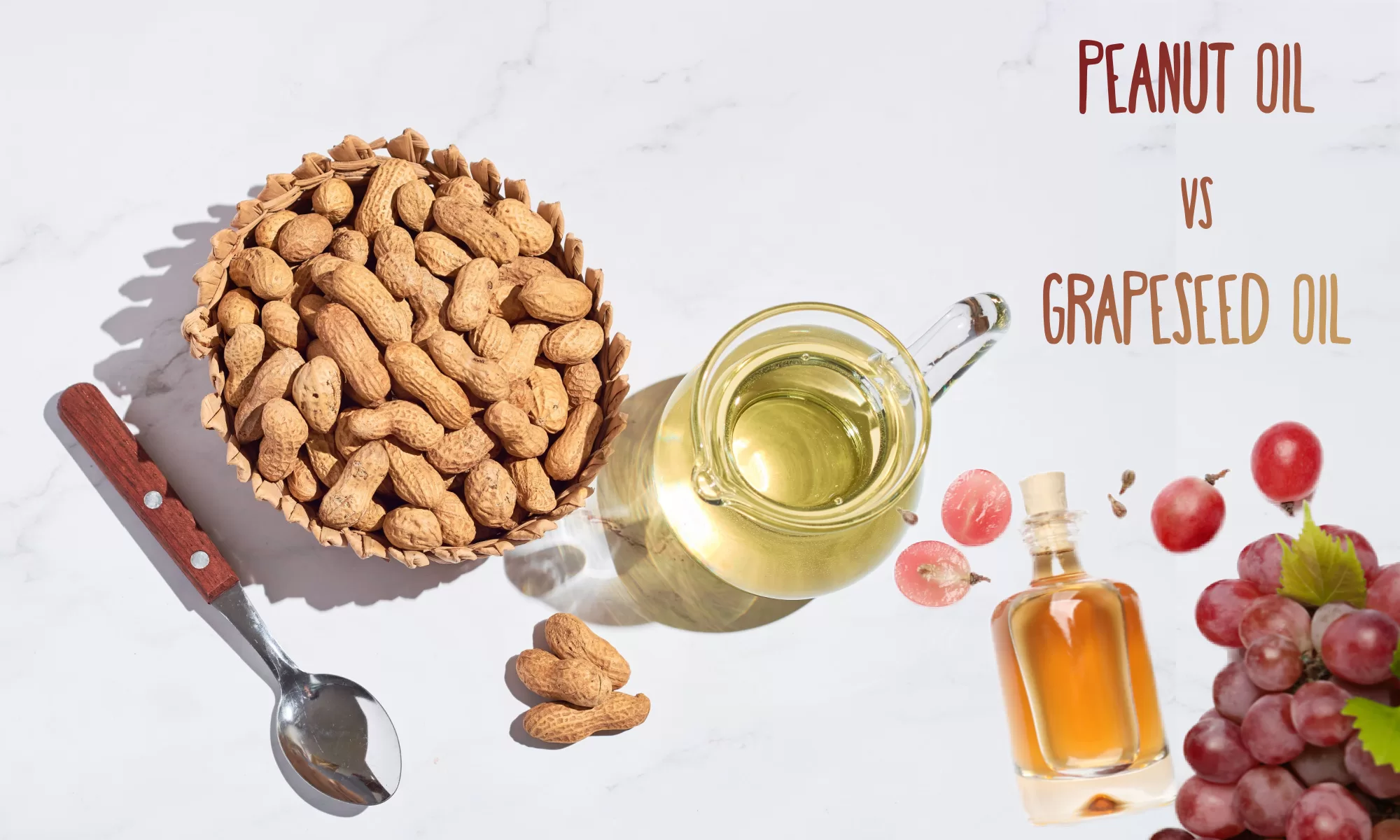
Differences between peanut oil and grapeseed oil
Although refined peanut oil can be a little more subtle, the biggest difference between peanut oil and grapeseed oil is their flavor! Unrefined peanut oil, in particular, has a strong nutty flavor which can enhance many dishes, while grapeseed oil boasts a neutral flavor that lets other ingredients take the spotlight. Both of these oils are favorites for their high smoke points, but refined peanut oil has the edge of having an extra high smoke point that’s perfect for frying.
Peanut oil and grapeseed oil are both gluten-free, keto-friendly, and vegan, meaning they can accommodate a range of dietary needs. Just be sure to steer clear if you’re allergic to peanuts or grapes!
Baking and cooking with peanut oil vs grapeseed oil
These oils are applicable to raw applications, all the way up to high-heat applications, but their individual qualities make them more suitable for some uses over others. Let’s take a look.
Peanut oil is a go-to choice for stir-frying and deep-frying. It’s a particularly popular deep frying oil in Asian cuisine, for dishes like Kung Pao chicken or tempura, for example. Its high smoke point means your food can crisp like a dream and maintain its distinct flavor. It even has the special quality of not absorbing the flavors of other foods cooked in the oil, which is a huge bonus. For raw applications, it works wonders in a delicious marinade or salad dressing. In baking, I reach for peanut oil if I’m looking for a subtle toasty nut flavor – for example, for nutty cookies or muffins. As well, it’s commonly used in Caribbean stews and African cooking.
Rather than impart a flavor like peanut oil, grapeseed oil acts as an everything oil where it won’t play a role in flavor. It’s an excellent fit if you’re sautéing vegetables or working with more delicate proteins like pan-fried fish or seared meats. While you’ll get that crispness you do with peanut oil as well, you’ll get a much fresher quality that showcases the ingredients’ natural flavors. When baking, grapeseed oil is a great emulsifier, which helps make moist and tender cakes and simple, clean-tasting goods.
Can peanut oil and grapeseed oil be substituted for each other?
Peanut oil and grapeseed oil are good substitutes in that they can handle high temperatures, but they won’t be suitable substitutes if you’re either striving for a neutral base or a more nutty one.
If you’re looking for a better substitute for grapeseed oil, cottonseed oil has a similar neutral flavor and smoke point. As a substitute for peanut oil, sesame oil can offer a rich and nutty flavor, but won’t be suited for high-heat cooking or deep frying. For high-heat applications, choose sunflower oil to sub in for peanut oil.
Nutrition: Peanut oil vs grapeseed oil
Peanut oil and grapeseed oil have different primary fats. While peanut oil is highest in monounsaturated fats, grapeseed oil is very high in polyunsaturated fats. Both of these are considered good fats that lead to good health outcomes, like better heart health and lower inflammation, if consumed in moderation. Both oils are also rich in vitamin E, which is an antioxidant that offers several protective benefits to the body. Grapeseed oil additionally has linoleic acid and other compounds that make it suitable for uses in the beauty industry, thanks to its moisturizing effect and benefits on skin quality.
Since all cooking oils and fats are high in calories and fat, use them in moderation.
| Per tablespoon (15mL) | Peanut oil | Grapeseed oil |
| Calories | 119 | 120 |
| Polyunsaturated | 4.3 g | 9.5 g |
| Monounsaturated | 6.2 g | 2.2 g |
| Saturated | 2.3 g | 1.3 g |
| Trans | 0 g | 0 g |
| Total fat | 13.5 g | 13.6 g |
| Cholesterol | 0 mg | 0 mg |
The primary fat source is bolded.
How to store peanut oil and grapeseed oil
Both peanut oil and grapeseed oil should be stored in a cool, dark place away from light and heat sources. Peanut oil has a long shelf life of two years unopened, and should be used within 6 months to a year. Grapeseed oil has a much shorter shelf life, where it can be stored unopened in the pantry for 3 to 6 months past its best-by date or 6 – 12 months past in the fridge. Once opened, it can be kept in the pantry for up to 6 months and in the fridge for up to a year.
Peanut oil vs grapeseed oil: What’s the verdict?
Personally, I choose peanut oil for its unique flavors for deep-frying or making peanut sauces and desserts, while grapeseed oil is more of a favorite for everyday cooking due to its versatile, neutral flavor. Peanut oil is a good pick if you want to add flavor and depth or want incredible sensory qualities like crispiness to your dishes, while grapeseed oil is a silky, invisible oil that is used more so for its textural qualities. So, give both oils a whirl in your kitchen and see how they can take things to the next level!
FAQ
Grapeseed oil and peanut oil share some similarities, most notably their high smoke points that make them ideal for high-heat cooking methods. However, they also have differences, which include their distinct flavor profiles. Grapeseed oil is known for its neutral flavor, while peanut oil has a distinct nutty flavor that adds a new dimension to your dishes.
Thanks to their high smoke points, both grapeseed oil and peanut oil are good for frying, but have their own merits. Grapeseed oil has a neutral flavor that is good for frying a variety of foods, as it won’t impart any flavors onto your ingredients, while peanut oil will provide a nutty, robust flavor and also won’t absorb any flavors of other items fried in the oil.




Leave a Comment