
Trying to figure out which cooking oil is better, pecan oil or canola oil? I’ve got you covered!
Let’s break it down and find out which one is the winner for your kitchen.
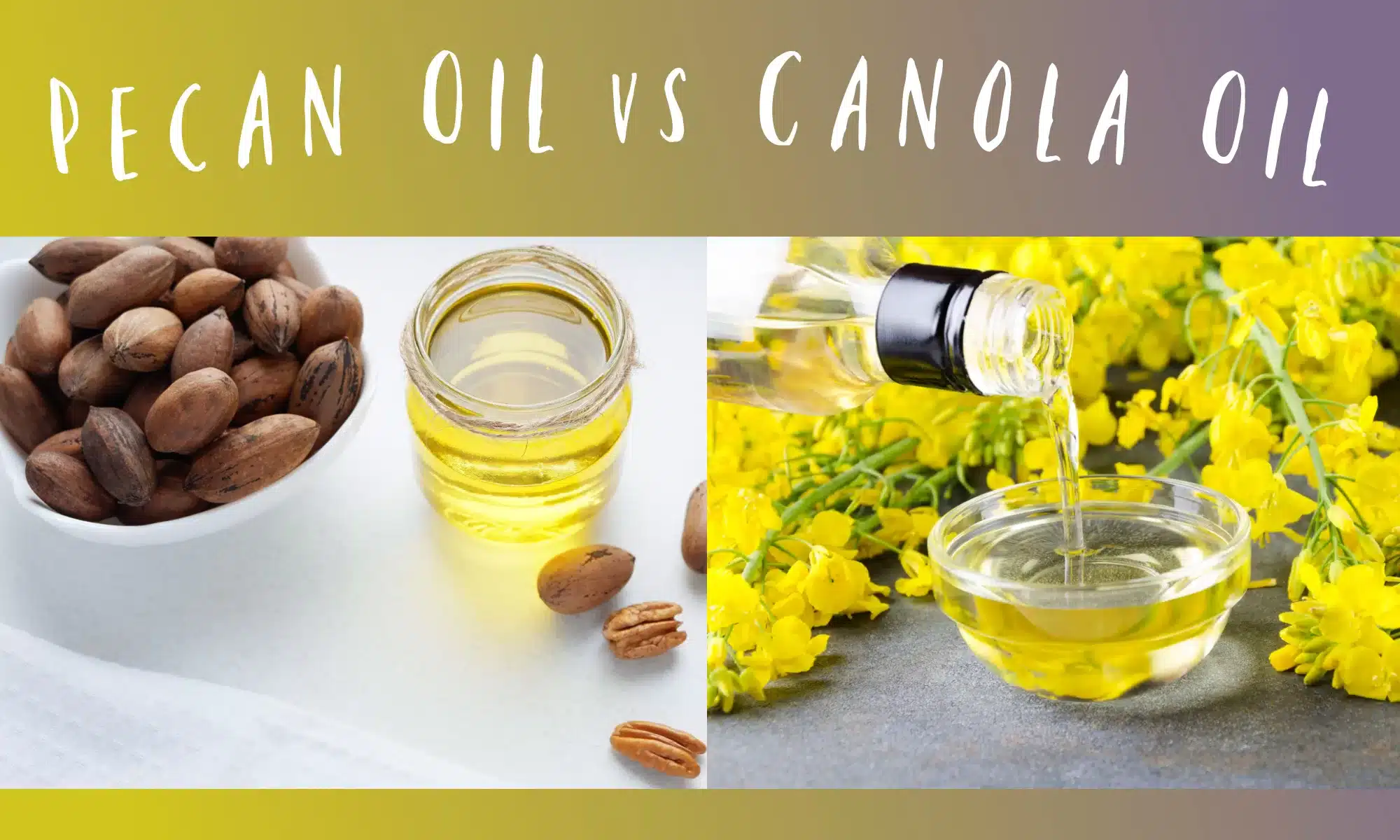
Comparing pecan oil vs canola oil
| Pecan oil | Canola oil | |
| Solid or Liquid? | Liquid | Liquid |
| Smoke Point (Fahrenheit) | 470 degrees | 225-445 degrees |
| Primary Fat | Monounsaturated | Monounsaturated |
| Taste | Nutty | Neutral |
| Good for Cooking… | Raw, low, moderate, and high heat | Raw, low, moderate, and high heat |
| Allergens | Pecans, tree nut | Rapeseed, canola |
| Gluten-free? | Yes | Yes |
| Keto? | Yes | Yes |
| Paleo? | Yes | No |
| Vegan? | Yes | Yes |
Differences between pecan oil and canola oil
Let’s start with the basics. Pecan oil is derived from pecan nuts, renowned for their rich and buttery flavor.
On the other hand, canola oil is extracted from the seeds of the canola plant, a variant of rapeseed.
Canola oil undergoes a more extensive refining process compared to pecan oil. It typically involves processes such as bleaching and deodorizing to remove impurities and enhance its shelf life, resulting in a more refined and neutral-tasting oil.
Baking and cooking with pecan oil vs canola oil
Pecan oil is known for its rich, nutty flavor, which adds a delightful twist to various dishes. It works exceptionally well in salad dressings, marinades, and as a finishing oil. Drizzle a bit of pecan oil over a fresh green salad with roasted pecans or use it to bring out the flavors in a grilled salmon dish.
Pecan oil has a VERY high smoke point of 470°F, which is even high than canola oil (up to 445°F), but due to its strong flavor, I find it’s better in smaller amounts rather than using it for things like frying.
On the other hand, canola oil is a versatile and neutral-tasting oil that suits a wide range of cooking methods. Its mild flavor makes it an ideal choice for baking, frying, sautéing, and even grilling. You can use canola oil to bake a moist cake, pan-fry some crispy chicken tenders, or stir-fry a medley of colorful vegetables.
Can pecan oil and canola oil be substituted for each other?
Pecan oil and canola oil can generally be substituted for each other in cooking, as they both have a relatively high smoke point and similar consistencies.
However, it’s important to note that pecan oil has a distinct nutty flavor that can add a unique taste to dishes, while canola oil has a more neutral flavor. So, the substitution may affect the overall taste of your dish.
Nutrition: Pecan oil vs canola oil
Pecan oil is rich in monounsaturated fats, similar to olive oil, which is considered heart-healthy. It also contains vitamin E, an antioxidant that helps protect cells from damage. Pecan oil has a slightly higher calorie content than canola oil, but it also offers a unique profile of nutrients, including omega-3 fatty acids.
Canola oil is known for its heart-healthy properties. It’s low in saturated fat and contains a good balance of monounsaturated and polyunsaturated fats, including omega-3 and omega-6 fatty acids. It is also a good source of vitamin E.
| Per tablespoon (15mL) | Pecan oil | Canola oil |
| Calories | 130 | 124 |
| Polyunsaturated | 4.5 g | 3.9 g |
| Monounsaturated | 8 g | 8.9 g |
| Saturated | 1.5 g | 1.0 g |
| Trans | 0 g | 0.1 g |
| Total Fat | 14 g | 14 g |
| Cholesterol | 0 | 0 |
The primary fat source is bolded.
How to store pecan oil and canola oil
It is best to store pecan oil in a cool, dark place, away from direct sunlight or heat sources. This helps preserve its freshness and prevent oxidation. Keep it in a pantry or a cupboard that maintains a consistent temperature. If the oil has been opened, it’s best to refrigerate it to extend its shelf life. Pecan oil tends to have a shorter shelf life compared to other oils, so it’s essential to check the expiration date and use it within the recommended timeframe.
Canola oil is relatively more stable and has a longer shelf life compared to pecan oil. It should be stored in a cool, dark place like in a cupboard or pantry at room temperature – without the need for refrigeration, even after opening.
Pecan oil vs canola oil: The ultimate verdict
While pecan oil has its unique flavor and can add a delightful touch to certain dishes, its limited applications and shorter shelf life make it slightly less versatile in comparison.
That being said, personal preference and specific recipes can still lead you to choose pecan oil for its distinct nutty taste. However, if I were to pick a winner overall, canola oil takes the crown for its versatility, nutritional benefits, and longer shelf life, plus its overall greater availability, making it an excellent all-around oil for everyday cooking and baking adventures!
Of course, canola oil is still a highly refined oil, and I generally recommend using avocado, olive, or coconut oil most of the time!
FAQs
Absolutely! Pecan oil is a nutritious option due to its high content of monounsaturated fats, vitamin E, and antioxidants. However, it’s important to consume it in moderation as part of an overall balanced diet.
Pecan oil is a nutritious option with a good balance of monounsaturated and polyunsaturated fats, similar to olive oil, making it a healthy choice for cooking and dressing, though the specific health benefits may vary.
Yup, pecan oil is a good option for cooking as it has a high smoke point and imparts a rich, nutty flavor to dishes.




Leave a Comment