Sometimes it feels like American workers just can’t catch a break, you know?
Pepsi is closing down yet another factory and firing everyone who works there.
As if there weren’t enough problems already.
And let’s face it…
Follow The Coconut Mama
• For fun lists, healthy living tips, and bar conversation topics, make sure to follow The Coconut Mama. Click here to access The Coconut Mama’s profile page and be sure to hit the Follow button here or at the top of this article!
• Have feedback? Add a comment below!
Shutterstock
Pepsi isn’t just a beverage company – it’s a global conglomerate.
In addition to tons of well-known drinks (not just Pepsi), it also owns Frito-Lay and all the famous chip brands associated with that iconic American company.
The factory Pepsi just closed was part of the Frito-Lay business, based in Rancho Cucamonga, California.
Reportedly hundreds of workers were laid off – every factory worker and all the admin staff, too.
Shutterstock
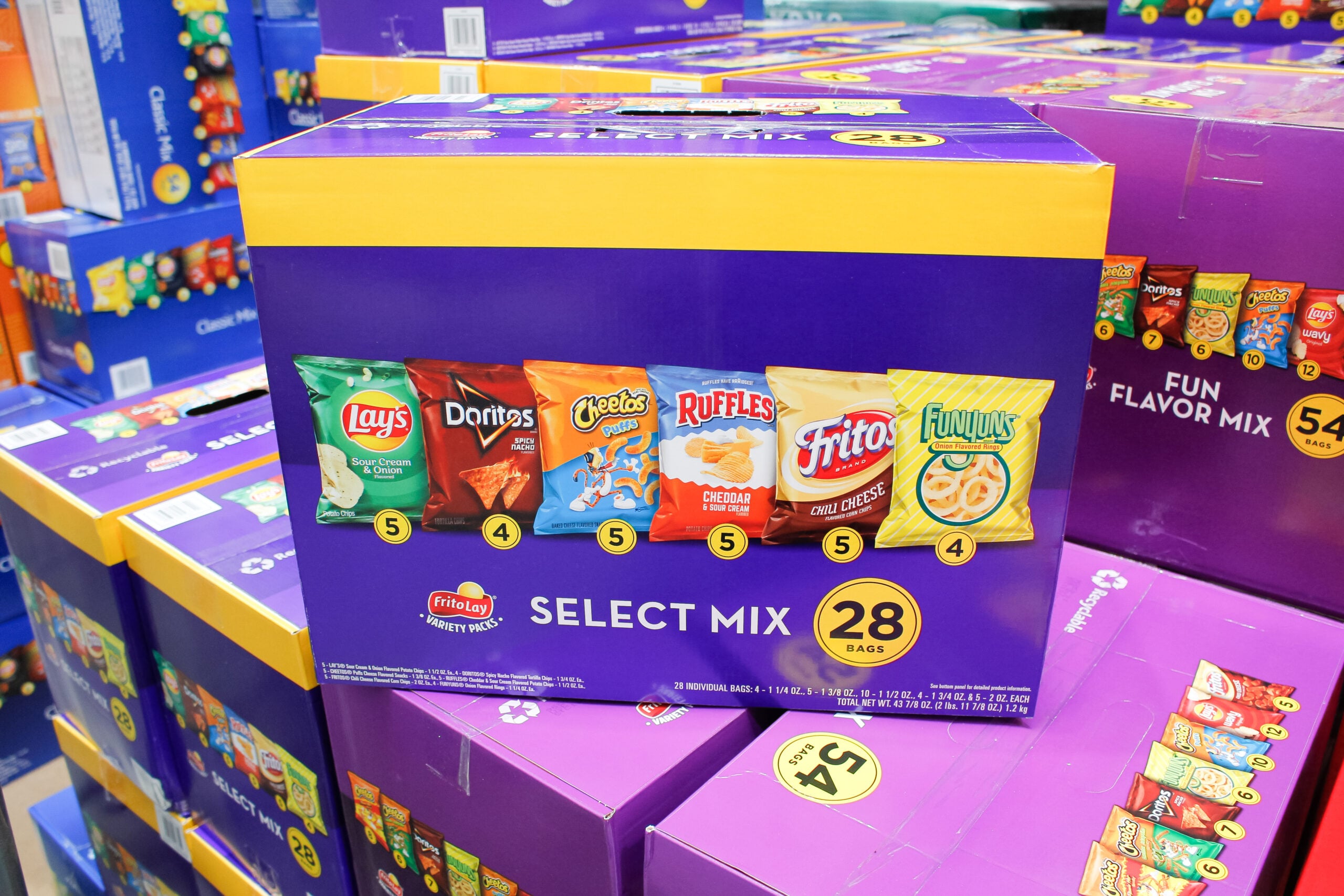
The plant produced many of Frito-Lay’s most popular chips: Doritos, Cheetos, Tostitos, and Funyuns.
(Relatedly – California is losing a TON of factories for some reason…)
And it had been a true pillar of the community, having been in business for over 50 years.
That may have unfortunately been a key piece of its downfall…
Shutterstock

PepsiCo didn’t have a lot to say about why it closed the factory beyond it being too expensive, but we can make some smart guesses.
For one, the fact that the plant was over 50 years old tells us that it probably didn’t exactly have the newest and best technology.
Automation tech has come a long way over the past 50 years, and older factories usually aren’t designed to take the best advantage of it.
That inefficiency means more human labor needed (more jobs), and also more costs tied to those jobs.
Shutterstock

If you’re the size of PepsiCo, normally you can afford a little inefficiency here and there.
But unfortunately, we are not in normal times.
Pepsi and its subsidiaries are facing a tough macroeconomic climate:
– Consumer confidence is low (indicating people may be pulling back spending)
– Lots of layoffs are happening
– Inflation remains stubbornly high
– And of course, tariffs and the trade war have scrambled everything
Shutterstock

Pepsi and its competitors face a series of tough choices in situations like this. Do you…
– Raise prices to compensate for higher input costs? (Recognizing that fewer people may buy your product, could even make people mad)
– Source lower-quality ingredients or shrink packaging to try and keep prices flat?
– Find other savings and efficiencies?
The answer is of course usually some combination of some or all of the above…and reducing its reliance on an older, less efficient factory, is certainly part of that third section for Pepsi.
In fact…
Shutterstock

This is in fact just the latest in a series of layoffs, downsizings, and outright plant closings over the last year.
Here are some of the others:
– They closed the PopCorners plant in Liberty, New York (less than a month ago, with 287 layoffs)
– They shut down the Pepsi production facility in Cincinnati, Ohio (back at the end of 2024, with 136 layoffs)
– They cut jobs at the Quaker Oats plant in Danville, Illinois (500+ layoffs)
– Downsizings in Harrisburg, PA and Atlanta, GA
It’s rough out there for sure.
Shutterstock

Coca-Cola has been trying to do something similar, having recently closed down one of their last bottling plants (at the cost of 135 more layoffs in California).
The thinking is pretty straightforward:
Leaving aside even all of the current macroeconomic problems for a moment, Pepsi and Coke have a bigger, longer-term problem facing them:
Follow The Coconut Mama
• For fun lists, healthy living tips, and bar conversation topics, make sure to follow The Coconut Mama. Click here to access The Coconut Mama’s profile page and be sure to hit the Follow button here or at the top of this article!
• Have feedback? Add a comment below!
Shutterstock

For a company like Coca-Cola, they can’t just invent a new flavor and celebrate.
Next they have to:
– Test and refine the recipe;
– Set up tooling to mass-produce it;
– Add carbonated water in the right ratios;
– Bottle it;
– Transport it to stores.
(Probably some more steps along the way that a true logistics expert – which I am not! – could add. Feel free to let me know in the comments if I’ve missed anything important!)
Shutterstock

And of course, if you own drinks AND chips AND breakfasts like Quaker Oats…as PepsiCo does…well, the complexity multiplies further.
Coke’s response to all of this has been to try and simplify – outsource a lot of the logistics, manufacturing, and production out to third parties.
It’s not unreasonable to think Pepsi is trying some similar moves on for size.
The strategy is pretty straightforward when you think about it…
Shutterstock

Does Coca-Cola or Pepsi add a lot of value by bottling its own soda? Packing its own chip bags? Shipping its own product?
Or can these massive conglomerates instead focus on a more “asset-light” approach that enables them to flexibly focus on what they’re really, really good at…stuff like:
– Developing new flavors and combinations
– Marketing
– Price negotiations
And more?
Coke has made its choice clear, and I think Pepsi is heading in a similar direction.
Shutterstock
These third-party suppliers, manufacturers, logistics companies…
Well, they’re all probably pretty efficient.
Meaning that many of the jobs that just disappeared probably aren’t coming back.
And even for those that do…
They could be somewhere else. (Like, in another state.)
Shutterstock

Plus, let’s face it – every time Pepsi does something like this…and things don’t fall apart…
It encourages them to look further for more things to cut.
More efficiencies to find.
More jobs to end.
So there can be a bit of a snowball effect.
Now, fortunately it’s not ALL bad news…
Shutterstock

Those efficiencies probably mean lower prices for us consumers in the checkout line.
And the fact that companies like Pepsi will now have more room to test new ingredients, combos, flavors…well, that could result in some pretty cool inventions!
All those things are great. I just want to point out that there are trade-offs and downsides to everything.
And of course, I want to take a moment to wish the affected workers well as they try to find new opportunities.
Shutterstock

So there you have it – another Pepsi factory gone, hundreds of jobs lost, and unfortunately – I would expect more layoffs as Pepsi looks to wring out more efficiencies throughout its network.
It’s tough out there – especially as more companies follow in the footsteps of leaders like Coca-Cola and Pepsi.
Are you seeing local factories close? Any advice to help people move forward? Let us know in the comments!
Shutterstock