
Powdered sugar, also known as icing sugar or 10X sugar, is commonly used for frosting and icing, as well as dusting over baked goods to add a touch of sweetness and a smooth finish. With a melting point ranging from 160 to 186 degrees Fahrenheit, powdered sugar easily dissolves into liquids and blends well with other ingredients.
But what is it exactly? Well, it’s technically just finely ground-up white granulated sugar! In fact, you can make it yourself at home by pulverizing white sugar in your food processor. Given that it is essentially the same thing as regular sugar, does that mean we are supposed to store it the same way? Kind of. Let’s talk more about it.
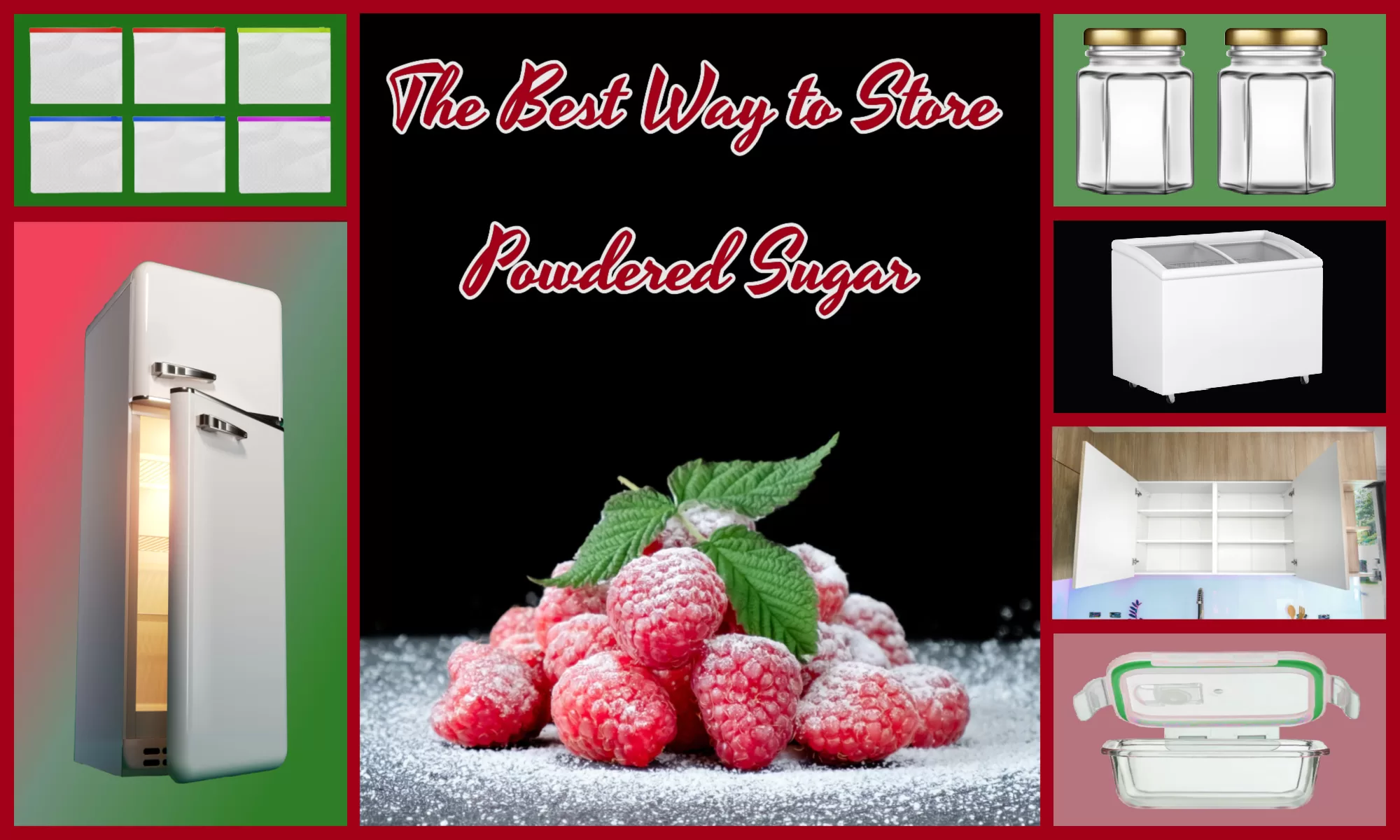
How To Store Powdered Sugar?
Powdered sugar should be stored in a cool and dry place, just like table sugar. The pantry or a kitchen cabinet are suitable options. Once opened, ensure the sugar is tightly sealed to prevent moisture or bugs from infiltrating. If the original packaging is resealable, keep the sugar in it. Otherwise, consider transferring it to an airtight container.
The main difference between storing this and white sugar is you have to make doubly sure that powdered sugar is not going to get any moisture in it. If a little gets into table sugar, you may end up with a clump, but a little liquid in powdered sugar could liquefy a large amount of it!
Lastly, be mindful of any strong odors nearby, especially if the sugar is in a paper bag. To safeguard against odor absorption, transferring the powdered sugar to an airtight container or sealing it in a ziplock bag is advisable.
Can You Freeze Powdered Sugar?
Powdered sugar can be frozen, but I do not suggest it. Freezing increases the odds of moisture sneaking in and ruining the sugar. Instead, just keep it tightly sealed at room temperature as you would with most kinds of sugars or sweeteners.
If you insist on freezing powdered sugar, ensure it is tightly sealed with a freezer bag or airtight container. This will prevent the sugar from clumping due to moisture and avoid acquiring freezer-like smells. Remember to remove excess air from freezer bags before sealing and label the bag or container to avoid confusion when you are cooking!
How To Defrost Powdered Sugar
For the quickest thawing of powdered sugar, allow it to sit at room temperature for 2 to 3 hours or until thoroughly defrosted. Do not microwave, as this can cause it to melt.
How Long Does Powdered Sugar Last?
Powdered sugar can live on indefinitely if appropriately stored in a well-sealed container, away from sources of heat, in a cool and dry place. However, it’s essential to discard it if you observe any signs of mold, organic growth, clumping, pests, or contamination in the bag or container.
Though powdered sugar typically includes a “best-by” date of about one to three years from the packaging date, it doesn’t actually expire when stored correctly. The most common issue is the formation of clumps, which can be easily resolved by sifting it. Unsealing the bag does not affect its shelf life; you can store it as long as needed, as long as you ensure it is well-covered and kept in a dry location.
Expired powdered sugar can still be used if it shows no signs of spoilage.
How To Know When Powdered Sugar Is Rancid?
If your powdered sugar has any signs of mold, organic growth, wet clumps, or pantry pests, it’s best to discard it. This includes any funny smells or off-tastes. Even if it’s just a few small moldy spots or a full-blown civilization of mold, getting rid of the entire package is safer—no need to take any risks.
And if you happen to come across any bugs, make sure to check and remove any nearby food products. These little critters can spread, and infestations are no fun.
FAQs
Powdered sugar, in simple terms, is white sugar that has been finely ground into a powdery form. Unlike granulated sugar, which has a coarse and sandy texture, powdered sugar has an almost chalk-like consistency, which makes it perfection for icing cakes!
Powdered sugar is also known as confectioners’ sugar, named for its application in candy making, or 10x sugar, which is a measure of how finely it has been ground.
Powdered sugar is available in various levels of refinement, ranging from three to fourteen times of processing. The numerical labels, such as 10x, indicate the number of times it has been processed. The most commonly used variant is 6x, but when shopping in stores or warehouse clubs, it is rare to come across anything more refined than 10x powdered sugar.
In your coffee or tea, sure. But for baking, it isn’t recommended because it can much with the texture of your final product.


Leave a Comment