

Texas just passed a law that could make America’s favorite candy come with a warning label.
Basically, they’re treating M&Ms and other popular junk food items just like cigarettes.
Let’s unwrap what’s really going on…
Follow The Coconut Mama
• For fun lists, healthy living tips, and bar conversation topics, make sure to follow The Coconut Mama. Click here to access The Coconut Mama’s profile page and be sure to hit the Follow button here or at the top of this article!
• Have feedback? Add a comment below!
Shutterstock

On June 29, Governor Greg Abbott signed Senate Bill 25 into law.
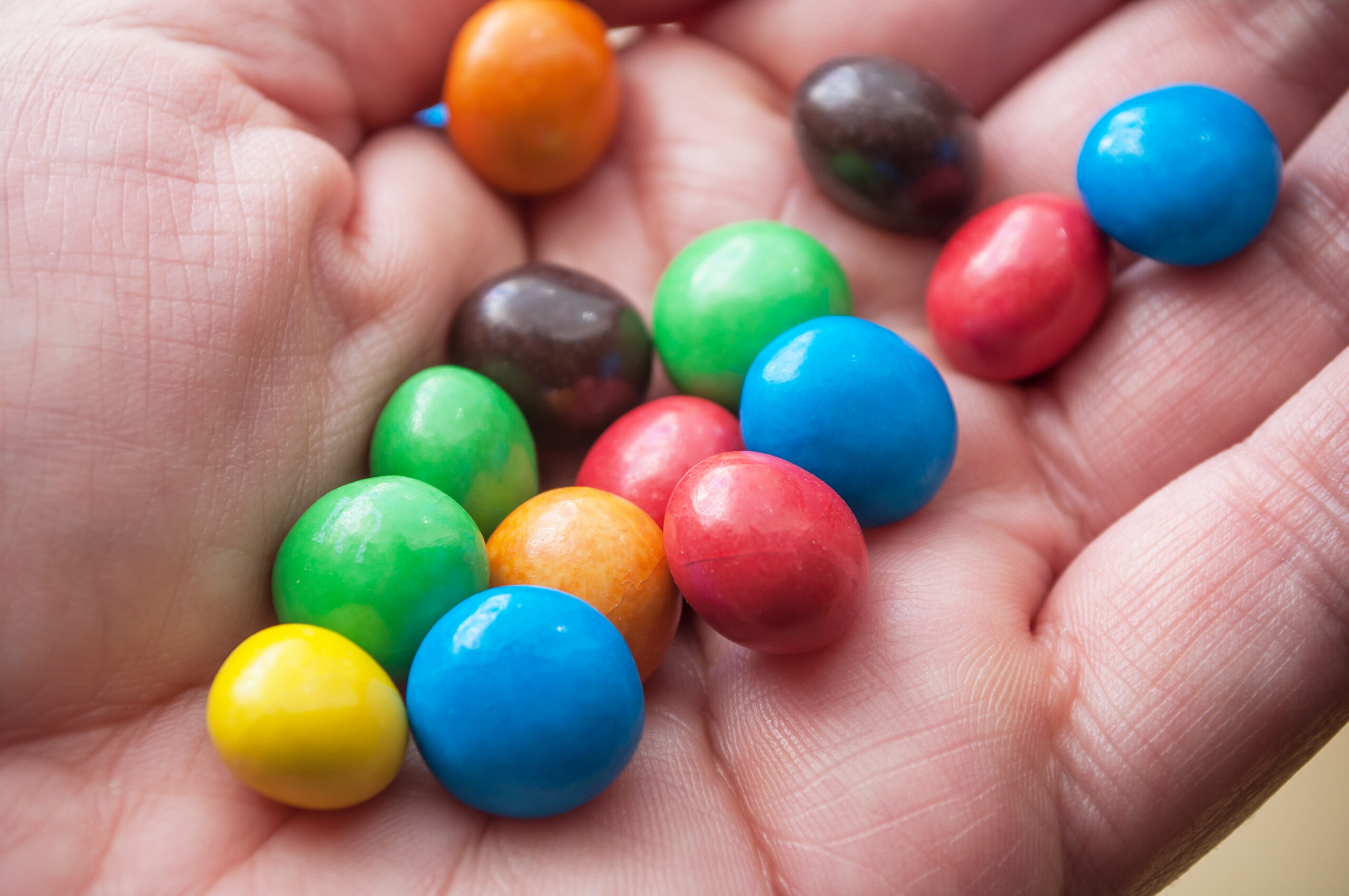
This first-of-its-kind law targets popular snack foods and cereals such as as M&Ms, Cinnamon Toast Crunch and Doritos.
Starting in 2027, food companies must either remove over 40 flagged ingredients (like artificial dyes, bleached flour, and common preservatives)…
or add a warning label saying the product contains ingredients “not recommended for human consumption” by other countries.
Many of these additives are already banned or restricted overseas, and now Texas is calling them out too.
If you ask me, it’s about time.
But the food industry is already gearing up for a fight…
Shutterstock

Brands whose products contain at least one of the targeted ingredients include:
– M&Ms and Skittles (Mars)
– Cheetos and Doritos (PepsiCo)
– Cinnamon Toast Crunch (General Mills)
– Fanta (Coca-Cola)
– Mountain Dew and Gatorade (PepsiCo.)
– Pop-Tarts (Kellanova, formerly part of Kellogg Company)
Basically, if they don’t change their ingredients, they get the label.
Shutterstock

These are just a few of the 40+ ingredients flagged by the new law, and many of them are already banned in places like Australia, Canada, the European Union, and the United Kingdom:
– Titanium Dioxide (a whitening agent used in candy, gum, and baked goods – the EU banned it in 2022 over concerns it may damage DNA)
– BHT (a preservative linked to cancer in some animal studies)
– Synthetic Dyes like Red 40, Yellow 5, and Blue 1 (some are tied to hyperactivity in kids)
– DATEM, an emulsifier used in bread and baked goods
Let’s just say… if other countries are slapping warning labels on this stuff, maybe it’s worth a second look.
Shutterstock

This is part of Robert F. Kennedy Jr.’s health initiative, “Make America Healthy Again,” which aims to cut ultra-processed junk and eliminate chemicals, synthetic dyes, and additives – especially in foods marketed to kids.
Think: brightly colored cereals, candy, and lunchbox snacks.
The pressure’s working. Some companies, like Kraft Heinz and General Mills, have already pledged to ditch synthetic dyes in U.S. products by 2027.
But not everyone’s on board…
Shutterstock

The Consumer Brands Association, which represents giants like PepsiCo and Kellogg’s, says the law is “confusing” and “misleading.”
Their argument? The FDA already approves these ingredients, and using foreign standards sets a dangerous precedent.
They’re warning this could:
– Confuse shoppers
– Raise costs
– Force companies to make Texas-only labels
They’re also threatening lawsuits. Lots of them.
Shutterstock

The law doesn’t kick in until 2027, giving food companies plenty of time to quietly reformulate their products.
Some might tweak recipes nationwide. Others could roll out Texas-only versions to avoid the warning label.
There is a loophole:
If the FDA or USDA declares an ingredient safe after Sept. 1, 2025, the label won’t be required.
But that’s a big IF, and most companies don’t want to gamble on slow federal approvals.
Shutterstock

Texas isn’t a small player. With 31 million people, it’s the second-largest state in the U.S.
And when a state that big changes the rules? Companies take notice.
To avoid the hassle of Texas-only packaging, many brands may choose to reformulate their products across the board.
That means cleaner snacks or warning labels could show up nationwide – even if your state didn’t pass any new laws.
Follow The Coconut Mama
• For fun lists, healthy living tips, and bar conversation topics, make sure to follow The Coconut Mama. Click here to access The Coconut Mama’s profile page and be sure to hit the Follow button here or at the top of this article!
• Have feedback? Add a comment below!
Shutterstock
Food activists like Vani Hari (aka “The Food Babe”) say this could finally push for national reform.
She’s been calling out synthetic dyes and additives for years.
But as we’ve already seen, food companies won’t go down without a fight.
Shutterstock

Let’s be real: Most people aren’t scanning ingredient lists.
But a giant label that says “Not Recommended for Human Consumption”?
That might make people think twice about handing M&Ms to their kids.
Shutterstock

This new Texas law kicks in January 1, 2027.
Until then, expect:
– Reformulated snacks (maybe?)
– A wave of lawsuits
– And a nationwide conversation about what we’re really eating
Because when candy gets treated like cigarettes, people start paying attention.
Shutterstock
Texas just told food giants: Clean it up, or label it dirty.
If nothing changes, your favorite snacks could soon come with a “Not Safe for Human Consumption” label on them.
So, what do YOU think about the new law?
Drop your thoughts in the comments!
Shutterstock


Leave a Comment