
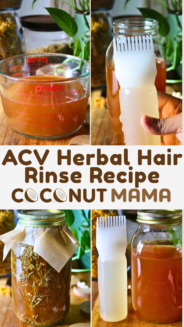
Looking for a simple way to add herbs to your hair care routine? This homemade apple cider vinegar herbal hair rinse is an easy DIY made with raw apple cider vinegar and dried herbs like rosemary, nettle, lavender, and chamomile.
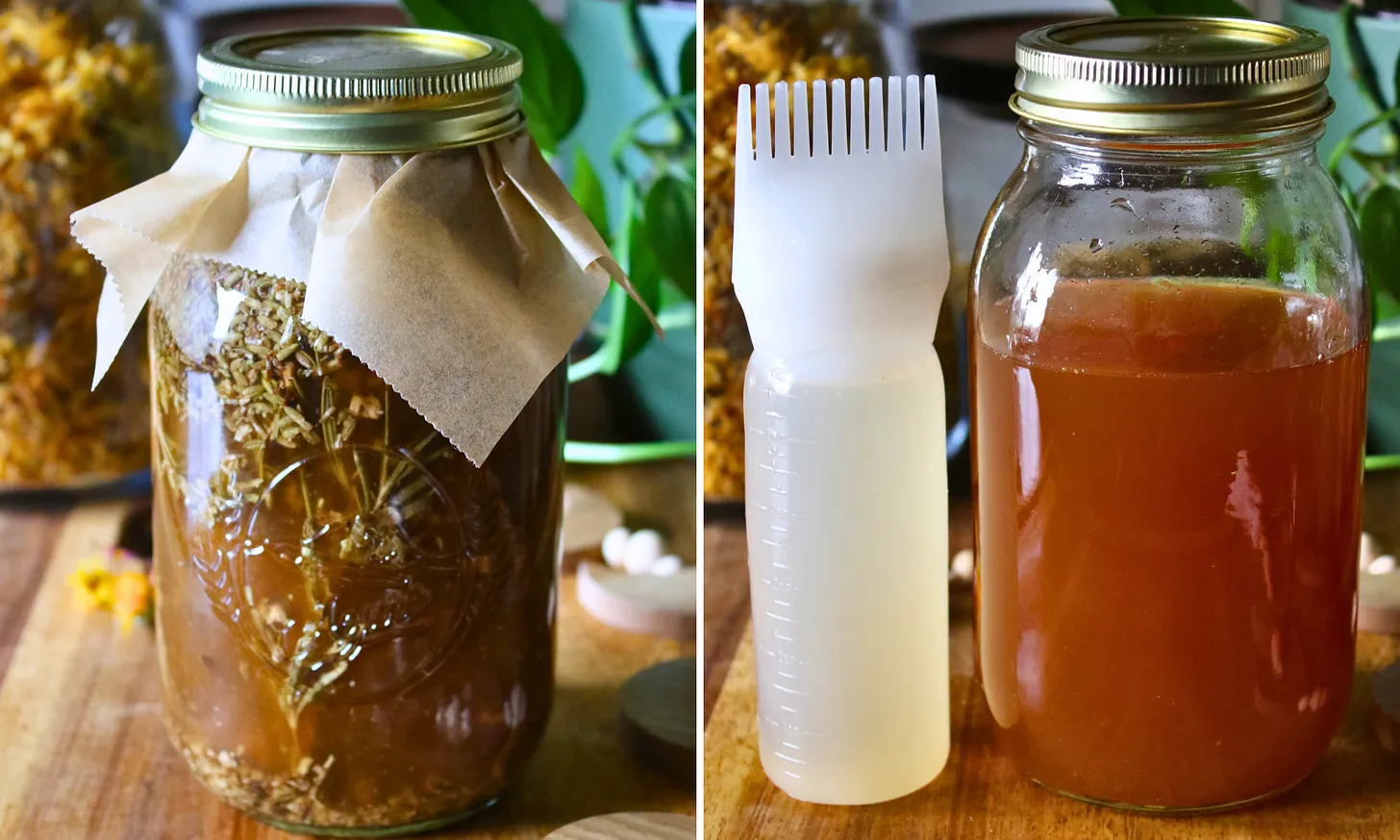
I love making my own herbal preparations at home. They’re a wonderful way to explore the benefits of plants and create simple alternatives to store-bought products. This herbal hair rinse is one of those DIYs that requires just a few ingredients and a little patience while the herbs infuse.
The best part? You can customize the herbal blend to suit your hair care preferences. Whether you’re looking for a rinse that leaves your hair feeling smooth, helps remove product buildup, or adds shine, you can experiment with different herbs to find a combination you enjoy.
Let’s make it!
Why You’ll Love This DIY Herbal Hair Rinse
- Simple ingredients: All you need is apple cider vinegar and dried herbs.
- Customizable: Choose herbs based on your hair care preferences.
- Easy to make: The hands-on preparation takes just a few minutes.
- Concentrated formula: A little goes a long way because you’ll dilute the finished vinegar before using it.
- Budget-friendly: Make a batch at home and use it as part of your hair care routine.
What Is an Apple Cider Vinegar Hair Rinse?
An apple cider vinegar hair rinse is a diluted vinegar preparation used after shampooing. Vinegar is acidic, and when appropriately diluted, it may help remove some product residue and leave hair feeling smoother.
Adding herbs gives you an opportunity to customize the rinse with botanicals traditionally used in hair care. Rosemary, nettle, lavender, and chamomile are popular choices for homemade herbal preparations.
I like to infuse the vinegar with dried herbs for two to three weeks. This gives the vinegar time to extract some of the herbs’ water-soluble and other acid-soluble constituents, creating a fragrant herbal concentrate.
Important: Apple cider vinegar is acidic and can irritate your scalp or damage your hair if used too concentrated or too frequently. Always dilute it before use, avoid contact with your eyes, and discontinue use if irritation occurs. This rinse isn’t a treatment for hair loss or scalp conditions.
Ingredients You’ll Need
Apple Cider Vinegar
Raw apple cider vinegar is the base of this recipe. I like using it as the foundation for herbal infusions because it’s easy to find and works well for this type of DIY.
Dried Herbs
For my herbal blend, I use rosemary, nettle, horsetail, lavender, chamomile, and burdock root. Each herb brings its own traditional uses and aromatic qualities to the recipe.
You can follow my blend or choose a few herbs based on your preferences.
Essential Oils (Optional)
A small amount of essential oil can add fragrance to the finished concentrate. I use rosemary essential oil in this recipe, but you can leave it out entirely.
Essential oils are highly concentrated and don’t automatically mix evenly into vinegar. If you choose to use one, follow appropriate dilution guidance and mix thoroughly. Skip essential oils if you have a sensitive scalp.
Which Herbs Should You Use?
One of my favorite things about making herbal preparations is experimenting with different combinations.
Here are some herbs commonly used in traditional hair care:
- Rosemary: An aromatic herb frequently used in scalp and hair care preparations.
- Nettle: A traditional botanical ingredient used in hair rinses and herbal infusions.
- Horsetail: Traditionally used in hair care because it contains silica and other plant compounds.
- Lavender: Adds a gentle floral aroma to herbal preparations.
- Chamomile: A popular herb in hair rinses, especially in preparations intended for lighter hair.
- Calendula: Often included in herbal preparations for its traditional skin-soothing uses.
- Burdock root: A traditional herbal ingredient used in scalp and skin preparations.
- Marshmallow root: Often used in hair care because its mucilage can provide a slippery, conditioning feel when prepared with water.
You don’t need every herb on this list. Start with two or three that appeal to you and see how your hair responds.
Herbs are not one-size-fits-all, and evidence for many specific hair care benefits is limited. Your hair type, existing products, and scalp sensitivity will influence your results.
How to Make an Apple Cider Vinegar Herbal Hair Rinse
Step 1: Add the Herbs to a Jar
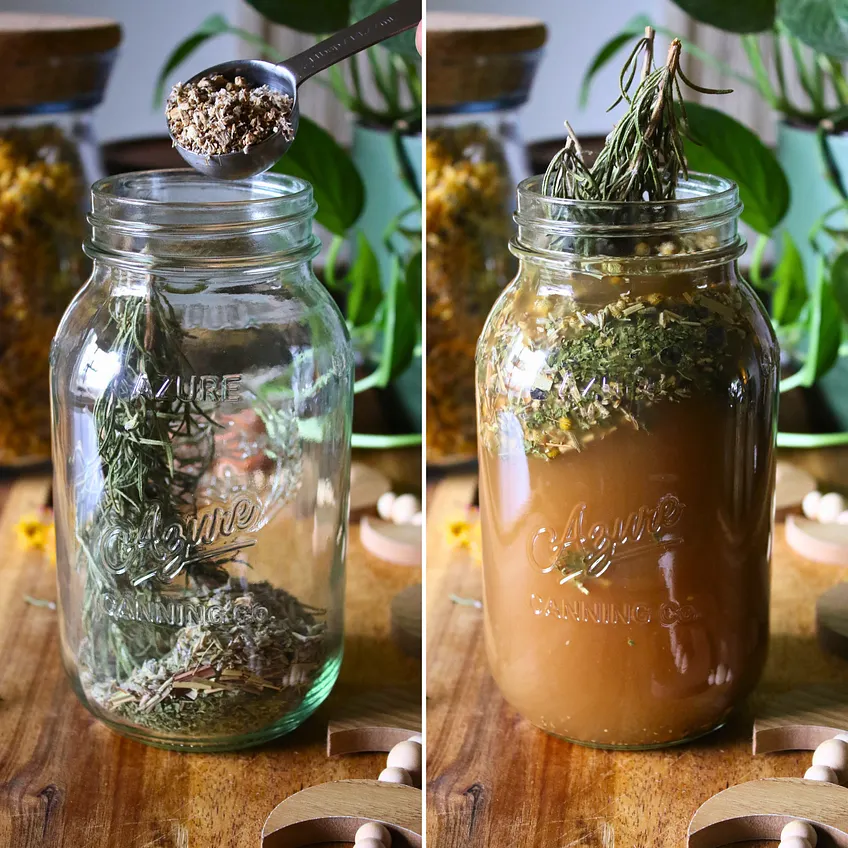
Add your dried herbs to a clean 32-ounce glass jar. For my blend, I use rosemary, nettle, horsetail, lavender, chamomile, and burdock root.
Step 2: Cover With Apple Cider Vinegar
Pour apple cider vinegar over the herbs until they’re covered. Allow the herbs to settle, then top off the jar with more vinegar.
Make sure the herbs remain submerged.
Step 3: Cover the Jar
Secure the lid. If you’re using a metal lid, place a piece of parchment paper between the lid and jar to help prevent corrosion from the vinegar.
Step 4: Let the Herbs Infuse
Place the jar in a cool, dark location for two to three weeks. Shake it gently every few days to help distribute the vinegar throughout the herbs.
Step 5: Strain the Herbs
After two to three weeks, strain the vinegar through a fine-mesh strainer. Discard the spent herbs and transfer the infused vinegar into a clean glass container.
Step 6: Add Essential Oil (Optional)
If desired, add the optional rosemary essential oil. Mix thoroughly. Because essential oils don’t readily dissolve in vinegar, don’t assume the oil will remain evenly dispersed.
Label your jar with the ingredients and date. Store it in a cool, dark place and discard it if you notice mold, unusual changes, or an off odor. For longer storage, consider refrigerating it.
How to Use an Apple Cider Vinegar Hair Rinse
Never apply the concentrated herbal vinegar directly to your hair or scalp. Always dilute it with water before use.
For a single application:
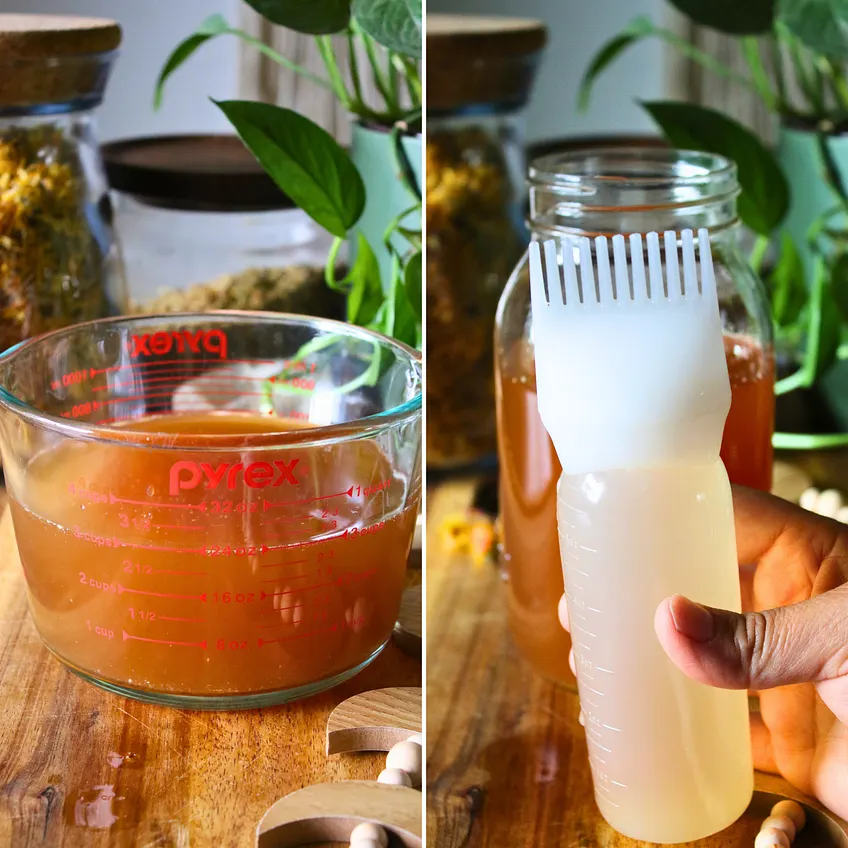
- Add 1/2 to 2 tablespoons of the herbal vinegar concentrate to 1 cup of water.
- Mix well and transfer to a clean applicator bottle if desired.
- After shampooing, gently apply the diluted rinse to your hair, avoiding your eyes and any irritated or broken skin.
- Rinse thoroughly with water.
Start with the weakest dilution, especially if you have dry hair, a sensitive scalp, or color-treated hair. You can adjust the dilution based on how your hair responds, but stronger isn’t necessarily better.
I typically use about 1 tablespoon of the concentrate per cup of water. You may find that you prefer less.
Try the rinse occasionally at first rather than using it every time you wash your hair. Stop using it if you notice dryness, irritation, or changes in your hair texture.
Tips for Making the Best Herbal Hair Rinse
Use completely dried herbs. Dried herbs are convenient for vinegar infusions and introduce less moisture than fresh herbs.
Choose a glass jar. Vinegar is acidic, so glass is a good choice for infusing and storing your preparation.
Keep the herbs submerged. Make sure the vinegar covers the herbs throughout the infusion period.
Label your jar. Include the date and ingredients so you know what’s inside and when you made it.
Start with a weak dilution. Everyone’s hair and scalp are different. Begin with less concentrate and see how your hair responds.
Don’t expect a miracle treatment. This is a simple DIY hair rinse, not a proven treatment for hair growth, dandruff, or other scalp conditions.
Frequently Asked Questions
Can I use apple cider vinegar on my hair every day?
Daily use isn’t necessary and may cause dryness or irritation. Start with occasional use and discontinue it if your scalp becomes uncomfortable or your hair feels dry.
Do I need to rinse it out?
I recommend rinsing it out with water, especially when you’re first trying the recipe. This helps minimize the amount of acidic vinegar left on your scalp and hair.
Will my hair smell like vinegar?
The vinegar scent often becomes less noticeable as your hair dries. Rinsing with water can also help reduce the smell.
Can I use fresh herbs instead of dried herbs?
I recommend dried herbs for this recipe. Fresh herbs contain more moisture, which can complicate storage and make a homemade preparation less predictable.
Can I use this rinse on color-treated hair?
Use caution. Acidic preparations may affect some hair treatments or colors, and results vary. Test on a small, inconspicuous section first and check with your stylist if you’re unsure.
Can this rinse help hair grow?
There isn’t sufficient evidence that this homemade vinegar rinse promotes hair growth. Rosemary essential oil has been studied in other formulations, but those findings don’t establish that this recipe will produce the same results.
If you’re experiencing persistent hair loss or scalp problems, consult a qualified healthcare professional.
How long does the herbal vinegar last?
The shelf life of a homemade herbal infusion can vary depending on preparation, moisture, storage, and contamination. Because this recipe hasn’t been tested for shelf stability, I can’t give it a guaranteed shelf life. Use clean equipment, label the jar, refrigerate the finished infusion, and discard it if anything seems unusual.
Related Recipes:
PrintDIY Apple Cider Vinegar Herbal Hair Rinse
Make your own apple cider vinegar herbal hair rinse with rosemary, nettle, lavender, chamomile, and burdock root. This simple DIY recipe is easy to customize with your favorite dried herbs. Learn how to make the herbal vinegar concentrate and dilute it for use in your hair care routine.
Ingredients
- 32-ounce glass jar
- 2 tablespoons dried rosemary
- 2 tablespoons dried nettle
- 2 tablespoons dried horsetail
- 2 tablespoons dried lavender
- 2 tablespoons dried chamomile
- 1 tablespoon dried burdock root
- Raw apple cider vinegar, enough to cover the herbs and fill the jar
- 2 drops rosemary essential oil (optional)
Instructions
- Add the rosemary, nettle, horsetail, lavender, chamomile, and burdock root to a clean 32-ounce glass jar.
- Pour apple cider vinegar over the herbs until covered. Allow the herbs to settle and top off with additional vinegar.
- Cover the jar. If using a metal lid, place parchment paper between the lid and jar.
- Store in a cool, dark location for 2–3 weeks, shaking gently every few days.
- Strain the herbs through a fine-mesh strainer and transfer the infused vinegar to a clean glass container.
- Add the optional rosemary essential oil and mix thoroughly.
- To use, dilute 1/2–2 tablespoons of concentrate in 1 cup of water. Apply to freshly washed hair, avoiding the eyes, and rinse thoroughly.
Notes





Leave a Comment