
Pumpkin seeds are one of those late autumnal snacks that are the perfect reward for carving a pumpkin. You just clean and roast the seeds, salt them heavily, and then enjoy.
But there is actually one more use for pumpkin seeds that is rarely enjoyed, mostly people most people don’t even really know that you can do it – homemade pumpkin seed oil.
Nutritious, delicious, and rich in pumpkin seed flavor, pumpkin seed oil is actually incredibly easy to make at home.
How Can I Use My Homemade Pumpkin Seed Oil?
Pumpkin seed oil is often sold as a nutritional health supplement, or used as the tincture in things like medicinal extracts. However, pumpkin seed oil is, ultimately, a tasty finishing oil, and is perfect for adding to salads, tomatoes, or any dish where you want that little hit of rich pumpkin flavor.
What Kind Of Special Equipment Do I Need To Make Pumpkin Seed Oil?
Making pumpkin seed oil, much like any other kind of homemade oil, can be done in a few different ways depending on what kind of equipment you have on hand.
While the easiest way to make it is to use something like an oil press, not everyone has one on hand at all times.
However, a blender and some cheesecloth work just as well, as well as an oven to heat the seeds a little bit to help encourage the oil to leech out of the seeds more easily.
Ingredients
2 Pumpkins

How To Make Homemade Pumpkin Seed Oil
Step 1 – Separate your pumpkins using a strong, sharp knife, and remove the pumpkin’s insides.

Step 2 – Separate the seeds and the pumpkin’s “guts”, reserving the seeds and discarding the leftovers.
Step 3 – Roast your pumpkin seeds in a low oven set to 250 Fahrenheit, for around 20-40 minutes, or until the pumpkin seeds are completely dry and have begun to develop a dark color.
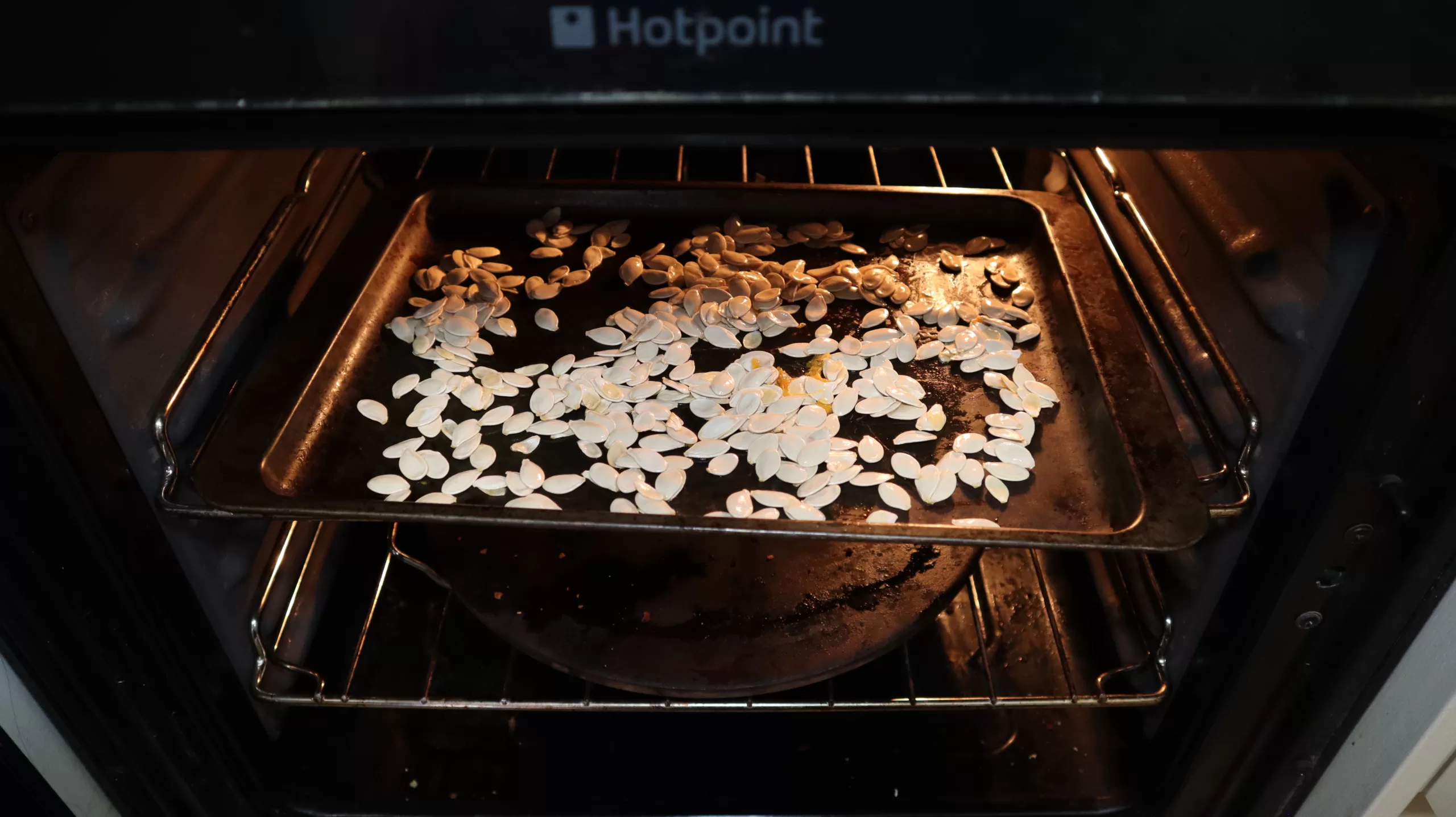
Step 4 – Crush and breakup your pumpkin seeds, either with a high powered blender, or using a pestle and mortar.

Step 5 – Transfer your pumpkin seed mash to a nut milk bag or a cheese cloth, tie it tightly, and squeeze the oil that leeches out into a separate container.

Step 6 – Store your pumpkin seed oil in a sealed container for up to 3 months.
Troubleshooting Tips
• One of the big troubles with trying to process pumpkin seeds from whole pumpkins is that the sticky, orange tendrils in the pumpkins just won’t seem to let go of your seeds. The best way to get around this is to wash your seeds under heavily flowing water in the sink while rubbing the orange tendrils off the seeds with your fingers. You can actually save this flesh and cook it up in whatever recipe you like, but it might be better to just throw them out.
• When you first cut into your pumpkin, you might be surprised to discover a whole mess of brown, slightly rotting flesh. This happens a lot with pumpkins that have been sitting on the shelf for too long, as you can’t really tell how fresh a pumpkin is just from looking at the outside. While you may be tempted to keep going and use the seeds from your rotten pumpkin, you would do a lot better to simply throw the whole thing out, because as soon as the flesh starts to rot, the seeds will take on a putrid, rancid flavor that you really don’t want, so it’s better to just get another pumpkin.
• If your pumpkin seeds just don’t seem to want to release any oil when you go to squeeze them, you might need to put them back into the oven for a short while. Just a little bit of extra heat on the crushed pumpkin seeds should help them to release any oil they’ve got leftover. Just make sure that you don’t take it too far and accidentally burn the oil, or the seeds!
Watch the Video Version…

Nutritional Facts
For the health-conscious out there, here are the nutritional details for 1 tablespoon of pumpkin seed oil.
Calories: 120
Total Fat: 14 grams
Saturated Fat: 3 grams
Cholesterol: 0 milligrams
Sodium: 0 milligrams
Total Carbohydrates: 0 grams
Dietary Fiber: 0 grams
Sugars: 0 grams
Protein: 0 gram
Potassium: 0 milligrams
FAQs
Pumpkin seeds are one of those things that absolutely have to be roasted before you can use them for anything, as the seeds just don’t taste right without being properly toasted.
However, how dark you roast your pumpkin seeds is totally up to you; the darker you take it, the darker and more intensely flavored your final pumpkin oil will end up being.
Just don’t take it too far, though, as otherwise, your pumpkin seed oil will taste exceptionally bitter if you aren’t careful.
After squeezing out all of the pumpkin seed oil that’s in your pumpkin seeds, you will be left with a finely crushed, almost pulverized mush of pumpkin seed particulate that has lost all of its fat.
While you absolutely could just throw this out, ideally into a compost bin, you could also try eating it!
With some salt added, and maybe a bit of cumin and garlic powder, this would turn into a tasty, if slightly messy, autumnal snack! You could also fry it in some oil (maybe even some pumpkin seed oil!) and turn it into little pumpkin seed fritters!
How to Make Pumpkin Seed Oil at Home
Ingredients
2 Pumpkins
Instructions
Step 1 – Separate your pumpkins using a strong, sharp knife, and remove the pumpkin’s insides.
Step 2 – Separate the seeds and the pumpkin’s “guts”, reserving the seeds and discarding the leftovers.
Step 3 – Roast your pumpkin seeds in a low oven set to 250 Fahrenheit, for around 20-40 minutes, or until the pumpkin seeds are completely dry and have begun to develop a dark color.
Step 4 – Crush and breakup your pumpkin seeds, either with a high powered blender, or using a pestle and mortar.
Step 5 – Transfer your pumpkin seed mash to a nut milk bag or a cheese cloth, tie it tightly, and squeeze the oil that leeches out into a separate container.
Step 6 – Store your pumpkin seed oil in a sealed container for up to 3 months.
Nutrition Facts
- Serving Size: 1 tablespoon


