
Tea tree oil and apple cider vinegar stand out as versatile and potent solutions for various health and beauty concerns. Both these natural extracts have gained popularity in recent years, celebrated for their antibacterial, antifungal, and anti-inflammatory properties.
In this article, I’ll delve into the characteristics and applications of tea tree oil and apple cider vinegar to help you understand which might be the better choice for your specific needs.
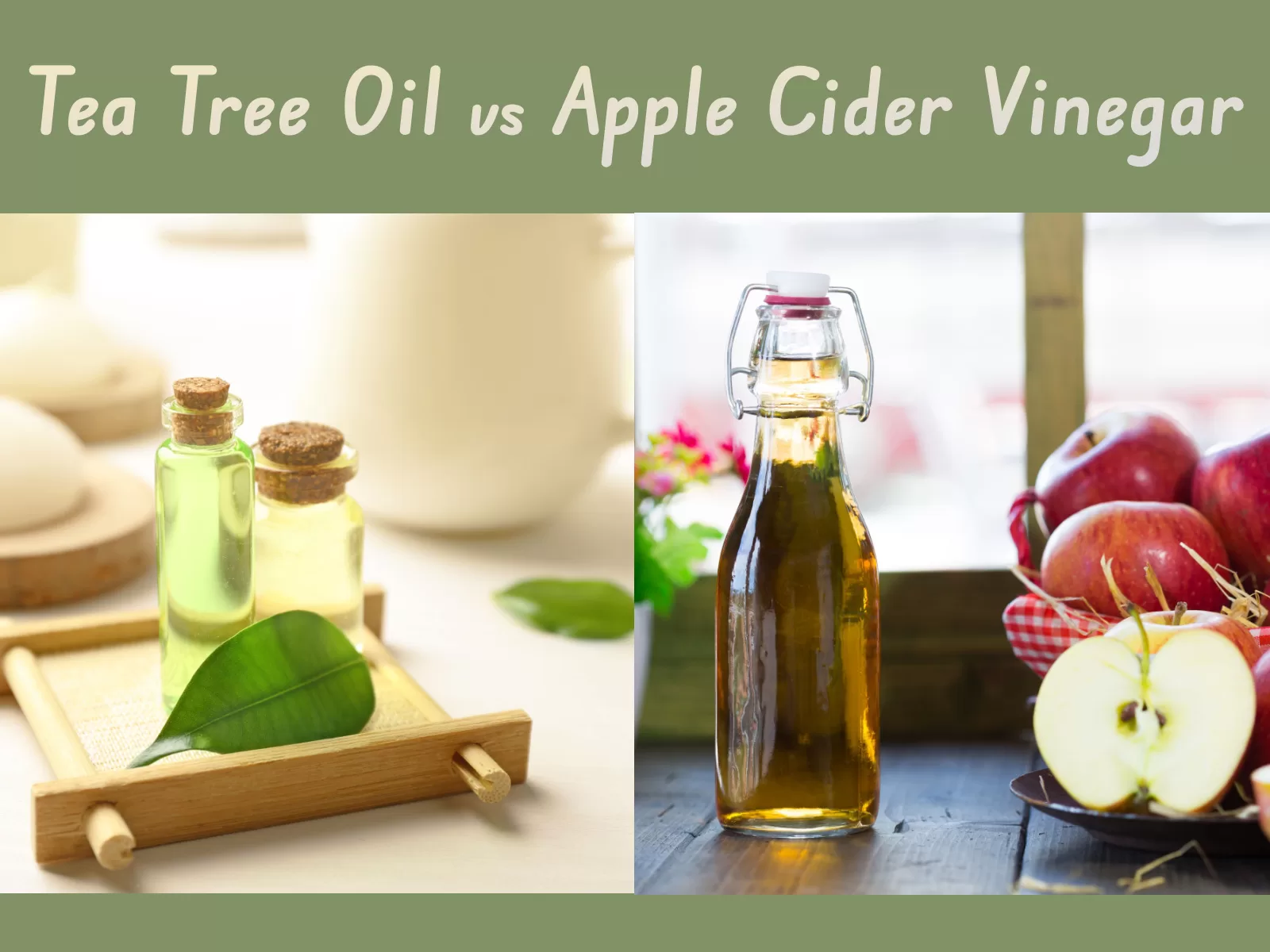
Comparing tea tree oil and apple cider vinegar
Tea tree oil, extracted from the leaves of the tea tree, is known for its potent antibacterial and anti-inflammatory properties. It’s commonly used in skincare for acne treatment and wound healing.
On the other hand, apple cider vinegar (ACV), derived from fermented apple juice, has milder antimicrobial effects and is often used in culinary applications, weight loss, and as a skin toner.
ACV finds its place in culinary applications, serving as a versatile ingredient in salads and various recipes. It is generally more affordable compared to tea tree oil, which is often used in smaller quantities for specific therapeutic purposes.
| Tea tree oil | Apple cider vinegar | |
| Source | Extracted from the leaves of the tea tree (Melaleuca alternifolia). | Made from fermented apple juice. |
| Active ingredients | Mainly terpinen-4-ol, cineole, and terpinol. | Acetic acid, malic acid, and various enzymes. |
| Odor | Strong, medicinal, and aromatic. | Pungent, sour, and vinegary. |
| Color | Clear to pale yellow. | Amber or golden brown. |
| Antibacterial properties | Well-known for its powerful antibacterial and antifungal properties. | Exhibits antimicrobial properties, but not as potent as tea tree oil. |
| Anti-inflammatory properties | Effective in reducing inflammation and redness. | May have mild anti-inflammatory effects. |
| Common uses | Skincare (acne treatment), hair care, and wound healing. | Culinary uses, weight loss, skin toner, and hair rinse. |
| Dilution required | Usually diluted with a carrier oil before topical application. | Often used in a diluted form for topical use or for consuming. |
| Caution | Can cause skin irritation in some individuals. | Should be diluted to avoid irritation, especially when applied to the skin. |
| Storage | Store in a cool, dark place. | Store in a cool, dry place away from direct sunlight. |
| Cost | Generally more expensive compared to apple cider vinegar. | Typically more affordable. |
It’s important to note that both tea tree oil and apple cider vinegar have unique properties and uses, and their effectiveness can vary for different individuals and conditions. Always follow recommended guidelines and consult with a healthcare professional if needed, especially for medicinal or therapeutic applications.
Source and composition
Tea tree oil is derived from the leaves of the tea tree (Melaleuca alternifolia) and is known for its rich composition, including terpinen-4-ol, cineole, and terpinol.
On the other hand, apple cider vinegar is a product of fermented apple juice, containing acetic acid, malic acid, and various enzymes.
Applications
Tea tree oil is commonly used in skincare routines, particularly for acne treatment and wound care. Its anti-inflammatory properties make it effective in reducing redness and inflammation. It’s also utilized in hair care products and as a natural remedy for conditions such as athlete’s foot and nail fungus.
Apple cider vinegar has a broad range of uses. In the culinary realm, it serves as a salad dressing, marinade, and food preservative. Additionally, it is employed as a skin toner, hair rinse, and in weight loss regimens. The acetic acid in ACV is believed to contribute to its antimicrobial properties, albeit not as potent as tea tree oil.
Health and skincare
Tea tree oil is renowned for its potent antibacterial and anti-inflammatory properties, making it a popular choice for acne treatment, wound healing, and overall skincare. It requires careful dilution with a carrier oil to prevent skin irritation.
Apple cider vinegar, while exhibiting mild antimicrobial effects, is often used for weight loss, as a skin toner, and even as a hair rinse. Dilution is also best for topical applications to avoid skin irritation.
Storage
Both substances require cautious handling. Tea tree oil, when not properly diluted, may cause skin irritation in some individuals. Apple cider vinegar, although generally safe, should be diluted for topical use. Storage recommendations include keeping tea tree oil in a cool, dark place and ACV in a cool, dry spot away from direct sunlight.
When to use tea tree oil vs apple cider vinegar
While both tea tree oil and apple cider vinegar have a range of health and beauty benefits, the choice between them depends on the specific issue you’re addressing:
- For skin and hair issues: Tea tree oil is my go-to solution for acne, infections, and dandruff.
- For digestive health: You can’t consume tea tree oil. Apple cider vinegar is more beneficial for issues like acid reflux and indigestion.
- First aid and minor infections: Tea tree oil’s antiseptic properties make it a valuable addition to first aid kits.
Tea tree oil vs apple cider vinegar: Final thoughts
Tea tree oil and apple cider vinegar (ACV), both derived from natural sources, offer a plethora of health and beauty benefits. Integrating these remedies into your routine can be a holistic approach to address various concerns. However, it’s crucial to use them judiciously and in moderation, as with any natural remedy. Consulting with a healthcare professional is best, especially if you have specific health conditions or concerns.
Ultimately, the choice between tea tree oil and apple cider vinegar depends on your individual needs and preferences, as both can play valuable roles in your natural health and wellness journey. In my experience, tea tree oil is more potent and effective when it comes to skincare, topical applications, and disinfecting. However, ACV is more versatile and great for providing benefits from the inside out due to its potential effects on gut health and inflammation.
FAQs
Tea tree oil is often preferred for addressing dandruff and scalp issues, while apple cider vinegar can be beneficial as a hair rinse for shine and scalp health.
Yes, combining apple cider vinegar and tea tree oil can create a potent mixture. For example, diluted in water, it can be used as a hair rinse or skin toner, offering dual benefits.
Tea tree oil is renowned for its antifungal properties, making it a preferred choice for addressing fungal infections on the skin or nails.
Yes, it’s generally safe to mix vinegar and tea tree oil when used in appropriate dilutions. However, it’s essential to follow recommended ratios to avoid skin irritation or other adverse reactions.





Leave a Comment