
Walnut milk and coconut milk are just two of the many milk options out there – and they’re pretty great ones!
On the one hand, walnut milk comes from one of the healthiest nuts ever, and offers you a very unique beverage that has a flavor profile that keeps things interesting! Then, you have coconut milk, which is a super popular dairy-alternative that’s proven itself to be a favorite among plant-based milk drinkers!
They’re both great, with walnut milk and coconut milk providing unique advantages over one another…so which one should you pick?
We’ll dive right into that question, comparing these two in every detail we need to ultimately see which one is better!
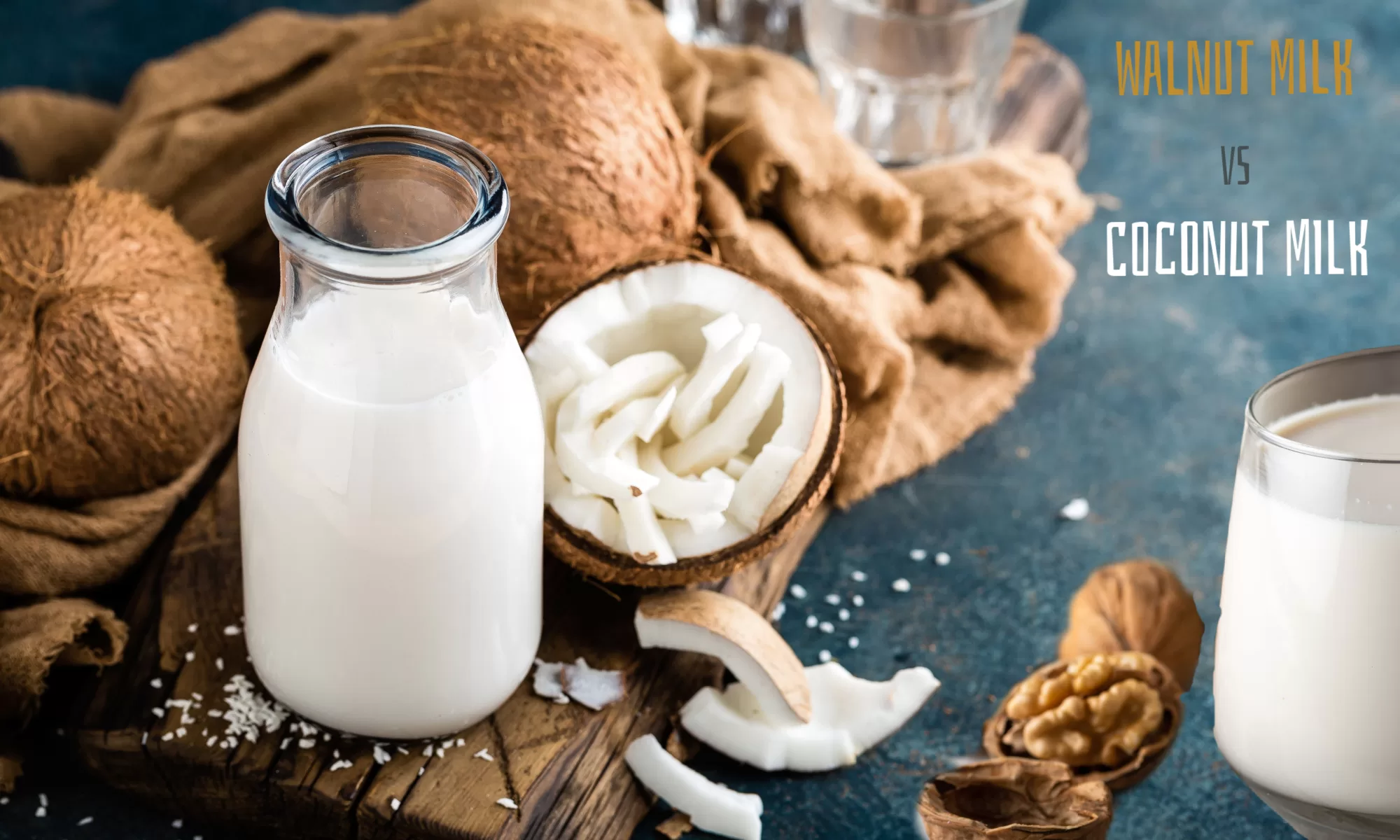
Let’s jump right in!
Comparing walnut milk vs coconut milk
Walnut milk and coconut milk are both plant-based, with walnut milk having tree nuts as an allergen. Now, coconut milk has tree nuts as an allergen too, but many people that have that allergy can still safely eat coconut products – I recommend talking to your physician to be safe!
They’re also both great options for vegan, paleo, and keto diets, making them extremely versatile!
| Walnut milk | Coconut milk | |
| Type | Plant-based (nut milk) | Plant-based (nut milk) |
| Allergens | Tree nuts | Tree nuts* |
| Vegan? | Yes | Yes |
| Paleo? | Yes | Yes |
| Keto? | Yes | Yes |
*Most people with tree nut allergies can consume coconut products, so talk to your physician!
Differences between walnut milk and coconut milk
The main difference between walnut milk and coconut milk is their flavors.
Walnut milk has a distinct nutty flavor that’s made by blending soaked walnuts with water. It’s great for anyone that’s lactose intolerant, or wants a unique dairy-free beverage to use! You can also easily make walnut milk at home!
Coconut milk has a coconut flavor that’s slightly nutty. However, it comes in two different versions: carton coconut milk and canned coconut milk.
Carton coconut milk is the stuff that you drink, being made by blending thicker coconut milk or coconut cream with water. Canned coconut milk, on the other hand, is basically a solid at room temperature, and is used to make many delicious coconut-based recipes! It’s made by heating high-fat coconut pulp in hot water, and then extracting the liquid from the solid pulp.
How to use walnut milk vs coconut milk
There are many awesome ways to use both walnut milk and coconut milk that take advantage of their characteristics, including:
Walnut milk:
- Use as a diary-free drink.
- Add it to your cereal and oatmeal.
- Mix it into your smoothies.
- Bake with it for a nutty twist.
- Put it in your coffee or tea.
- Thicken sauces and soups with it.
Coconut milk:
- Enjoy it as a dairy-free beverage.
- Make coconut creamer with it.
- Add it to your smoothies.
- Splash it over your cereal or into your oatmeal.
- Bake and cook with it for a tropical addition.
- Make coconut yogurt.
Can you substitute walnut milk for coconut milk?
Yes, you can substitute these out for one another. That being said, they have very distinct flavor profiles that will greatly change your overall dish – walnut milk is much nuttier, while coconut milk has a strong coconut flavor. Walnut milk also tends to be a little thinner in texture, but that can depend on the type and processing of your coconut milk.
Nutrition: Walnut milk vs coconut milk
Walnut milk has an awesome omega-3 fatty acids content, which are great for heart and brain health! It’s also much higher in fat (healthy fats) than coconut milk, although coconut milk does have some more saturated fats.
Coconut milk is lower in calories than walnut milk, but both are low in carbs. They’re both low in protein, and coconut milk has a much better calcium and vitamin D content than walnut milk, which has nearly nothing of both.
| Per 1 cup (237 ml/8 oz.) | Walnut milk | Coconut milk |
| Calories | 120 | 40 |
| Total fat (saturated) | 11 g (1 g) | 4 g (3.5 g) |
| Total carbs | 1 g | 2 g |
| Total sugars (incl. added) | 0 g | <1 g (0 g) |
| Protein | 3 g | 0 g |
| Calcium | 2% DV | 45% DV |
| Vit D | 0% DV | 20% DV |
How to store walnut milk and coconut milk
Walnut milk is best stored in the fridge. Try keeping it in a sealed container so that it doesn’t start taking flavors from inside the refrigerator, and consume it within 5 days for the most freshness!
Canned coconut milk should be stored in an airtight container and placed in the fridge when opened, where it’ll last around 7 days! Carton coconut milk should be stored in the fridge, where it’ll last 5-7 days after opening. However, this can vary a bit depending on the type you buy – full-fat coconut milk lasts longer than low-fat coconut milk, for example.
You can also freeze your coconut milk to keep it good for up to a month!
Walnut milk vs coconut milk: Which is better?
Walnut milk has some advantages over coconut milk…but coconut milk has some advantages over walnut milk – which should you choose?
Well, it mainly comes down to preference with milks that are this close in comparison. They both have very similar nutritional profiles, and both have the same dietary versatility with slightly different allergens.
Walnut milk has a nuttier flavor profile, while coconut milk has a much more coconuty taste – I prefer walnut milk for the omega-3 fatty acids, nutty taste, and a slight bit of extra protein!
FAQs
Both are really close on paper, so “better” is subjective – pick that one that fits your needs and tastes!
You’ll find health benefits and drawbacks in many different types of milk, so check them out to find one that fits your needs – or talk to a health professional!
Coconut milk can be a poor choice if you’re allergic to coconuts, or don’t like its distinct flavor.
It sure is! It has healthy fats, nutrients, and omega-3 fatty acids!





Leave a Comment