
Avocados have long had a reputation as that rare treat you only ever enjoy when you eat Mexican food or don’t mind not paying rent this month.
However, alongside being a tasty accompaniment for spicy food, avocadoes are also a fantastic source of cooking oil.
Unfortunately, avocado oil is usually incredibly expensive when you buy it at the store, so why not learn how to make it yourself?
How Can I Use My Homemade Avocado Oil?
Avocado oil is a great finishing oil, much like extra virgin olive oil, and can be added to all kinds of dishes when you are looking for an earthy, vegetal flavor to add to your dish.
You should probably avoid trying to fry anything directly in it, though, because avocado oil has an especially low smoke point, resulting in any kind of extreme temperatures creating some pretty significant burnt flavors.
What Kind Of Special Equipment Do I Need To Make Avocado Oil?
Making avocado oil, much like any other kind of homemade oil, can be done in a few different ways. The easiest way to make it is to use something like an oil press, which allows you to extract the oils incredibly easily.
Failing that, however, a blender and some good cheesecloth are really all you need to extract oil from basically anything, avocadoes included.
Ingredients
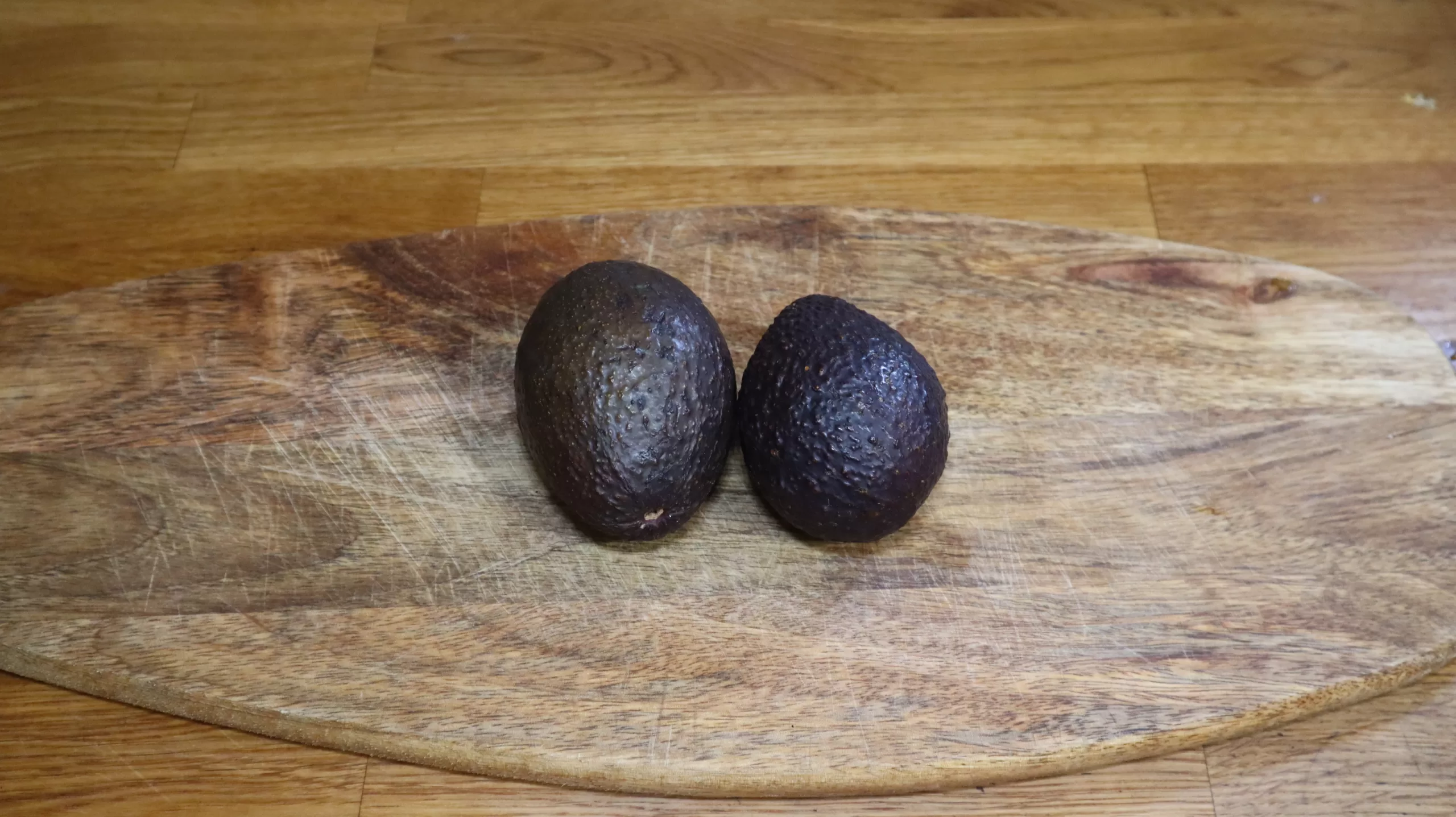
2-4 avocados
How To Make Homemade Avocado Oil
Step 1 – Remove the flesh from your avocados using a spoon, making sure to remove the stone and discard.

Step 2 – Blend all of the avocado flesh together, either using a food processor, or just a hand-masher.
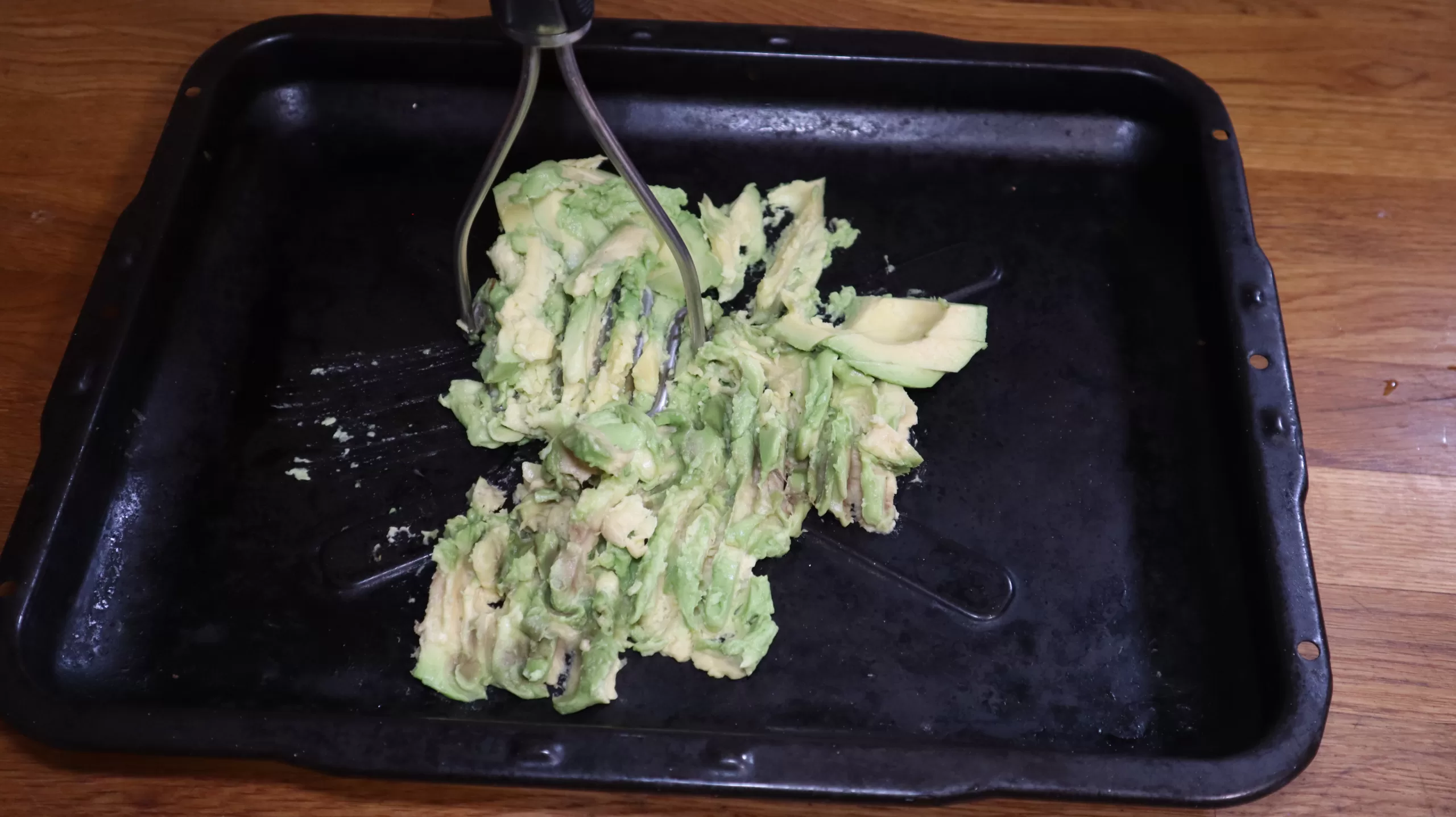
Step 3 – Spread the avocado mash out in a single, even layer on a baking sheet or small casserole dish, and bake it in an oven set to 150 Fahrenheit for about 2 hours, or until all of the flesh is brown and partly dehydrated.
Step 4 – Crush or blend the avocado pieces into an even paste, either using a mortar and pestle or a blender.

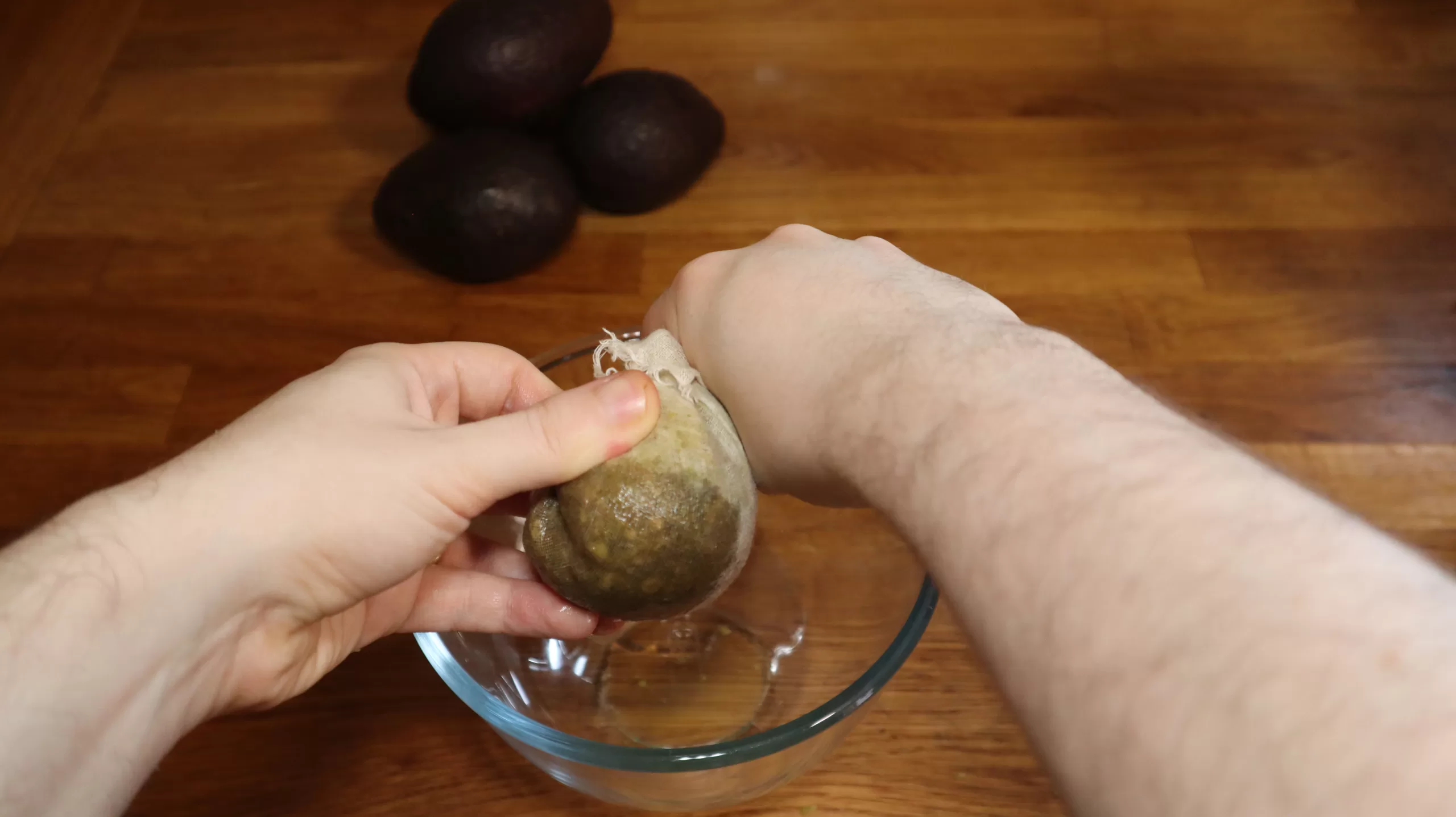
Step 5 – Scoop the avocado onto a cheesecloth, and squeeze the oil out of the avocados, collecting it in a small jar.
Step 6 – Store your avocado oil in a sealed container, and use within 1 month for the best flavor.
Troubleshooting Tips
• A really common problem with trying to do anything with avocadoes is the struggle to get them out of their skins. While a lot of this is going to depend on just how ripe your avocadoes are, the flesh of these little green fruits loves to cling to their tough skins. The best way to remove the flesh from your avocados is with a strong, sharp spoon to cut underneath the flesh, making sure to scrape very hard to get it all.
• When you are going through the process of drying your avocadoes in the oven, you might find that the avocado flesh is refusing to turn brown. The brownness typically comes from oxidation, so if your flesh isn’t going brown, you just need to remember to stir it Flesh isn’t turning brown – need to stir it really vigorously, turning the bottom parts of the blended avocado flesh to the top, to allow it to get the chance to brown as well.
• If you can’t seem to get any oil out of your avocados when you squeeze, you might not have dried your avocados sufficiently to allow the oil to be released from the flesh. Cooking it down a little bit more will likely help, but you might also just need to give it a really good squeeze to try and extract the oil properly.
Watch the Video Version…

Nutritional Facts
For the health-conscious out there, here are the nutritional details for 1 tablespoon of avocado oil.
Calories: 120
Total Fat: 14 grams
Saturated Fat: 2 grams
Cholesterol: 0 milligrams
Sodium: 0 milligrams
Total Carbohydrates: 0 grams
Dietary Fiber: 0 grams
Sugars: 0 grams
Protein: 0 gram
Potassium: 0 milligrams
FAQs
One thing that many people can never figure out with avocadoes is how to get the large, rock-hard stones out of the center of the avocado.
Unless your avocados are super ripe, the stone will be solidly stuck into your flesh. While you absolutely could just cut the stone out with a sharp spoon, the easiest thing to do is to get a big, sharp knife, and give the stone one solid hit with your with your knife, so that the plane gets caught in the stone.
Then, gripping the underside of the avocado, twist your knife to liberate the stone from the flesh, and then pull the knife away, finally liberating the stone from your avocado.
All fats can turn rancid given enough time, especially if they are improperly stored. This is very likely to happen if you don’t cover the top of your avocado oil with something to keep the air out.
However, one good thing with such a delicate oil like avocado oil is that avocado oil will smell really strongly when it starts to go rancid, so there is no way you can accidentally eat rancid avocado oil – you would be able to smell it long before it became a problem.
How to Make Homemade Avocado Oil
Ingredients
2–4 avocados
Instructions
Step 1 – Remove the flesh from your avocados using a spoon, making sure to remove the stone and discard.
Step 2 – Blend all of the avocado flesh together, either using a food processor, or just a hand-masher.
Step 3 – Spread the avocado mash out in a single, even layer on a baking sheet or small casserole dish, and bake it in an oven set to 150 Fahrenheit for about 2 hours, or until all of the flesh is brown and partly dehydrated.
Step 4 – Crush or blend the avocado pieces into an even paste, either using a mortar and pestle or a blender.
Step 5 – Scoop the avocado onto a cheesecloth, and squeeze the oil out of the avocados, collecting it in a small jar.
Step 6 – Store your avocado oil in a sealed container, and use within 1 month for the best flavor.
Nutrition Facts
- Serving Size: 1 tablespoon


