
While we all used to be forced to drink dairy milk and nothing else, these days there are all kinds of weird and interesting varieties of milk alternatives out there for us to try.
While dairy-free milk like soy and almond and pretty well known by now, there are still a few that most people have yet to hear of, and one of the most interesting is potato milk.
Most people certainly wouldn’t ever imagine drinking a potato (that wasn’t in the form of vodka), but what if you could make your very own potato milk entirely yourself, in your own kitchen, with basically no work whatsoever?
How Can I Use My Homemade Potato Milk?
Homemade potato milk can be used in place of regular dairy milk, or any kind of milk alternatives, in pretty much any way.
You can drink it straight, you can use it as a base for smoothies, or you can even use it as an ingredient in recipes that would normally call for milk. Just keep in mind that it does have a particularly sweet and potato-forward flavor, meaning that whatever you add it to will have that background flavor of potatoes, which is definitely not a bad thing!
What Kind Of Special Equipment Do I Need To Make Potato Milk?
Potato milk is surprisingly easy to make and doesn’t require any kind of specialty equipment other than a blender.
You could even make it in a regular food processor if you didn’t have a blender, as everything you are blending is soft and wet, so it doesn’t put up any kind of resistance to the blades.
If you like your milk alternatives to be a bit thinner, then you might want to strain it through cheesecloth as well.
Ingredients

1 medium potato (about 7 ounces)
½ teaspoon salt
½ teaspoon vanilla extract
1 teaspoon honey (or any other kind of sugar you like)
2 cups water
How To Make Homemade Potato Milk
Step 1 – Peel your potato thoroughly, and then chop it roughly into a few pieces.

Step 2 – Cook your potato in the 2 cups of water on the stove until the potatoes are cooked through, and a fork goes straight through the potato with no resistance.

Step 3 – Once cooked, turn the heat off and leave the potatoes and water alone for 10 minutes, until it cools slightly.
Step 4 – Transfer your potatoes and water to a blender and add all of your other flavoring ingredients.
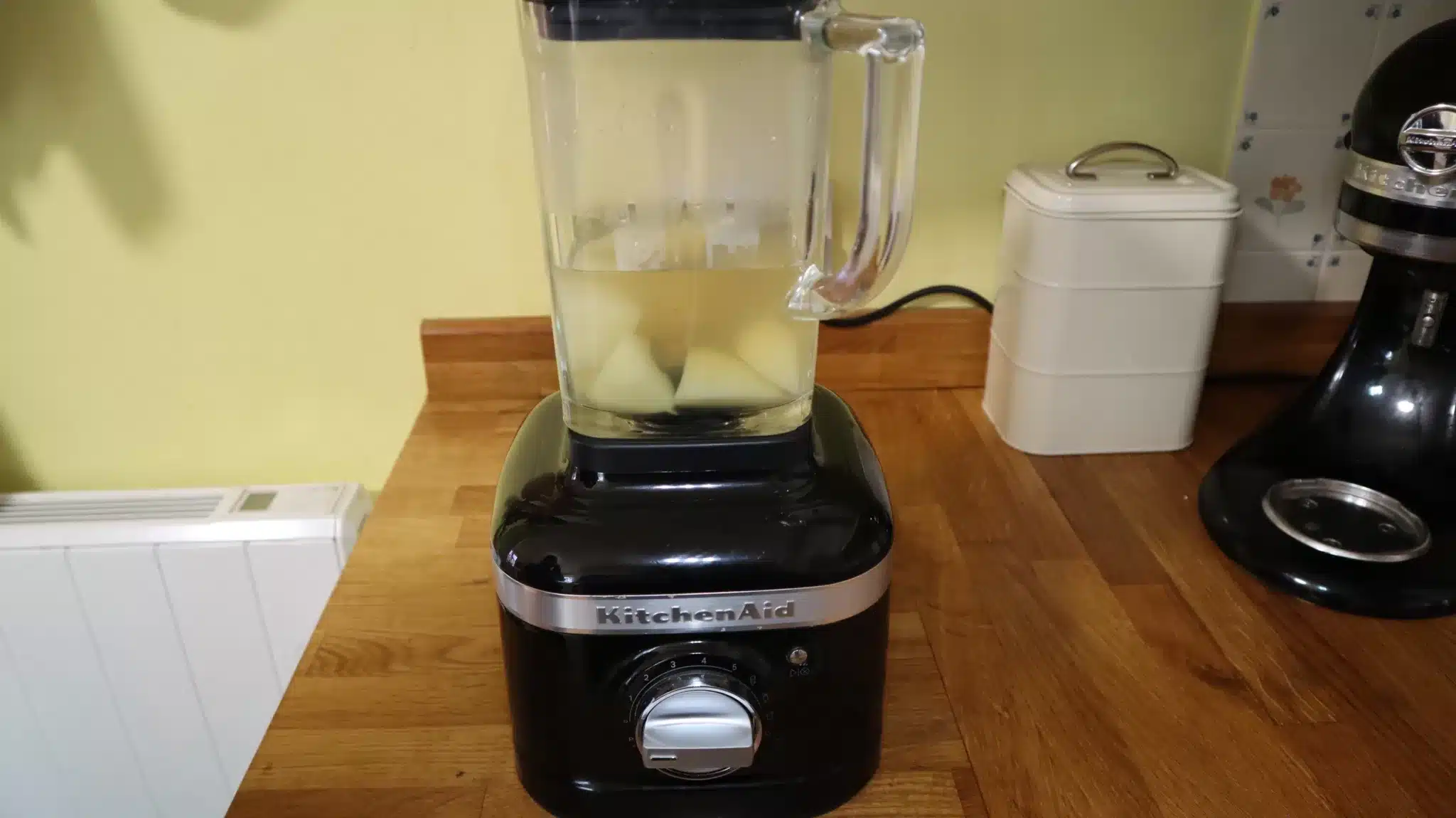
Step 5 – Blend everything together until it is completely smooth and then pour into a serving glass.
Optionally, if you want it super smooth:
Step 6 – Pour your blended potato milk into a cheesecloth set over a metal strainer, and squeeze out all of the milk, leaving behind any of the leftover potato solids.

Troubleshooting Tips
• If you find that your potato milk tastes just a little bit dull or lacking in that “oomph,” consider adding a pinch more salt. Potatoes can have a bit of a variety in their salt content, so some potatoes are naturally saltier than others, so you might need to add just a touch more salt to ensure everything balances out alright.
• One thing to watch out for when picking your potato is to avoid any green parts on the exterior of the potato. While they might seem harmless enough, any green parts on a potato are a sign of sun exposure, and the green actually comes from a toxic compound that the potato releases on being hit by sunlight! If you have the choice, it’s best to cut that part of the potato off or pick another one altogether.
• If you find that your blender is overflowing with potato milk when you are trying to blend it, try only adding a portion of the whole mixture at once. Failing that, try and keep your hand over the top of the blender with a kitchen towel clamped down tightly, to catch any stray bits of potato milk that might overflow.

Nutritional Facts
For the health-conscious out there, here are the nutritional details for 1 cup of potato milk.
Calories: 78
Total Fat: 0.1 grams
Saturated Fat: 0 grams
Cholesterol: 0 milligrams
Sodium: 594 milligrams
Total Carbohydrates: 17.7 grams
Dietary Fiber: 2.3 grams
Sugars: 4.1 grams
Protein: 1.6 gram
Potassium: 386 milligrams
FAQs
As part of this recipe, you need to peel your potatoes before boiling them. A big part of this is ensuring that your potato milk doesn’t pick up any kind of dirt or grittiness that might be on the potato skins.
The other big reason is that potato skins have a lot of fiber in them, and this extra fiber will thicken up your potato milk way too much, resulting in really thick, slightly sludgy milk. So, though it is a bit of a bother, definitely don’t skip peeling the potatoes.
Every kind of homemade milk alternative is going to have its own shelf life, and potato milk is no exception.
If you store your potato milk quickly, and get it into a tightly sealed mason jar or something similar and stick it in the fridge, you can expect it to last up to a week before it starts developing off flavors.
Keep in mind that this is going to change depending on the freshness of your potato! If you picked a particularly soft potato, it might only last a few days less.
This recipe uses vanilla extract and honey to make for pretty sweet potato milk, but there is nothing stopping you from turning this recipe a bit more savory or adding your own flavorings.
Try adding any kind of seasonings you want to this, and play around until you find something you luck!

How to Make Homemade Potato Milk
Delicious, homemade potato milk, made in under an hour!
Ingredients
1 medium potato (about 7 ounces)
1/2 teaspoon salt
1/2 teaspoon vanilla extract
1 teaspoon honey
2 cups water
Instructions
Step 1 – Peel your potato thoroughly, and then chop it roughly into a few pieces
Step 2 – Cook your potato in the 2 cups of water on the stove until the potatoes are cooked through, and a fork goes straight through the potato with no resistance
Step 3 – Once cooked, turn the heat off and leave the potatoes and water alone for 10 minutes, until it cools slightly.
Step 4 – Transfer your potatoes and water to a blender and add all of your other flavoring ingredients.
Step 5 – Blend everything together until it is completely smooth and then pour into a serving glass.
Optionally, if you want it super smooth:
Step 6 – Pour your blended potato milk into a cheesecloth set over a metal strainer, and squeeze out all of the milk, leaving behind any of the leftover potato solids.
Nutrition Facts
- Serving Size: 1


Leave a Comment