
Why are steakhouses so popular? Steak is easy to buy at the supermarket, and most people have the basic cooking equipment at home, yet it isn’t a famous cook-at-home dinner. My theory is that while cooking a steak is easy, it’s hard to cook it well.
Enter the reverse sear cooking method. This method simply involves cooking the steak at low heat for a while, then finishing it quickly on high heat. This means you end up with a steak perfectly cooked in the middle, with no grey or overly red bits, just perfect pink and a nice brown sear on the outside. And it is so easy to do at home, even with non-professional equipment! I am no chef, and I made do with what I had, as I’ve recently moved house and am missing a few things. Let’s look at the process, and maybe you can try it too.

What is Reverse Searing?
Most steaks are cooked on one thing, like a skillet or pan or grill. Reverse searing involves two cooking methods: low and slow in the oven, then hot and fast on the stovetop to give it that tasty crust.
Step-By-Step for Reverse Searing a Steak
Ingredients:
- Steak of your choice (I used a t-bone, but porterhouse, rib eye and a thick cut top sirloin also work)
- Salt and pepper
- Avocado oil or another high heat-safe oil. You can check our oil guide for more info!
- Butter (optional)
- Garlic (optional)
Instructions:
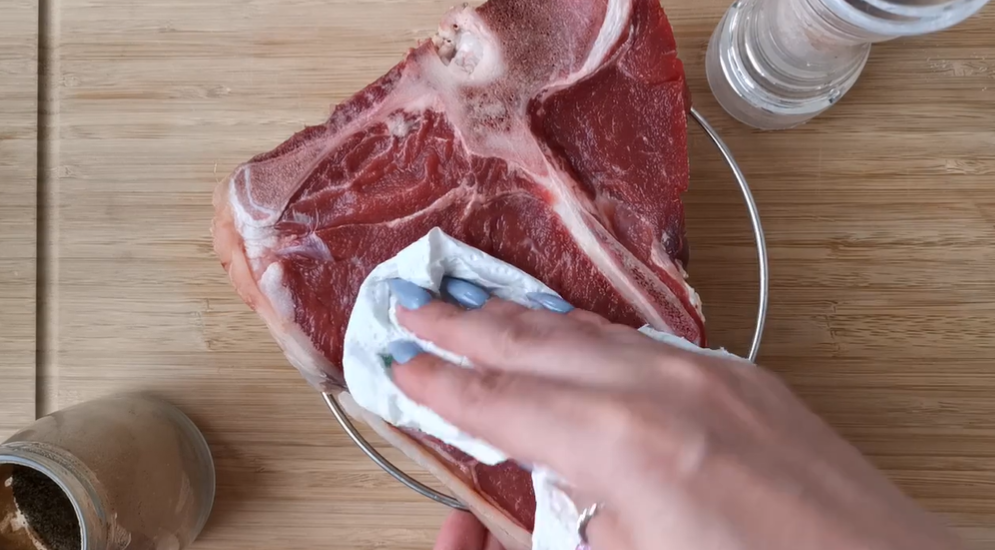
Step 1: Preheat your oven to 275 degrees Fahrenheit. Pat down both sides of your steak with a paper towel to get rid of any moisture.
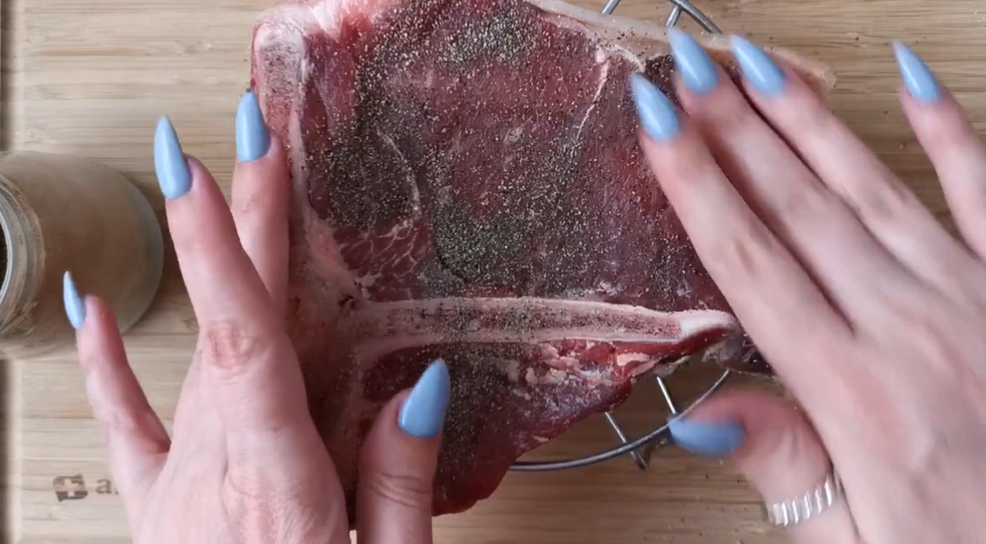
Step 2: Season both sides well with salt and pepper.
Step 3: (Optional – rest in the fridge for 2 – 24 hours, then bring to room temperature before cooking)
Step 4: Pop your steak on an oven rack over a baking pan. You don’t have to use a wire rack, but it helps cook the steak evenly.
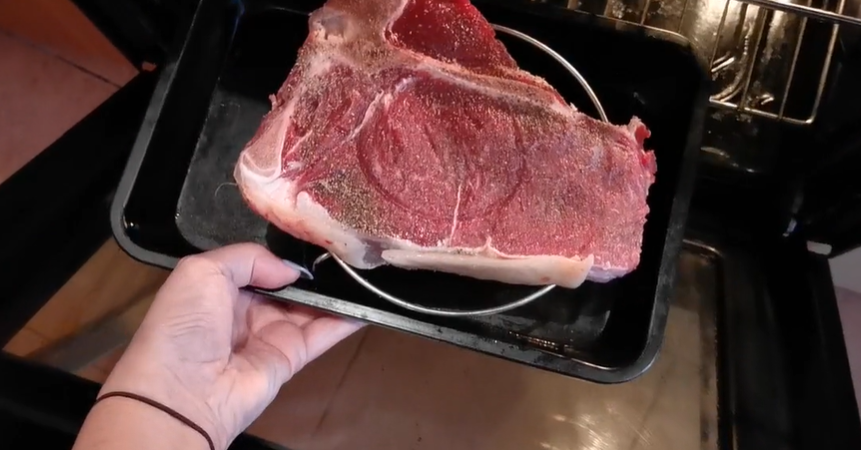
Step 5: Cook in the oven following the time chart below this recipe.
Step 6: Preheat your pan on high heat for a few minutes and add the oil.
Step 7: Transfer the steak to the pan and sear each side, following the instructions on the time chart below this recipe.
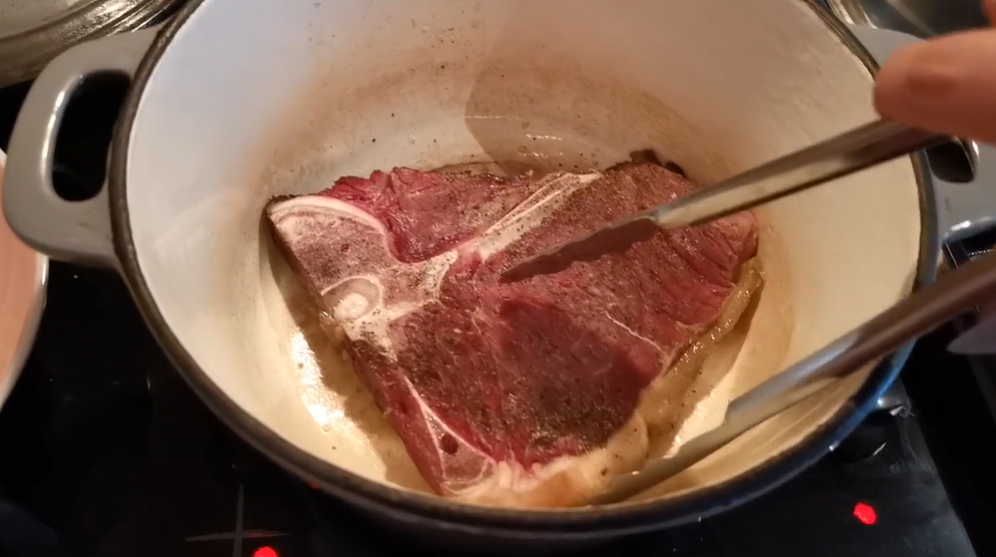
Step 8: If you are adding butter, garlic, or other seasonings, now is the time! Throw them in while you are searing and baste the steak in them a little.
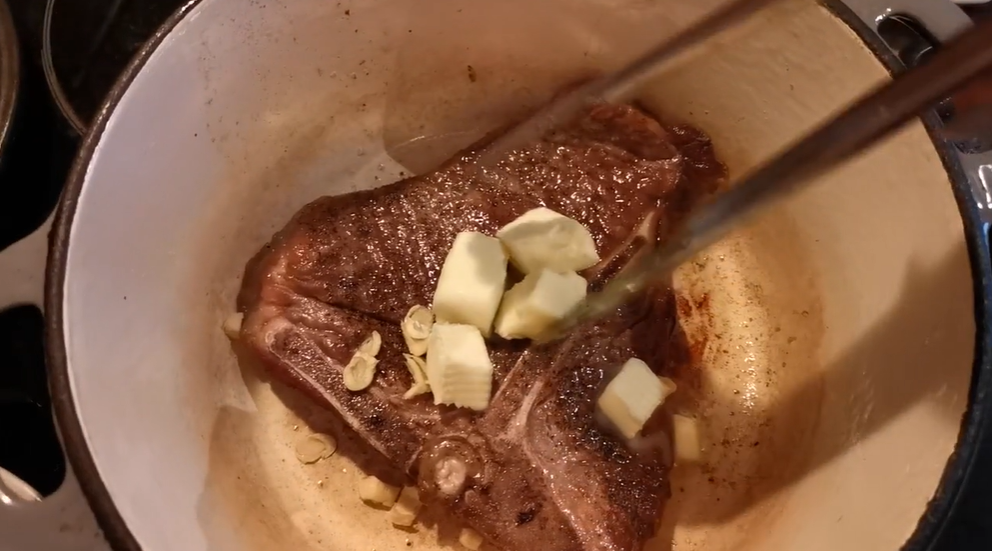
Step 9: Remove the steak and let it rest for 5 minutes.
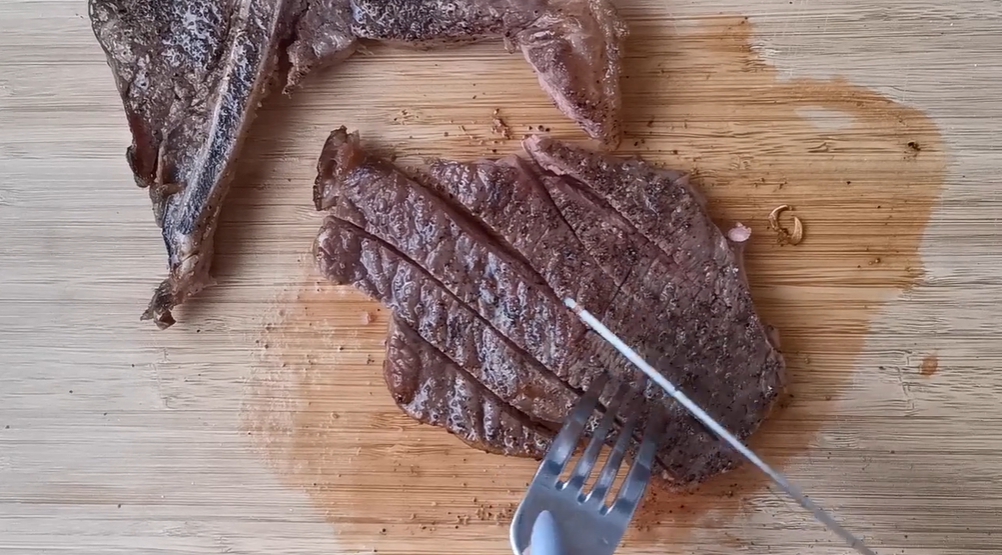
Step 10: Serve the steak how you like it! I sliced it up and served it with different kinds of mustard, chimichurri, and fresh tomatoes.
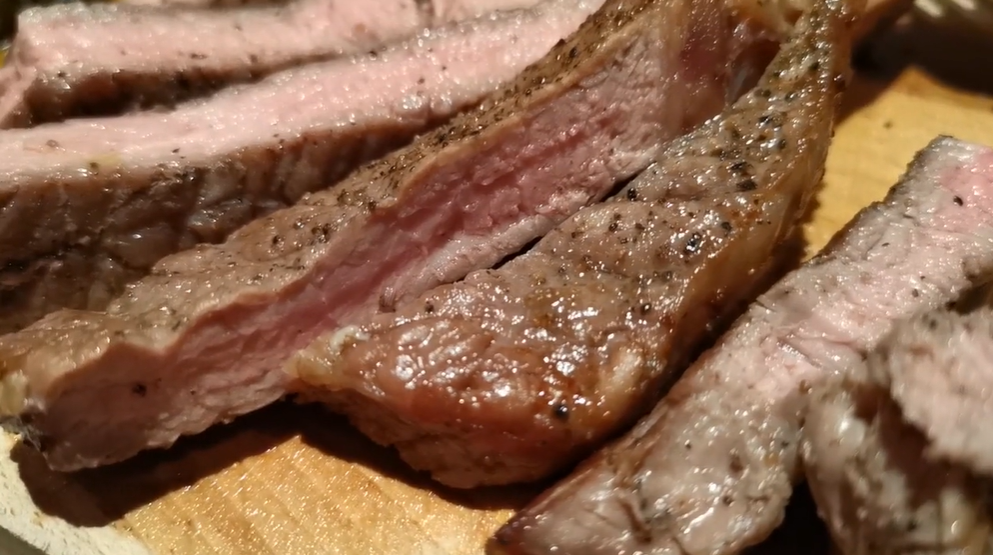
Cooking Time Chart
It can take anywhere from 15 to 60 minutes to reverse sear a steak, depending on its thickness and how hot your oven is. The final searing part takes 1-2 minutes on the stovetop. To make life easier and avoid using an oven thermometer (I hate having to pull the steak out of the oven to poke at it), I’ve made this handy table for cooking times in a 275-degree Fahrenheit oven for a steak that comes out somewhere between medium rare and medium. Disclaimer – results are not guaranteed, but this is a pretty good estimate for you if you don’t want to use a meat thermometer.
| Steak size | Time in the oven at 275 degrees | Searing time |
| 1-inch thick T-bone | 15 minutes in the oven | 1-minute sear on each side |
| 1.5 inch thick T-bone | 20 minutes in the oven | 1-minute sear on each side |
| 2-inch thich T-bone | 25 minutes in the oven, | 1.5 minutes searing on each side |
| 3-inch thick T – bone | 40 minutes in the oven | 2 minutes sear on each side. |
Why You Should Reverse Sear a Steak
Reverse searing a steak may be a bit more involved, but once you get the hang of it, you won’t want to cook it any other way. Why? Because not only can you achieve the perfect level of doneness, but it also creates the perfect crust and helps retain the steak’s flavour. Couple this with the fact that a reverse sear steak is also more tender, and you have a meal that will rival any steakhouse!
Which Cuts of Steak Are Best For Reverse Searing
The reverse sear works best on filet mignon, T-bone, porterhouse, thick-cut top sirloin, tomahawk, or ribeye steak. Most websites say the minimum size is 1.5 inches, but I’ve managed it with a 1-inch steak just fine. It does work better with thicker steaks, though. Just don’t go any thinner.
Tips and Tricks for Reverse Searing a Steak
- Make sure your steak is completely thawed and at room temperature before cooking.
- Don’t skip the pat-down step with the paper towels. The drier the outside of the steak, the better the crust you will get.
- Be generous with your seasonings; rub them in with your hands so they stick well.
- Rest the seasoned raw steak in the fridge for 2 to 24 hours before cooking. This is called a dry brine, and it helps to make a great crust as it further dries the outside of the steak.
- Use a heavy skillet for searing. I used my cast iron pot as I couldn’t find my skillet, and it worked perfectly. Cast iron works best for even heat distribution when you’re cooking.
How to Serve a Reverse Sear Steak
When it comes to serving a steak, the world is your oyster. It goes well with so many things! I love a simple mustard with it, but it’s also great with sauteed mushrooms, roast potatoes, or arugula, balsamic, and parmesan cheese!
Watch The Video Here:

How To Reverse Sear A Steak (Without A Meat Thermometer!)
Ingredients
Instructions
Ingredients:
- Steak of your choice (I used a t-bone, but porterhouse, rib eye and a thick cut top sirloin also work)
- Salt and pepper
- Avocado oil or another high heat-safe oil. You can check our oil guide for more info!
- Butter (optional)
- Garlic (optional)
Instructions:
Step 1: Preheat your oven to 275 degrees Fahrenheit.
Pat down both sides of your steak with a paper towel to get rid of any moisture.
Step 2: Season both sides well with salt and pepper.
Step 3: (Optional – rest in the fridge for 2 – 24 hours, then bring to room temperature before cooking)
Step 4: Pop your steak on an oven rack over a baking pan. You don’t have to use a wire rack, but it helps cook the steak evenly.
Step 5: Cook in the oven following the time chart below this recipe.
Step 6: Preheat your pan on high heat for a few minutes and add the oil.
Step 7: Transfer the steak to the pan and sear each side, following the instructions on the time chart below this recipe.
Step 8: If you are adding butter, garlic, or other seasonings, now is the time! Throw them in while you are searing and baste the steak in them a little.
Step 9: Remove the steak and let it rest for 5 minutes.
Step 10: Serve the steak how you like it! I sliced
FAQs
If you have the time and the energy, then yes. The process is slightly more involved but yields a more tender and flavorful steak.
Lining the pan with a wire rack is not essential, but it allows air to circulate more evenly, ultimately cooking the meat a little more evenly.
Yes, it absolutely does. I encourage you to test the theory by trying one reverse-seared steak and one simply done on the stovetop. The difference is remarkable.



Leave a Comment